
Beautiful Plants For Your Interior
Beautiful Plants For Your Interior
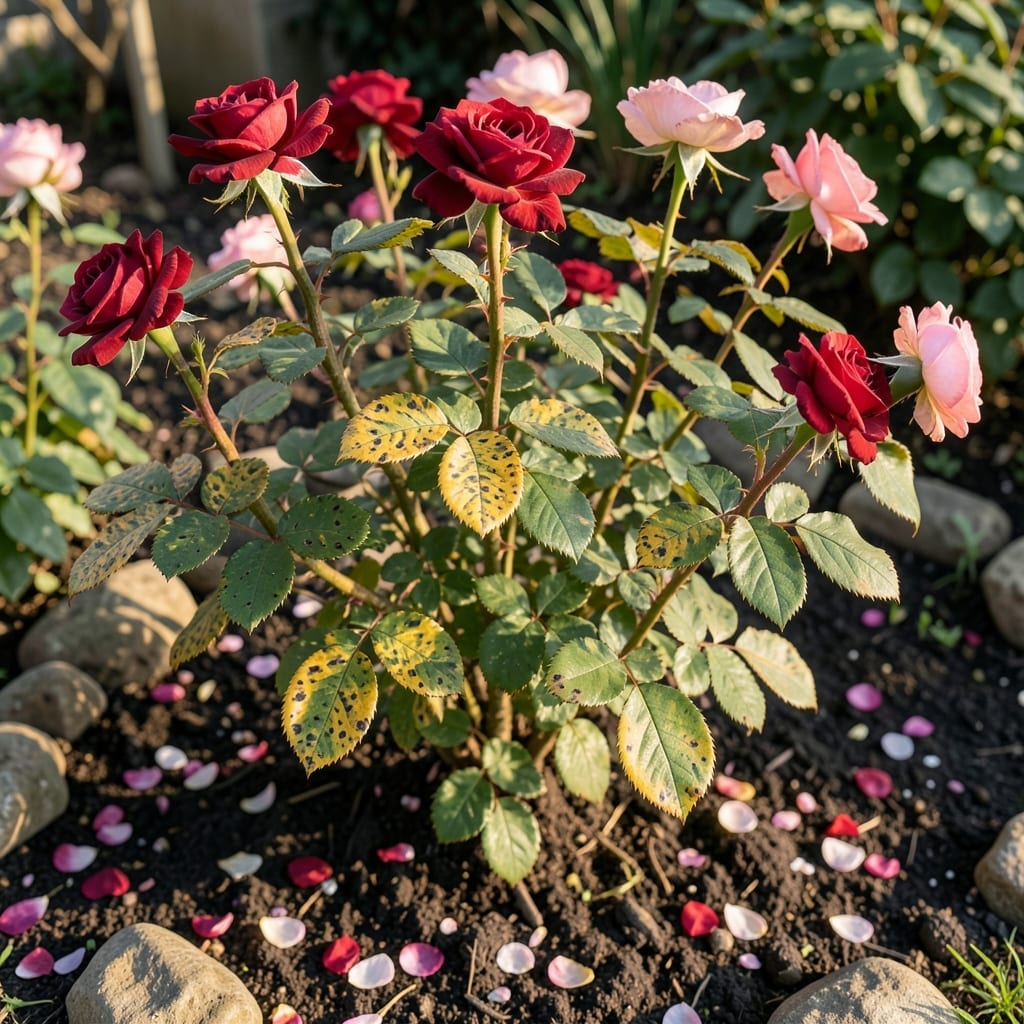
Spotted leaves and blackened stems don’t mean your roses are done for. I’ve brought back bushes that looked beyond hope with the right approach.
The key is catching problems early. Yellowing leaves often signal fungus, while cankers need immediate pruning. Most issues start with poor air circulation or wet foliage.
Within 2-3 weeks of treatment, you’ll see new growth replacing damaged leaves. The plants rebound stronger when you address the root cause, not just the symptoms.
Works for all rose types, from climbers to shrubs. Here’s how to diagnose and fix the most common issues.
Understanding why rose bushes fall ill is the first step toward a thriving garden. Below are the primary causes, each with actionable insights to help you address them.
Fungi like Phragmidium mucronatum (black spot) and Sphaerotheca pannosa (powdery mildew) thrive in wet, humid conditions. These pathogens spread via spores, which germinate on rose leaves when moisture lingers for 6+ hours. Poor air circulation and overhead watering exacerbate the problem. Solution: Water at the base early in the day and prune for airflow.
Aphids, thrips, and spider mites weaken roses by sucking sap or chewing foliage, creating entry points for diseases. Their honeydew (a sticky residue) also fosters sooty mold. Solution: Introduce beneficial insects like ladybugs or apply neem oil weekly during outbreaks.
Overcrowding, improper pruning, or contaminated tools spread disease. Roses planted in shaded, damp spots or nutrient-poor soil are more susceptible. Solution: Sterilize pruners with rubbing alcohol, space bushes 3–4 feet apart, and amend soil with compost.
Drought, extreme heat, or frost stress roses, lowering their immunity. Heat stress, for example, can trigger Botrytis blight (gray mold) in high humidity. Solution: Mulch to retain moisture, provide afternoon shade in hot climates, and cover plants during frost warnings.
Don’t let common issues steal the beauty of your garden! Here’s how to tackle each problem head-on with simple, effective fixes.
Remove infected leaves and burn or trash them to stop the spread. Apply a fungicide (copper-based or neem oil) every 7–10 days until the issue clears. Prevention tip: Water at the base (not overhead) and thin out crowded branches for better airflow. 💡
Mix 1 tsp baking soda + 1 quart water + a drop of dish soap, and spray affected leaves weekly. For severe cases, use sulfur-based fungicide. Prevention tip: Plant roses in full sun and avoid late-day watering. ☀️
Blast them off with a strong water spray or wipe leaves with soapy water. Introduce ladybugs (natural predators) for long-term control. Prevention tip: Apply horticultural oil in early spring to deter eggs. 🐞
Prune below the infected area with sterilized shears (dip in rubbing alcohol between cuts). Disinfect tools after use. Prevention tip: Avoid overhead watering and mulch to reduce soil-borne spores. ✨
Improve drainage by amending soil with compost or planting roses in raised beds. If roots are mushy, remove affected plants and treat soil with fungicide. Prevention tip: Water deeply but less often—let soil dry between waterings. 🌊
Pro tip: Always sterilize pruning tools and rotate treatments to prevent resistance. Healthy roses start with vigilance! 🎯
Yes, too much water creates perfect conditions for fungal growth like root rot. Always let soil dry between waterings and ensure good drainage.
Prune on a dry, sunny day to help wounds heal quickly. Use sterilized tools and remove at least 6 inches below visible damage to ensure complete removal of pathogens.
Look for disease-resistant varieties like Knock Out or Drift roses. These hybrids were bred to withstand common issues like black spot and powdery mildew with less maintenance.
Fungal issues show as spots, powdery coatings, or wilting. Pests leave visible insects, chewed leaves, or sticky residue. A magnifying glass helps spot tiny culprits like spider mites.