
Beautiful Plants For Your Interior
Beautiful Plants For Your Interior
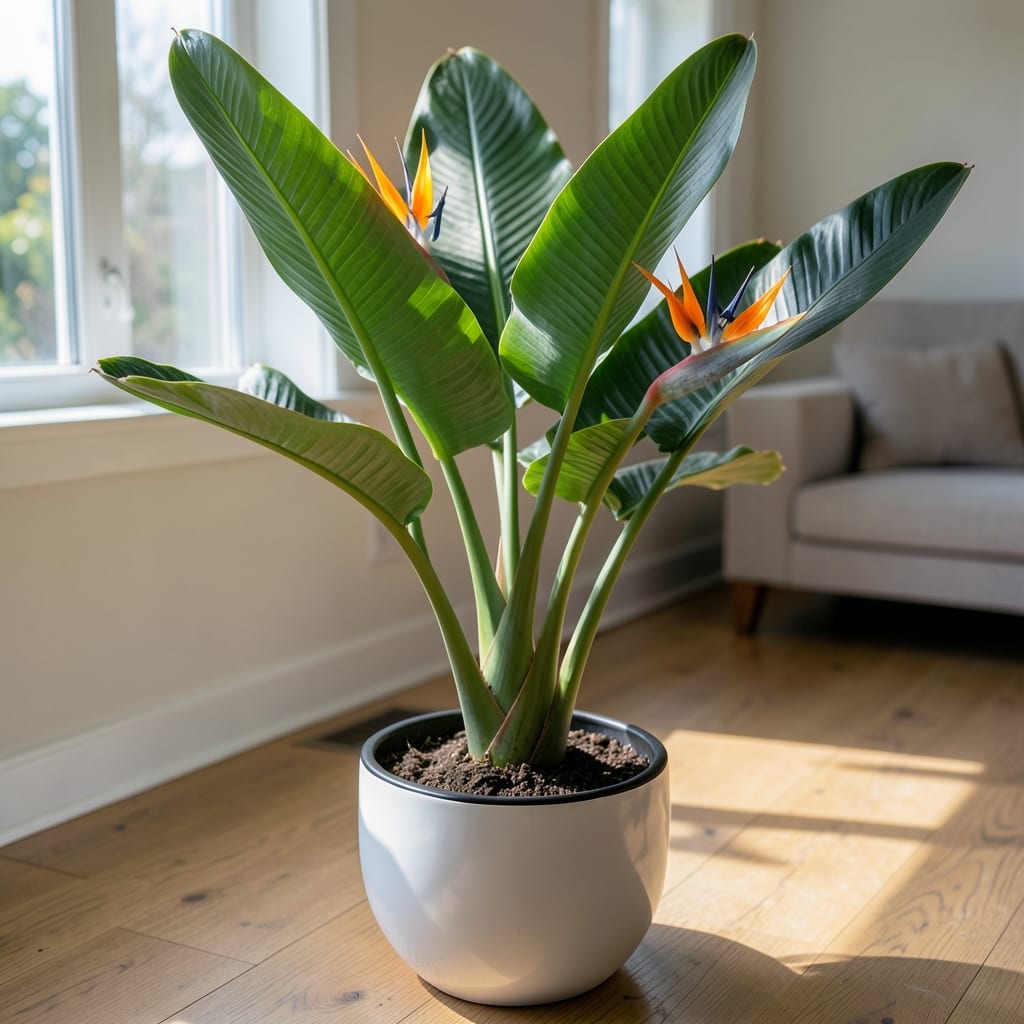
Bird of Paradise is a tropical plant known for its striking, bird-like flowers and large, banana-shaped leaves. It symbolizes paradise, freedom, and exotic beauty in many cultures.
I love how this plant brings a touch of the tropics to any space with its vibrant orange and purple blooms that resemble a bird in flight. 🌿 Native to South Africa, it thrives in warm climates and can grow up to 5 feet tall with proper care. Many gardeners prize it for adding dramatic visual interest while requiring relatively low maintenance once established.
💡 In This Article
The Strelitzia genus, commonly known as Bird of Paradise, features unique floral structures that mimic tropical birds in flight.
Each flower has a beak-like bract and vibrant blue-purple sepals that resemble wings, with orange and white petals forming the “body.” This striking appearance isn’t just for show—it’s a specialized adaptation for bird pollination, particularly by sunbirds in its native South Africa.
The plant’s large, paddle-shaped leaves can grow up to 2 feet long and 1 foot wide, with a waxy coating that helps conserve water in dry conditions. The leaves emerge from a central clump, creating a fan-like arrangement that can span 4-6 feet in mature plants.
🌿 This growth pattern maximizes sunlight exposure while minimizing water loss through transpiration.
What makes this plant truly fascinating is its growth rate and hardiness. In ideal conditions, it can add 1-2 feet of height per year, reaching up to 5-6 feet tall. The stems are thick and woody, with a unique ability to store water, allowing the plant to survive brief droughts.
This adaptation is crucial for its native habitat, which experiences seasonal dry periods.
The plant’s root system is equally impressive. It develops a network of thick, fleshy roots that spread horizontally rather than growing deep. This allows it to efficiently absorb surface water while anchoring the plant against strong winds—a common occurrence in its coastal South African homeland.
The roots also contain specialized cells that store nutrients, helping the plant maintain its lush appearance even during less favorable conditions.
Bird of Paradise plants are evergreen perennials, meaning they maintain their leaves year-round. They produce flowers intermittently throughout the year in warm climates, with peak blooming typically occurring in late winter and spring. Each flower stalk can bear 5-7 blooms that open sequentially, extending the visual impact for weeks. ✨
The unique shape comes from its beak-like bract and vibrant blue-purple sepals that resemble wings, with orange and white petals forming the body. This adaptation attracts sunbirds for pollination in its native habitat.
In ideal conditions, it can reach 5-6 feet tall with a spread of 4-6 feet. The large, paddle-shaped leaves can grow up to 2 feet long and 1 foot wide, creating a dramatic tropical look.
Yes, but it needs bright, indirect light and high humidity. Place near a sunny window and mist leaves regularly. Be cautious of fluoride in tap water, which can cause leaf tip browning.
Water deeply 1-2 times per week for new plants, then reduce to every 2-3 weeks once established. Always let the top 2-3 inches of soil dry out between waterings to prevent root rot.