
Beautiful Plants For Your Interior
Beautiful Plants For Your Interior
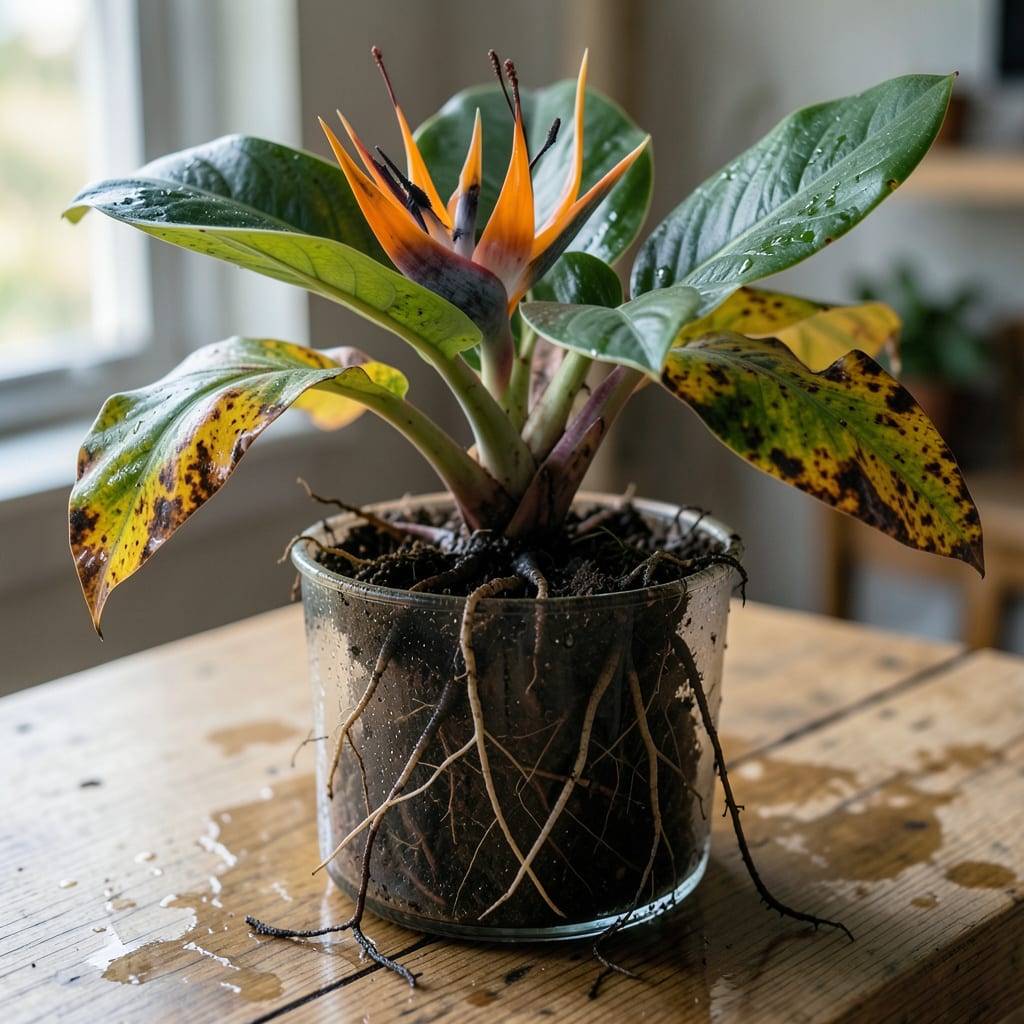
Yellowing leaves and mushy stems are your first warning. 🌿 I’ve rescued my bird of paradise from root rot twice now, and both times the plant bounced back stronger than before.
The problem starts underground where you can’t see it—soggy soil suffocates roots. Most people water on a schedule instead of checking the soil first. That simple change alone can prevent the whole issue.
You’ll know it’s working when new growth emerges bright green and firm. The existing leaves may not recover, but that’s normal. Fresh, healthy roots are what matter most.
Works for any size plant, from tabletop to towering specimens. Here’s the step-by-step rescue plan.
Root rot in your bird of paradise often stems from a few key issues, all tied to excess moisture and poor growing conditions. Here’s a breakdown of the most common causes:
The primary culprit is consistent overwatering, which suffocates the roots. Bird of paradise plants thrive in well-draining soil, and when waterlogged, their roots can’t access oxygen. This creates the perfect anaerobic environment for Pythium, Phytophthora, or Fusarium fungi to thrive, leading to root decay.
Even if you water appropriately, compacted or poorly draining soil traps moisture around the roots. Heavy clay soils or pots without drainage holes exacerbate the problem, preventing excess water from escaping. This stagnation accelerates fungal growth and root rot.
Using a pot that’s too large for your bird of paradise can also lead to overwatering issues. Larger pots hold more soil, which retains moisture longer, increasing the risk of rot. Additionally, non-porous materials (like plastic) can trap moisture more than terracotta or fabric pots.
Cool temperatures (below 50°F/10°C) slow down evaporation and root metabolism, making the plant more susceptible to rot. Combine this with high humidity, and you’ve created a breeding ground for fungal spores to attack weakened roots.
If your bird of paradise is suffering from root rot due to overwatering, don’t panic—there are clear steps to revive it. Below are targeted solutions for each cause, along with prevention tips to keep your plant thriving.
Stop watering immediately and let the soil dry out completely. Remove the plant from its pot and inspect the roots. Trim away any mushy, dark, or foul-smelling roots with sterilized scissors. Repot in fresh, well-draining soil and a pot with drainage holes. Water only when the top 2-3 inches of soil are dry.
If the pot lacks drainage holes, switch to one that allows excess water to escape. Use a fast-draining potting mix (add perlite or orchid bark for aeration). Elevate the pot on a tray with pebbles to prevent waterlogging.
Loosen the soil around the roots gently with a fork to improve aeration. If the soil is heavily compacted, repot the plant in a lighter, airier mix. Avoid pressing the soil too tightly when repotting.
With these steps, your bird of paradise can bounce back from root rot and grow strong again! ✨
Look for yellowing leaves, mushy stems, or a foul odor from the soil. These are classic signs of root rot from too much water. Early detection makes recovery much easier.
Yes, but first check the soil moisture with your finger. Water only when the top 2-3 inches feel dry. This simple habit prevents most overwatering problems.
No, always use fresh, well-draining soil when repotting. Old soil may harbor fungi that caused the rot. Mix in perlite for better drainage.
With proper care, new healthy growth appears in 4-6 weeks. Existing damaged leaves may not recover, but fresh roots will develop. Be patient and consistent.
