
Beautiful Plants For Your Interior
Beautiful Plants For Your Interior
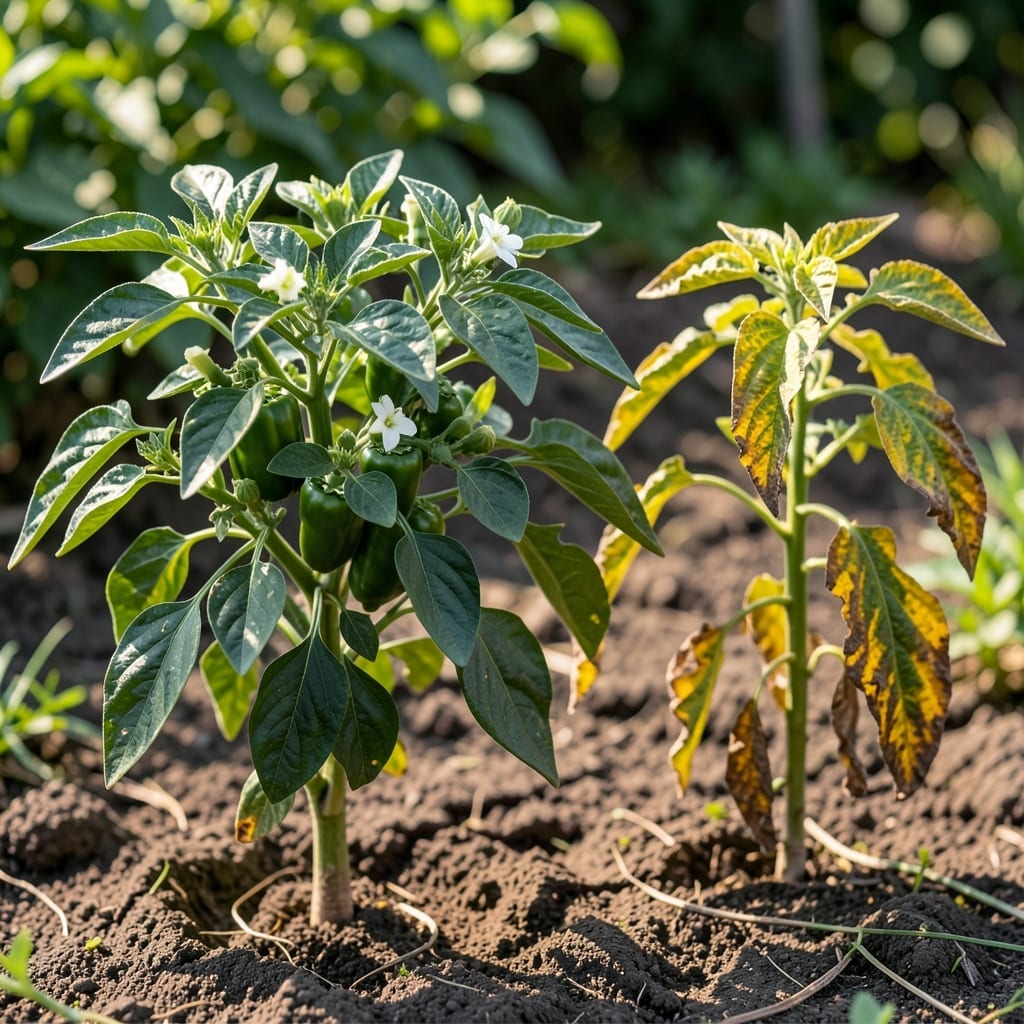
Yellow spots on your pepper leaves aren’t just unsightly—they’re a distress signal. I’ve seen calcium deficiency wipe out entire pepper crops in weeks, but the good news is it’s fixable once you recognize the signs.
This isn’t about poor soil quality alone. Inconsistent watering, extreme temperatures, or root damage can block calcium uptake even when it’s present. My first pepper plants taught me this the hard way—watching leaves curl and fruit rot on the vine.
You’ll notice new growth suffering first, with leaves developing those telltale yellow patches between veins. Left unchecked, blossom end rot follows, turning promising peppers into inedible mush.
Here’s the thing—solutions range from crushed eggshells to foliar sprays, and prevention is simpler than you’d think. We’ll get your plants back on track.
Calcium deficiency in peppers often stems from issues beyond just a lack of calcium in the soil. Here’s a breakdown of the most common causes:
Soil that’s too acidic (pH below 5.8) or overly sandy limits calcium availability. Calcium becomes less soluble in low-pH environments, making it harder for pepper roots to absorb. Test your soil—amend with lime to raise pH if needed.
Fluctuating moisture levels disrupt calcium uptake. Overwatering suffocates roots, while drought stress slows nutrient transport. Consistent, deep watering (1–2 inches per week) ensures steady calcium flow to growing tissues.
Peppers in a growth spurt (e.g., fruiting phase) may outpace calcium supply, leading to deficiencies like blossom end rot. Supplement with a calcium-rich fertilizer (e.g., gypsum or bone meal) during high-demand periods.
Chilly soil (below 50°F/10°C) slows root activity, reducing calcium absorption. Use black plastic mulch to warm soil or start seedlings indoors in cooler climates.
Excess potassium, magnesium, or ammonium can block calcium uptake. Avoid over-fertilizing with high-potassium blends; opt for balanced formulas (e.g., 10-10-10) and flush soil with water if salt buildup is suspected.
Calcium deficiency in peppers is fixable with the right approach. Here’s how to tackle each cause with simple, actionable solutions:
Mix gypsum (calcium sulfate) or crushed eggshells into the soil at planting. For a quick fix, dissolve calcium nitrate in water (1 tbsp per gallon) and apply as a soil drench. Prevention tip: Test soil annually—aim for 6.2–6.8 pH for optimal calcium uptake. 💡
Fluctuating moisture disrupts calcium transport. Water deeply 2–3 times per week (adjust for heat/rain) and use mulch to retain moisture. Drip irrigation ensures even delivery. Prevention tip: Avoid overhead watering to prevent blossom end rot. 🌡️
Too much potassium, magnesium, or nitrogen can block calcium. Flush the soil with water to remove excess salts, then apply a balanced fertilizer (e.g., 10-10-10) or compost. Prevention tip: Rotate crops yearly to prevent depletion. ✨
If roots are stunted (from overwatering or pests), loosen the soil gently and add mycorrhizal fungi to improve uptake. Trim damaged roots and repot if in containers. Prevention tip: Avoid compacting soil—use raised beds for better drainage. 🎯
For severe cases, foliar sprays (like calcium chloride) can provide a fast but temporary fix—use at dawn for best absorption. Consistency is key: most peppers rebound in 2–3 weeks with proper care!
New leaves show yellow or brown spots between veins, often curling at the edges. Blossom end rot—dark, sunken patches on fruit—appears later if untreated.
Yes! Crush eggshells and mix into soil, or steep them in water for a 24-hour calcium tea. Avoid vinegar—it lowers soil pH further.
With consistent treatment, new growth looks normal in 2-3 weeks. Severely affected leaves won’t heal, but future ones will.
All peppers are susceptible, but large-fruited types like bell peppers show symptoms first. Hot peppers may tolerate mild deficiency longer.