
Beautiful Plants For Your Interior
Beautiful Plants For Your Interior
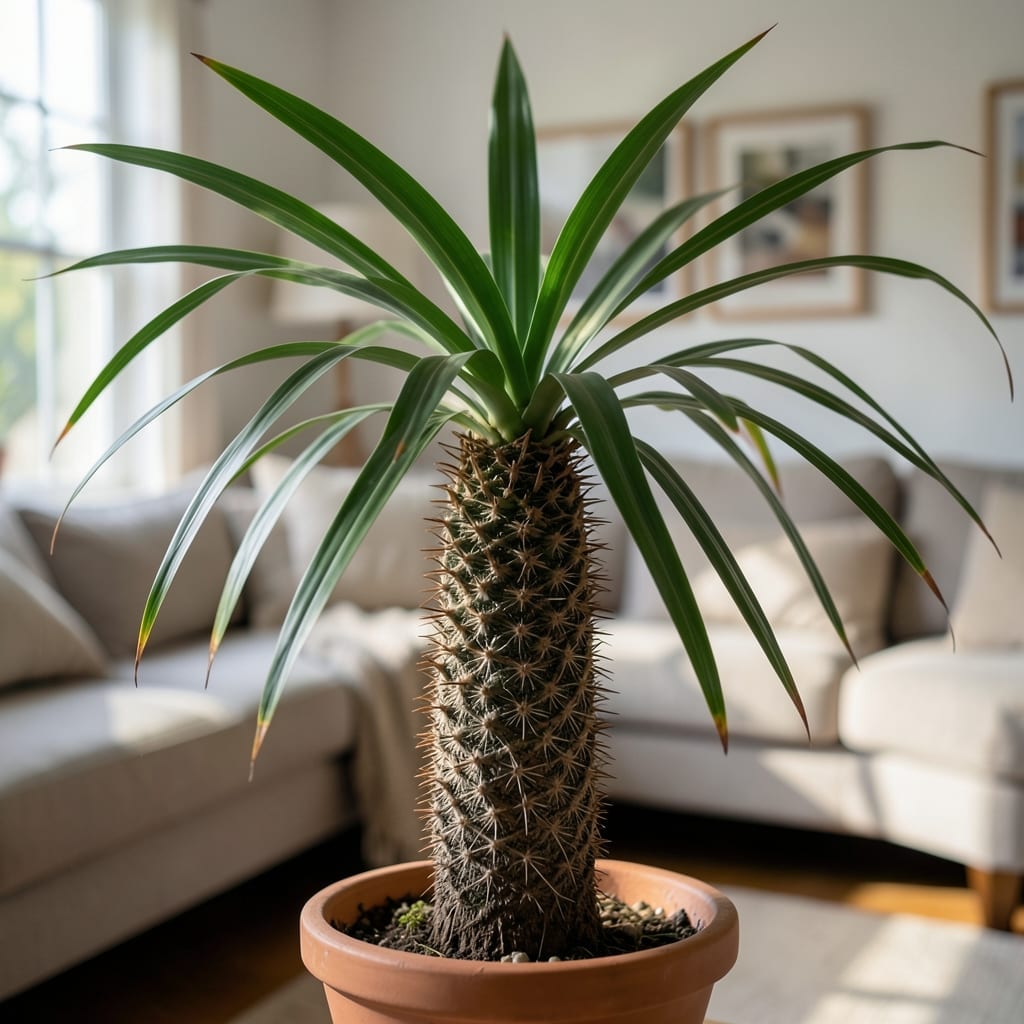
Those brown tips on your Madagascar palm aren’t just unsightly—they’re a cry for help. I’ve seen this happen to mine, and the fix is usually simpler than you think.
Low humidity, inconsistent watering, or a buildup of salts in the soil are the usual culprits. Often, it’s just a matter of adjusting your care routine slightly. The plant wants to recover; it just needs the right conditions.
With a few tweaks, you’ll see new growth coming in vibrant green within weeks. No fancy tools or expensive products required—just consistency and observation.
Works for any Madagascar palm, whether it’s in a bright living room or a sunny office. Here’s how to get it back on track.
The unsightly brown tips on your Pachypodium lamerei (Madagascar Palm) are usually a cry for help. Below are the most common causes, explained simply but with scientific precision.
Madagascar Palms are succulents, storing water in their thick stems. Overwatering leads to root rot, as excess moisture suffocates the roots, preventing oxygen uptake. This stress manifests as brown, mushy tips. Conversely, underwatering causes dehydration, leading to crispy, dry brown tips as the plant sacrifices older leaves to conserve water.
These plants thrive in warm, arid conditions (70–100°F). Exposure to cold drafts (below 50°F) or sudden temperature drops disrupts cellular function, causing necrosis (tissue death) at the leaf tips. Low humidity (<30%) can also desiccate the leaves, as the plant loses moisture faster than it can absorb it.
While Madagascar Palms need bright light, intense, direct sunlight (especially in hot climates) can scorch the leaves. This is due to photooxidative stress, where excess light energy damages chlorophyll and cell membranes, leading to brown, crispy tips. Think of it as a sunburn for your plant!
If you water with tap water high in salts, chlorine, or fluoride, these minerals accumulate in the soil over time. This raises the soil’s electrical conductivity (EC), making it harder for roots to absorb water. The result? Tip burn, as the plant struggles to distribute nutrients evenly.
Madagascar Palms hate soggy roots. Dense or compacted soil retains too much moisture, leading to anaerobic conditions (lack of oxygen). This suffocates the roots and triggers root rot, which often presents as brown tips before progressing to full leaf drop. A well-draining mix (e.g., cactus/succulent soil + perlite) is non-negotiable.
If your Madagascar palm’s leaves are sporting unsightly brown tips, don’t panic—most issues are fixable with a few simple tweaks. Below, we break down the most common causes and their practical solutions, plus prevention tips to keep your plant thriving long-term.
Check the soil before watering: stick your finger an inch deep. If it’s bone-dry, water thoroughly until it drains from the bottom. If it’s soggy, hold off and let it dry out. Aim for moist but not waterlogged soil. Prevention tip: Use a well-draining potting mix (add perlite or sand) and ensure the pot has drainage holes. 💡 Pro tip: Water less in winter when growth slows.
If leaves are crispy and brown at the tips, your palm may be getting scorched. Move it to a spot with bright, indirect light, like near an east- or north-facing window. If outdoor, provide afternoon shade. Prevention tip: Rotate the pot occasionally for even light exposure.
Brown tips can signal dry air. Mist the leaves lightly 2–3 times a week or place the pot on a pebble tray with water to increase humidity. For a hassle-free fix, use a humidifier nearby. Prevention tip: Group humidity-loving plants together to create a microclimate.
If your water is hard or you fertilize often, salts can accumulate and burn the tips. Flush the soil by running water through the pot for 2–3 minutes every few months. Switch to distilled or rainwater if possible. Prevention tip: Fertilize sparingly—once every 6–8 weeks in growing season is plenty.
Yellowing with brown tips? Your palm might need a balanced fertilizer (10-10-10 or 20-20-20). Dilute to half-strength and apply monthly in spring/summer. Prevention tip: Avoid over-fertilizing—it can do more harm than good!
With these fixes, your Madagascar palm should bounce back in no time. Keep an eye on new growth to confirm the issue is resolved!
No, once the tips turn brown, that tissue is dead and won’t recover. Focus on improving care so new growth comes in healthy. Trim the brown parts with clean scissors for a tidier look.
Water when the top 1-2 inches of soil are dry. Typically every 2-3 weeks in warm weather, less in winter. Always check soil moisture first to avoid overwatering.
Tap water can cause tip burn if it’s high in salts or fluoride. Let it sit out overnight to allow chlorine to evaporate, or use filtered water. Flush the soil monthly to prevent buildup.
These palms prefer 40-50% humidity. If your air is dry, use a pebble tray or humidifier. Grouping plants together also helps maintain consistent moisture levels.