
Beautiful Plants For Your Interior
Beautiful Plants For Your Interior
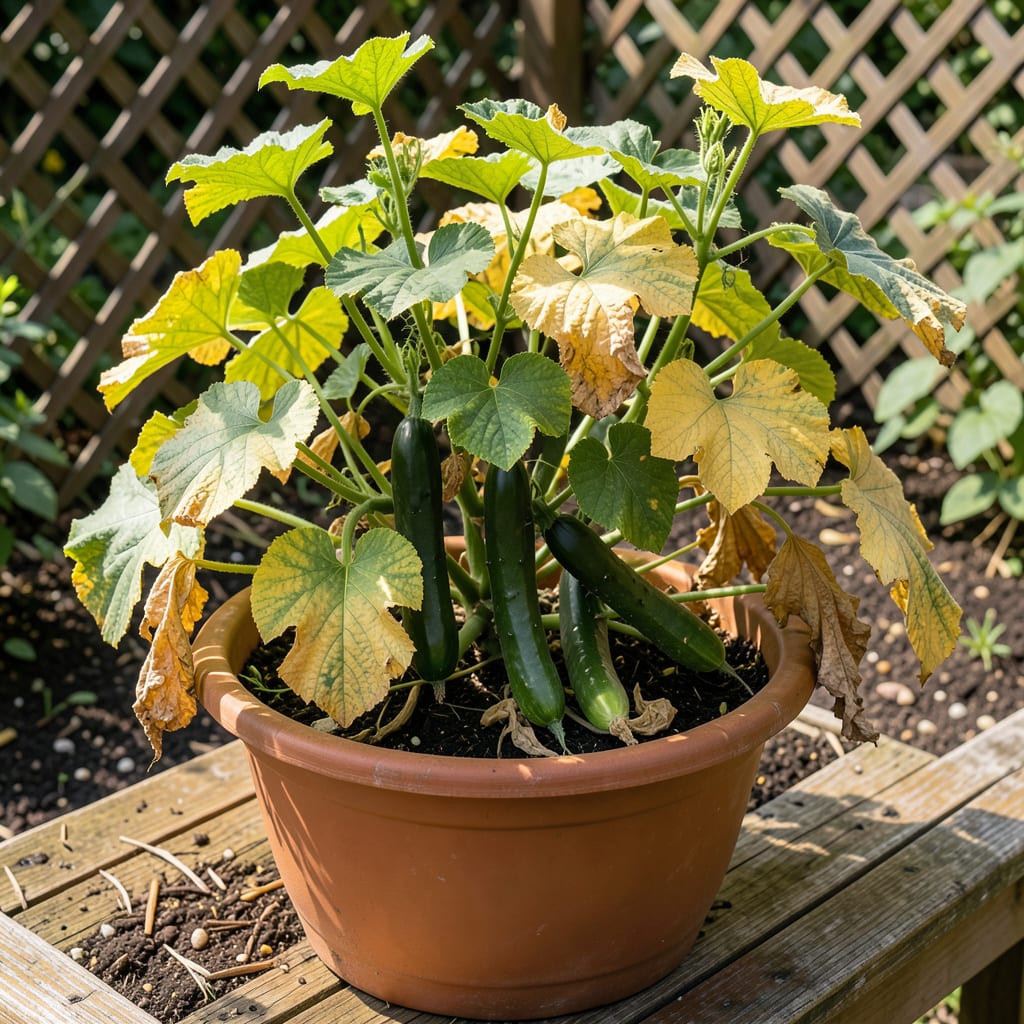
Yellow, crispy cucumber leaves are your plant’s way of waving a red flag. I’ve seen this exact problem wipe out entire vines overnight, but the good news is it’s usually fixable once you identify the root cause.
Most often, it’s a moisture issue—either too much water drowning the roots or too little leaving them parched. But don’t jump to conclusions yet. Pests like spider mites or nutrient deficiencies can create the same symptoms, so we need to play detective.
With a little investigation, you’ll spot the difference between underwatered leaves (dry and papery) and overwatered ones (yellow with mushy stems). The fix is simpler than you think and often shows improvement within 2-3 days.
This guide will help you diagnose the issue quickly and get your cucumbers back to their vibrant green best.
Several factors can turn cucumber leaves yellow and crispy, often tied to environmental stress or biological threats. Below are the most common culprits, explained with actionable insights.
Excess moisture drowns the roots, preventing oxygen uptake and leading to root rot. As roots suffocate, they fail to deliver nutrients, causing leaves to yellow (chlorosis) and crisp due to cellular damage. Cucumber plants need consistent but not soggy soil—aim for 1–2 inches of water per week, and ensure pots or beds have drainage holes.
Cucumbers are 90% water, so drought stress quickly manifests. When soil dries out, leaves can’t maintain turgor pressure (internal water balance), turning brittle and yellow. High temperatures (above 90°F/32°C) exacerbate this by increasing transpiration. Mulch with straw to retain moisture and water deeply at the base—not the leaves—to avoid scorching.
Sap-sucking pests like aphids, spider mites, or whiteflies pierce leaf cells, draining vital fluids. This damage disrupts photosynthesis, leading to yellowing (nutrient deficiency symptoms) and crispy edges. Check leaf undersides for webbing (mites) or sticky residue (aphids). Treat with neem oil or insecticidal soap at first signs.
Yellowing often signals a lack of nitrogen (uniform pale leaves), magnesium (yellow between veins), or potassium (crispy edges). Cucumbers are heavy feeders—amend soil with compost or use a balanced fertilizer (e.g., 10-10-10). For magnesium, Epsom salt (1 tbsp/gallon of water) can help, but test soil first to avoid overcorrecting.
If your cucumber leaves are turning yellow and crispy, don’t panic—there are clear fixes for the most common causes. Here’s how to diagnose and treat each issue, plus prevention tips to keep your plants thriving.
Fix: Let the soil dry slightly between waterings. Stick your finger an inch into the soil—if it’s damp, hold off on watering. If the soil is soggy, improve drainage by adding compost or perlite. Consider repotting in a container with drainage holes if needed.
Prevention: Water deeply but infrequently (about 1-2 inches per week), and always use well-draining soil. A moisture meter can help take the guesswork out of watering.
Fix: Give your cucumbers a deep soak at the base to rehydrate the roots. Mulch around the plants with straw or shredded leaves to retain moisture and cool the soil. If heat is the culprit, provide afternoon shade with a shade cloth or strategically placed taller plants.
Prevention: Water consistently, especially during hot spells, and aim for early morning watering to reduce evaporation. Drip irrigation is ideal for delivering water directly to the roots.
Fix: For spider mites or aphids, spray leaves with a strong stream of water to dislodge them. Follow up with neem oil or insecticidal soap, applying in the evening to avoid harming beneficial insects. For severe infestations, remove heavily affected leaves and dispose of them in the trash (not compost).
Prevention: Encourage natural predators like ladybugs by planting companion flowers (e.g., marigolds or nasturtiums). Inspect leaves regularly, especially the undersides, for early signs of pests.
Fix: Yellowing leaves often signal a lack of nitrogen or potassium. Use a balanced, water-soluble fertilizer (like 10-10-10) or a compost tea to replenish nutrients. If the soil is alkaline, add sulfur to help plants absorb iron.
Prevention: Test your soil annually and amend it with organic matter before planting. Side-dress cucumbers with compost mid-season for a nutrient boost.
With these targeted fixes, your cucumber plants should bounce back in no time! 💡
Water deeply 1-2 times per week, providing 1-2 inches total. Always check soil moisture first—it should be damp but not soggy.
Spider mites, aphids, and whiteflies are common culprits. Check leaf undersides for webbing or sticky residue. Treat immediately with neem oil or insecticidal soap.
Yes! Potassium deficiency often causes crispy leaf edges. Use a balanced fertilizer or amend soil with compost for quick improvement.
In extreme heat (above 90°F/32°C), afternoon shade helps prevent stress. Use shade cloth or plant taller crops nearby to protect leaves.
