
Beautiful Plants For Your Interior
Beautiful Plants For Your Interior
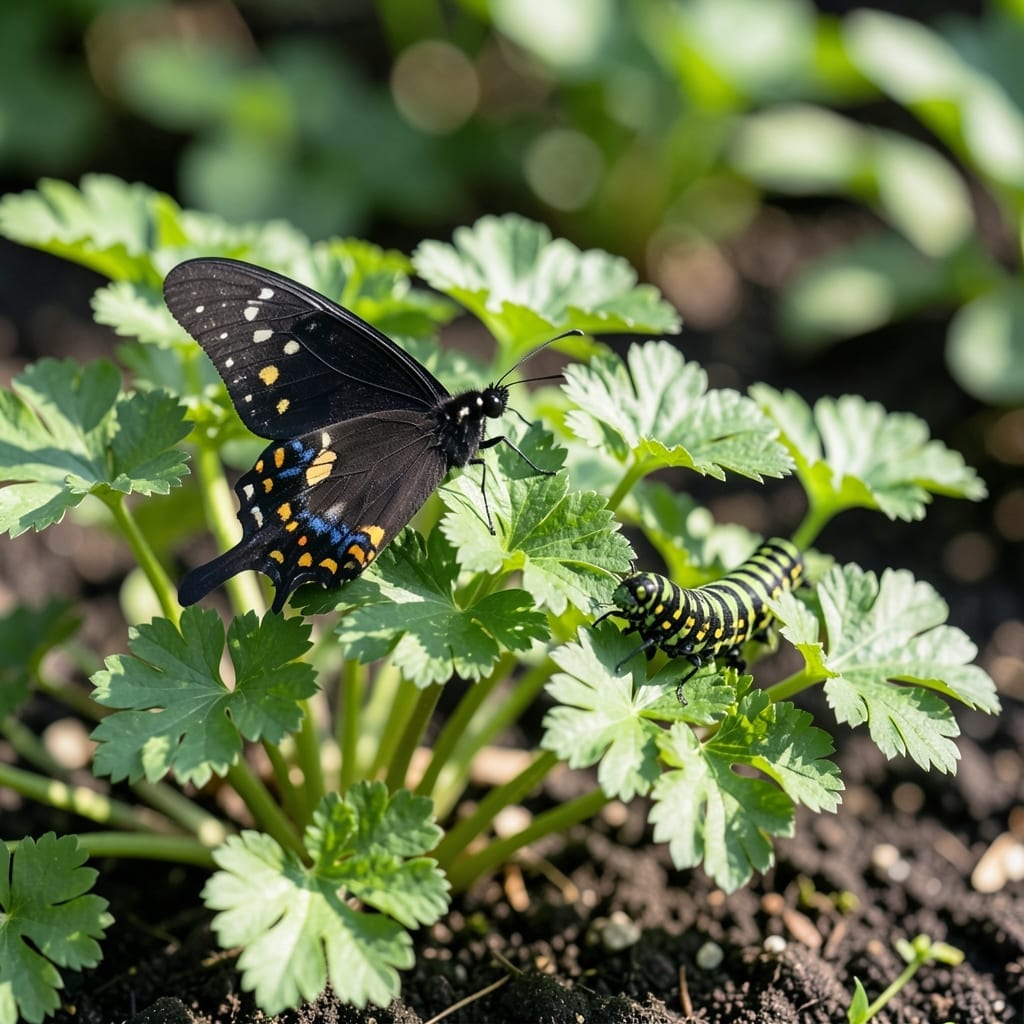
The black swallowtail butterfly in Florida features vibrant yellow-spotted wings with blue and orange accents on its hindwings. It thrives in gardens with host plants like parsley, dill, and Queen Anne’s lace.
I love watching these butterflies flutter through my garden—their 3-4 inch wingspan makes them easy to spot. They’re not just beautiful; they’re also important pollinators for many Florida-native plants. 💫
What’s fascinating is how their caterpillars mimic snake eyes to scare off predators, a clever survival trick in the wild. Planting their favorite herbs will have them visiting your yard in no time.
💡 In This Article
Adult black swallowtails have a 3-4.5 inch wingspan with distinctive markings. Their upper wings feature bold yellow bands, while the lower wings showcase striking blue and orange eyespots near the tail. These colors aren’t just decorative— they help deter predators by mimicking larger, more dangerous creatures. 🌟
The caterpillars go through remarkable transformations. Newly hatched ones resemble bird droppings, but mature caterpillars turn bright green with black bands and yellow dots. When threatened, they extend an orange forked gland called an osmeterium that emits a foul smell to repel attackers.
Florida’s warm climate allows these butterflies to produce 2-3 generations per year, with adults emerging from March to November. The southern subspecies often appears slightly larger with more pronounced blue markings compared to northern populations. This regional variation helps them adapt to Florida’s unique ecosystem. ✨
You’ll typically spot them in open, sunny areas near their host plants. Their flight pattern is distinctive— fast and erratic when disturbed, but slow and graceful when feeding. This behavior helps distinguish them from similar-looking species like the eastern tiger swallowtail.
Look closely at their antennae too. Black swallowtails have long, thin antennae with slightly swollen tips, unlike moths which have feathery or straight antennae. This small detail can be the key to proper identification in your garden. 💫
Look for the distinctive yellow bands on upper wings and blue-orange eyespots near the tail. Their 3-4.5 inch wingspan and long, thin antennae with swollen tips are key identifiers. The eastern tiger swallowtail lacks these specific markings.
Focus on host plants like dill, parsley, and fennel for caterpillars. Add nectar sources such as lantana, pentas, and butterfly bush for adults. Cluster plants in sunny spots for best results.
They’re active from March to November, with 2-3 generations per year. Early morning is ideal for spotting them feeding on nectar. Florida’s warm climate supports their long flight season.
They may eat leaves of host plants like dill or parsley, but the damage is minimal. Avoid pesticides, as they’re crucial for the butterfly lifecycle. The caterpillars often mimic snake eyes to deter predators naturally.