
Beautiful Plants For Your Interior
Beautiful Plants For Your Interior
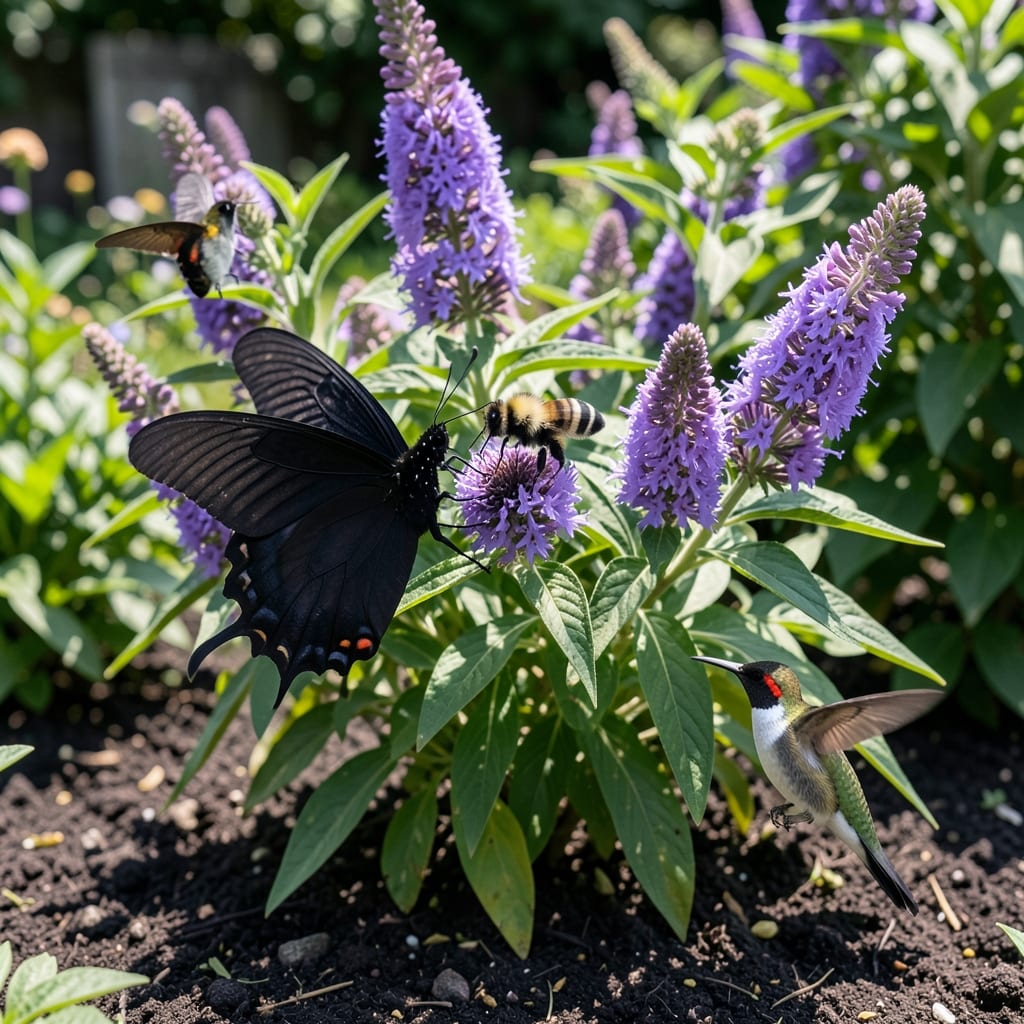
True black butterflies are uncommon because most dark-winged species appear deep brown or purple under light. Only a few, like the Black Swallowtail, have genuine black coloring in certain regions.
What most people don’t realize is that butterfly wing color comes from microscopic scales that refract light in unique ways. 🔥 These tiny structures often create iridescent effects, making pure black appear more like dark brown or deep purple. I’ve noticed that even species that look black at first glance often reveal hidden color patterns when light hits them at different angles.
💡 In This Article
Butterfly wing color comes from microscopic scales that refract light rather than true pigments. These scales contain photonic crystals that bend and scatter light waves, creating structural color.
Most dark-winged species appear black because their scales absorb nearly all visible light, but subtle variations in scale structure often produce deep brown or purple hues under certain lighting conditions. 🔥
The Black Swallowtail (Papilio polyxenes) achieves near-true black through dense melanin in its wing scales combined with light-absorbing nanostructures. However, even this species shows blue iridescence along the edges when light hits at specific angles.
In contrast, species like the Eastern Black Swallowtail have wings that appear more charcoal than pure black due to their scale arrangement.
Research shows that only about 5% of butterfly species exhibit what we’d consider true black coloring. The rest rely on combinations of dark brown, deep purple, or blue-black shades. This rarity stems from the energy cost of producing dense melanin combined with the structural complexity needed to absorb all light wavelengths.
Nature tends to favor more efficient color production methods. ✨
Lighting conditions dramatically affect our perception. In direct sunlight, many “black” butterflies reveal hidden patterns. The Pipevine Swallowtail, for example, appears black at first glance but shows stunning iridescent blue and green under ultraviolet light. This adaptive coloration helps with thermoregulation and predator confusion, explaining why pure black is evolutionarily less common. 💫
Genetic factors also play a role. The genes responsible for melanin production in butterfly wings often have trade-offs with other survival traits. In most cases, natural selection favors coloration that provides camouflage or signaling benefits over the energy-intensive production of true black pigments. This biological balancing act contributes to the rarity we observe in nature.
⚡
True black comes from dense melanin in wing scales combined with light-absorbing nanostructures. Most dark-winged species actually show deep brown or purple hues under different lighting.
The Black Swallowtail and Pipevine Swallowtail are the most frequently spotted. Look for yellow spots or iridescent blue edges to confirm their identity.
Producing true black requires significant energy for melanin production. Nature favors more efficient coloration that aids camouflage or signaling, making pure black evolutionarily rare.
Direct sunlight often reveals hidden patterns like blue or green iridescence. Many species appear black in shadow but show other colors in bright light.
Examine it under various lighting conditions. True black remains consistent, while dark brown or purple will show color shifts. Use a field guide to compare markings.