
Beautiful Plants For Your Interior
Beautiful Plants For Your Interior
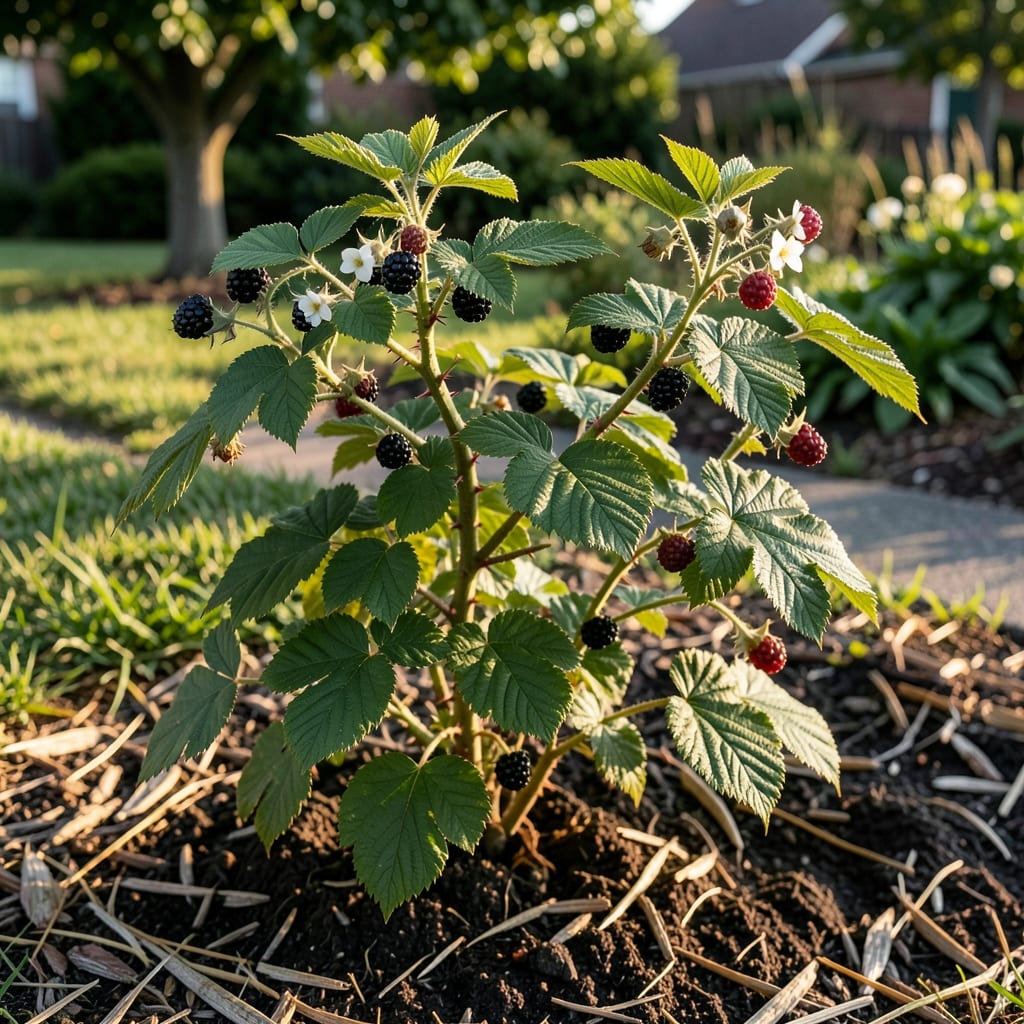
Black raspberry color results from high anthocyanin pigments, giving the fruit its deep purple-black hue. This rich color signals peak ripeness and potent antioxidant levels in the berries.
I’ve noticed that anthocyanins intensify with sunlight exposure, which is why berries grown in full sun often develop the deepest hues. 🌟 This natural pigmentation isn’t just beautiful—it also boosts the fruit’s health benefits, making black raspberries a powerhouse for immune support. The darker the color, the higher the concentration of these protective compounds.
💡 In This Article
The deep purple-black color in black raspberries comes from anthocyanins, specifically cyanidin-3-glucoside and cyanidin-3-sambubioside. These pigments accumulate in the fruit’s skin as it ripens, triggered by sunlight exposure and sugar buildup. The more intense the light, the more anthocyanins the berries produce to protect their cells from UV damage. 🌟
During ripening, the berry’s pH drops, becoming more acidic. This shift enhances the stability of anthocyanins, allowing them to display their richest hues. Black raspberries typically reach peak color at a pH of about 3.2-3.5, which is slightly more acidic than red raspberries. This acidity also contributes to their tart, complex flavor profile.
Temperature plays a role too. Cooler nights during the growing season slow down respiration, giving anthocyanins more time to develop. In regions with warm days (75-85°F) and cool nights (50-60°F), black raspberries often achieve their deepest, most vibrant color. This temperature fluctuation also enhances the berry’s sugar content. ⚡
What most people don’t realize is that the color isn’t just superficial. Anthocyanins are concentrated in the outer layers, but they also diffuse inward as the berry matures. This is why fully ripe black raspberries maintain their dark hue even when juiced or pureed.
The pigments are stable enough to withstand processing, unlike some other fruit colors.
The color development process begins about 10-14 days before harvest. During this period, the berries transition from green to red, then to deep purple, and finally to their characteristic black appearance. This gradual change allows growers to monitor ripeness visually. The final dark color signals that the berries have reached their maximum antioxidant capacity.
Anthocyanins, particularly cyanidin-3-glucoside, create the deep purple-black color. These pigments develop as the fruit ripens, triggered by sunlight and sugar buildup. The more intense the light, the richer the hue.
Yes! The transition from green to red to deep black signals peak ripeness. Fully dark berries have the highest antioxidant levels and sweetest flavor. Harvest when they easily detach from the plant.
Full sun (6-8 hours daily) and well-draining soil with pH 5.5-6.5 produce the deepest color. Cooler nights (50-60°F) also enhance pigment development.
Insufficient sunlight or premature picking often causes this. Berries need 10-14 days to transition fully to black. Shade or over-fertilization with nitrogen can also dull the color.