
Beautiful Plants For Your Interior
Beautiful Plants For Your Interior
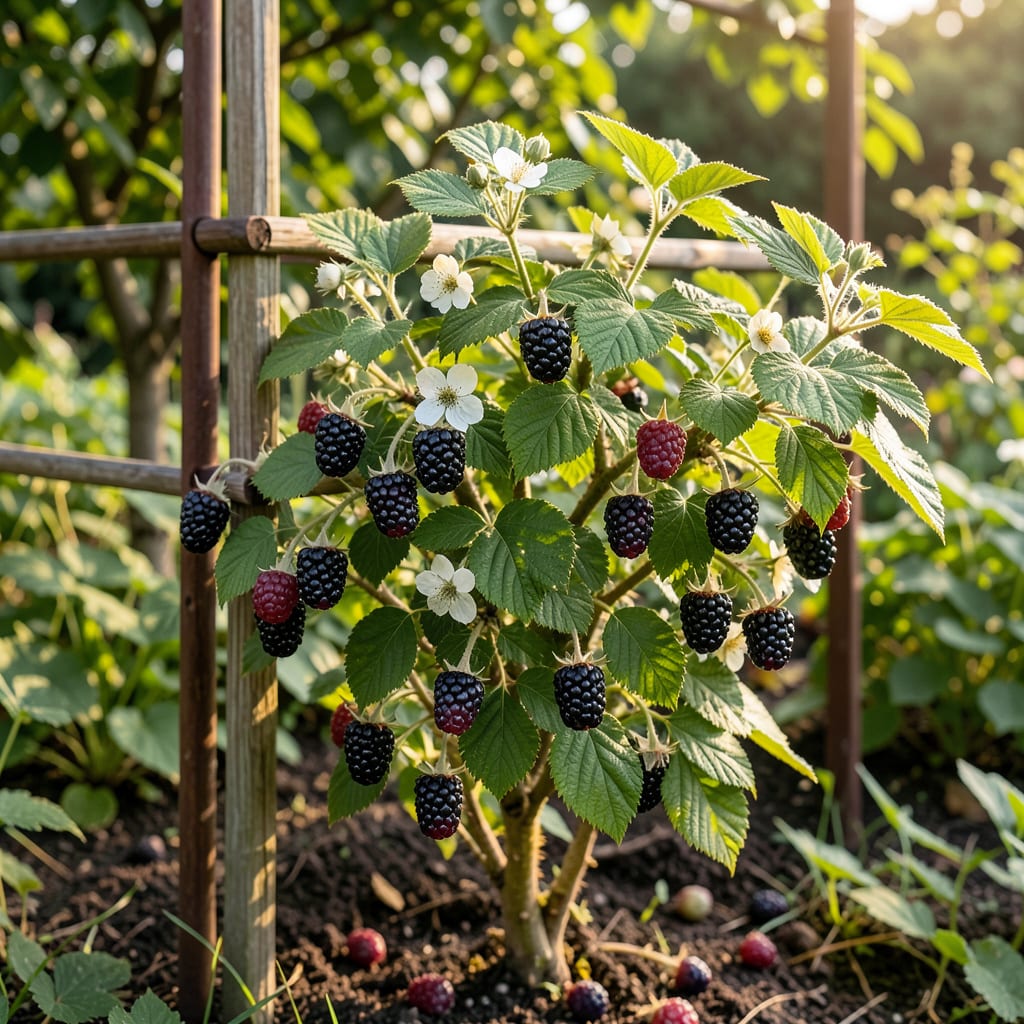
That first taste of wild black raspberries hooked me forever. These hardy bushes thrive with minimal fuss, rewarding you with deep, jammy fruit that store-bought berries can’t touch.
They’re drought-tolerant once established and handle poor soil better than most cultivated varieties. Plant in full sun, give them room to spread, and you’ll get years of harvests with just basic pruning.
📚 In This Guide
Here’s the method I use to establish healthy canes that produce abundant fruit year after year.
Choose a location with full sun to partial shade and well-draining soil. Wild black raspberries tolerate a range of conditions but thrive in loamy soil with a pH of 5.5 to 6.5. I test the soil first—amending with compost if it’s too heavy or sandy.
Clear the area of weeds and grass, digging a hole twice as wide as the root ball but no deeper. This encourages roots to spread outward rather than circling. Space plants 3 to 4 feet apart to allow for airflow and future cane growth.
Place the raspberry bush in the hole, ensuring the crown sits slightly above soil level. Backfill with native soil, gently pressing to remove air pockets. Water thoroughly to settle the soil around the roots.
I always add a 2-inch layer of mulch (straw or wood chips) around the base to retain moisture and suppress weeds. Keep mulch a few inches away from the stem to prevent rot. New canes should emerge within 4 to 6 weeks if conditions are right.
Real talk: if the soil stays soggy after planting, the roots will suffocate. A well-draining site is non-negotiable.
Wild black raspberries grow in arching canes that need support. I install a trellis or wire system 4 to 5 feet high to train canes upward. Tie new growth loosely to the structure with twine, allowing room for expansion.
Prune in late winter, removing dead or weak canes at ground level. Thin remaining canes to 4 to 6 per plant to focus energy on fruit production. This is the moment that matters: proper pruning prevents overcrowding and disease.
Water deeply 1 to 2 times per week, especially during fruit development. The goal is consistently moist soil—never waterlogged. A drip irrigation system works best to keep foliage dry and prevent fungal issues.
Fertilize in early spring with a balanced 10-10-10 formula, applying 1/2 pound per plant. Avoid high-nitrogen fertilizers late in the season, as they promote leafy growth at the expense of fruit. Yellowing leaves often signal a nutrient deficiency or overwatering.
Here’s the thing—wild black raspberries are hardy, but they reward attention to detail with bigger, sweeter harvests.
Fruit ripens over 2 to 3 weeks in early to mid-summer. Pick berries when they’re deep black, plump, and pull away from the core easily. Harvest every 2 to 3 days to catch them at peak flavor.
Use a gentle touch—raspberries bruise easily. I harvest in the morning when temperatures are cool to preserve freshness. Expect 1 to 2 quarts per plant in the second year, increasing as the bush matures.
Small details make the difference between struggling plants and thriving harvests.
Site Selection Wisdom: The pH of 5.5 to 6.5 mentioned in Step 1 isn’t just a suggestion—it’s critical for nutrient uptake. Test your soil before planting; I’ve seen bushes languish in alkaline soil until amended with sulfur. Full sun to partial shade works, but more sun means more fruit, so prioritize the sunniest spot you can.
Planting Depth Secret: In Step 2, that instruction to keep the crown slightly above soil level prevents rot. I learned this the hard way after losing three plants to crown rot from planting too deep. The 2-inch mulch layer is equally important—it retains moisture without smothering the stem when kept a few inches away.
Support System Insight: The 4 to 5 feet high trellis in Step 3 isn’t optional for wild black raspberries. Their arching canes can reach 6 feet, and without support, they’ll sprawl and break under fruit weight. Use soft twine that won’t cut into the canes as they thicken.
Pruning Precision: Step 3’s instruction to thin to 4 to 6 canes per plant is your harvest insurance. More canes mean smaller berries and higher disease risk. Late winter pruning—before new growth starts—gives you the cleanest cuts and best regrowth.
Look for thorny canes, compound leaves with 3-5 leaflets, and clusters of small white flowers in spring. The berries turn deep black when ripe (unlike red raspberries) and have a hollow core when picked.
Harvest in early to mid-summer (June–July in most regions) when berries are deep purple-black, plump, and easily detach from the receptacle. Pick in the morning for the sweetest flavor!
Yes! They’re edible and delicious fresh, but always ensure they’re fully ripe (black, not red or shiny). Avoid bushes near roadsides (pollution risk) or those sprayed with pesticides.
Common causes: insufficient sunlight (needs 6+ hours daily), poor pollination (plant near other raspberries), or over-fertilizing (use balanced compost). Prune old canes yearly to encourage new growth.
Yes, but choose a large pot (5+ gallons) with drainage. Use well-draining soil, provide a trellis for support, and water consistently.
