
Beautiful Plants For Your Interior
Beautiful Plants For Your Interior
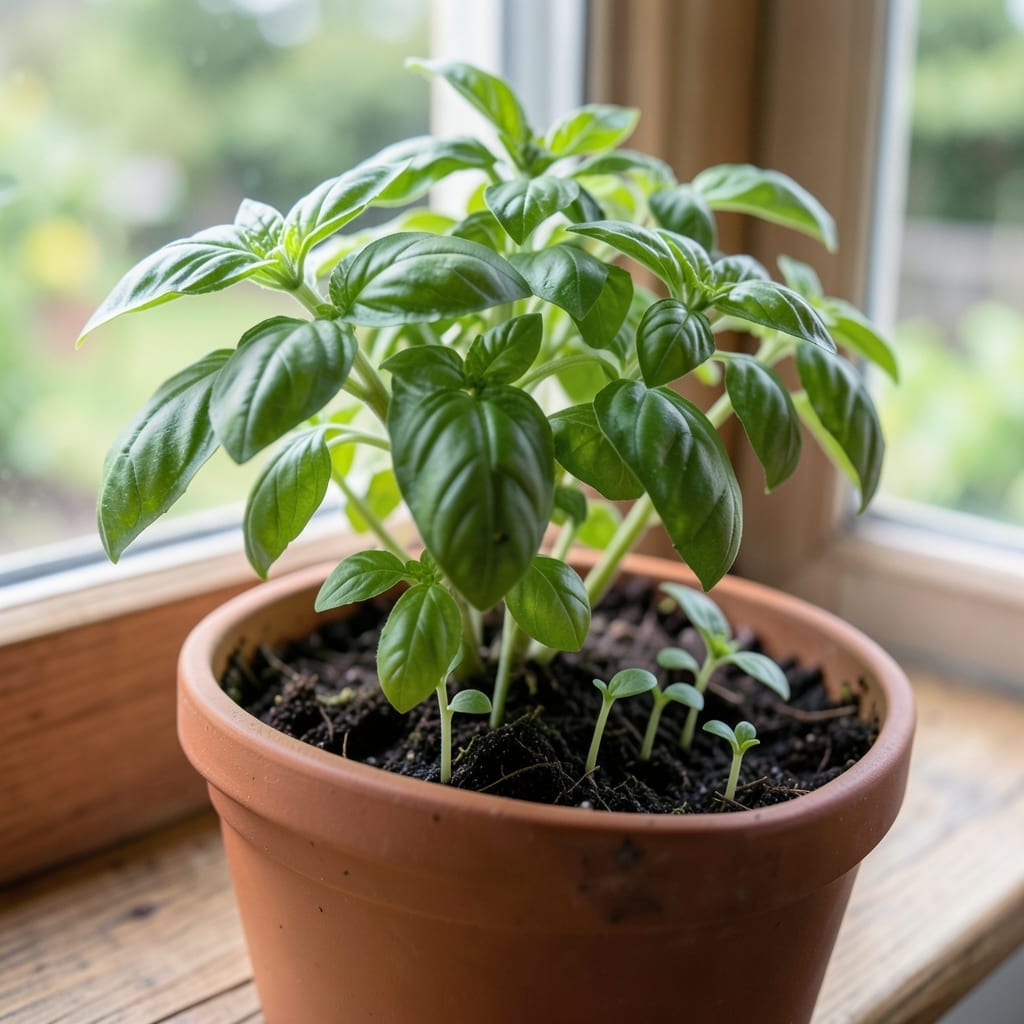
That first whiff of fresh basil hits different when it’s from your own windowsill. I’ve killed more basil plants than I’d like to admit before figuring out the foolproof indoor setup.
It’s not about fancy equipment—just matching what basil naturally wants. A sunny spot, the right soil mix, and a watering routine that doesn’t drown the roots. Most people overcomplicate this.
Within 4 weeks, you’ll have dark green leaves ready for harvest. The plants stay productive for 6+ months with proper care, and the aroma fills your kitchen daily.
Works in any home with a bright window. Here’s how to make it happen.
Growing basil indoors can be tricky, but understanding the root causes helps you fix them. Here’s why your plants might be wilting, yellowing, or growing slowly:
Basil thrives in warm, humid conditions (70–85°F). Indoor environments often have dry air from heating/AC or cold drafts near windows, stressing the plant. Low humidity causes leaf edges to brown, while sudden temperature drops can shock the roots.
As a full-sun herb, basil needs 6–8 hours of bright light daily. Weak indoor lighting (or inconsistent exposure) leads to leggy, pale growth as the plant stretches toward light sources. South-facing windows are ideal; north-facing or shaded spots often fail to provide enough energy for photosynthesis.
Basil hates soggy roots. Overwatering or pots without drainage holes cause root rot, where fungal pathogens attack oxygen-starved roots. Yellowing leaves and a foul soil smell are telltale signs. Conversely, underwatering makes leaves crispy and brittle.
Potting mix can deplete nutrients over time. Basil requires nitrogen for leafy growth and magnesium for vibrant green leaves. A lack of these results in stunted growth or yellowing between leaf veins (interveinal chlorosis). Poor-quality soil or skipped fertilizing often triggers these issues.
Indoor basil attracts aphids, spider mites, and whiteflies, which sap plant juices and spread disease. These pests thrive in dry, still air—common in homes. Look for sticky residue (honeydew) or webbing under leaves as early warnings.
Even the most attentive growers run into trouble, but these fixes will get your basil back on track.
Overwatering is the most common culprit. Let the top inch of soil dry out between waterings, and always use pots with drainage holes. If the soil feels soggy, hold off on watering for a few days. Prevention tip: Stick your finger in the soil—if it’s damp an inch down, wait. Basil prefers slightly dry conditions over wet feet.
If your basil looks tall and spindly, it’s stretching for light. Move it to a south-facing window or supplement with a grow light for 12–16 hours a day. Rotate the pot weekly for even growth. Prevention tip: Start with a bright spot from day one to avoid weak, floppy stems.
Spray leaves with a mix of water and neem oil or insecticidal soap, focusing on the undersides where pests hide. Wipe down leaves with a damp cloth to remove visible bugs. Prevention tip: Inspect new plants before bringing them indoors, and keep air circulation steady with a small fan.
Fungal issues often arise from poor ventilation or overly moist conditions. Trim affected leaves, increase airflow, and avoid misting the foliage. Prevention tip: Space plants apart and water at the base to keep leaves dry.
Basil thrives in temperatures between 70–80°F (21–27°C). If your home is cooler, use a heat mat. Feed with a balanced liquid fertilizer every 4–6 weeks, but avoid over-fertilizing, which can burn roots. Prevention tip: Start with nutrient-rich soil to give your basil a strong foundation.
With these tweaks, your basil will bounce back and flourish! 🌿
Water when the top 1 inch of soil feels dry. Usually every 3-4 days, but adjust based on your home’s humidity. Overwatering causes root rot, so ensure pots have drainage holes.
Yes, use a grow light for 12-16 hours daily. LED or fluorescent bulbs work well. Keep the light 6-12 inches above plants and adjust height as they grow.
Yellow leaves often mean overwatering or poor drainage. Check soil moisture and ensure your pot has holes. If soil is dry, underwatering or nutrient deficiency may be the cause.
Begin harvesting when plants are 6 inches tall, usually after 4-6 weeks. Snip leaves from the top to encourage bushier growth. Never remove more than 1/3 at once.