
Beautiful Plants For Your Interior
Beautiful Plants For Your Interior
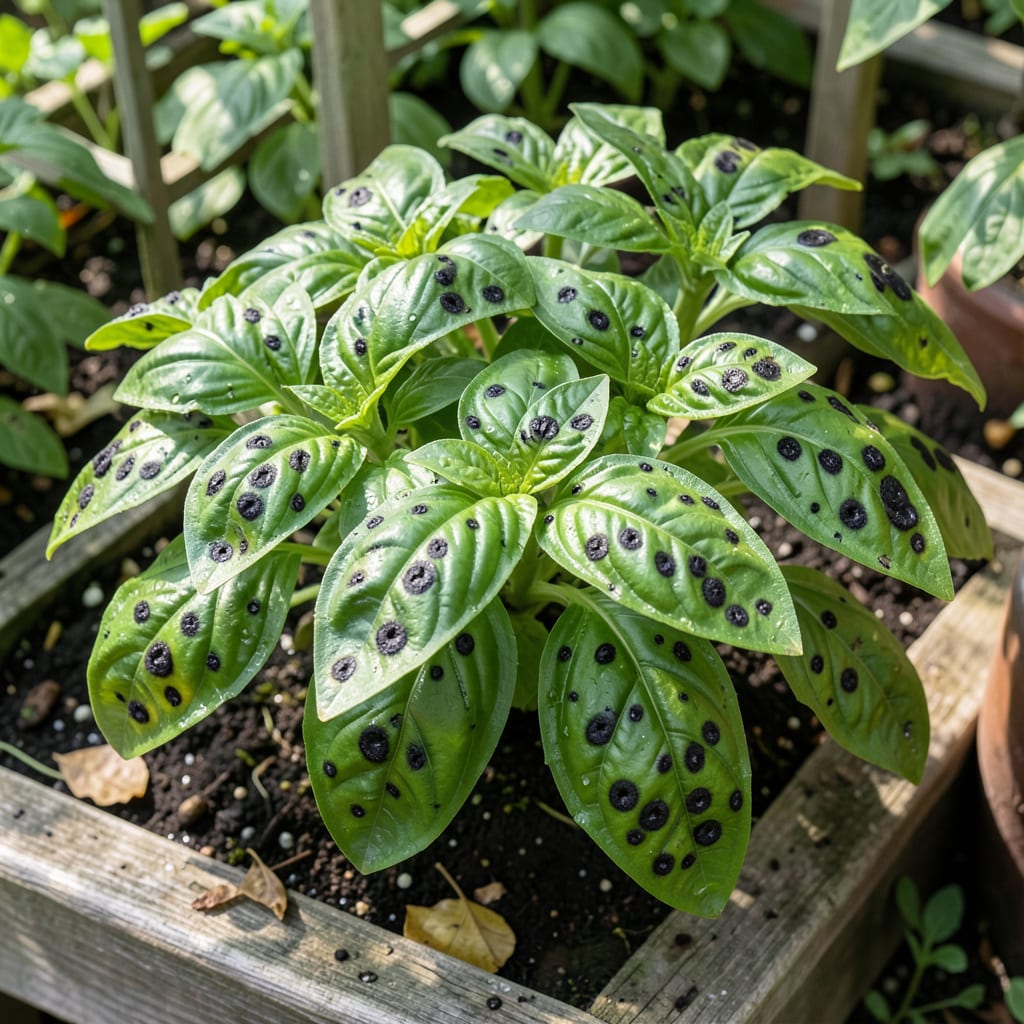
Those black spots on your basil aren’t just ugly—they’re a warning. 🌱 I’ve lost entire plants to this overnight, so I know the panic when those dark splotches appear on leaves you were counting on for pesto.
Here’s the thing—it’s usually fungal, often from too much moisture or poor air flow. The spores spread fast in warm, wet conditions, turning your lush plants into spotted messes in 48 hours. But don’t toss them yet.
With a few simple fixes—better spacing, morning watering, and a homemade spray—you can stop the spread and even save the plant. I’ve rescued basil at the brink with just baking soda and water.
Works for pot-grown or garden basil, and prevents future outbreaks too.
Black spots on basil leaves are usually a sign of underlying stress or infection. Here are the most common causes, explained simply but with the science behind them.
Fungi like Pseudoperonospora belbahrii (downy mildew) or Colletotrichum spp. thrive in wet, humid conditions. They produce dark, irregular spots as they break down plant cells. Spores spread via water splash or wind, especially when foliage stays wet for 6+ hours.
Excess moisture at the roots or on leaves creates a breeding ground for pathogens. Basil prefers moist but not soggy soil—waterlogged roots reduce oxygen uptake, weakening the plant and inviting fungal and bacterial invaders.
These bacteria enter through wounds or stomata (leaf pores), causing water-soaked lesions that turn black. They spread via contaminated tools, insects, or splashing water, and thrive in temperatures between 75–85°F (24–29°C).
Intense sunlight can scorch leaves, leaving dark, crispy spots. Meanwhile, calcium or potassium deficiency weakens cell walls, making basil more susceptible to disease. Poor air circulation also traps moisture, accelerating fungal growth.
Don’t let those unsightly black spots ruin your basil harvest. Here’s how to tackle the most common causes with simple, organic fixes—and keep your plants thriving. 🌿
For fungal issues like leaf spot or downy mildew, prune affected leaves immediately to stop the spread. Thin out dense foliage to boost airflow, and avoid overhead watering to keep leaves dry. Apply a copper fungicide or a DIY mix of 1 tsp baking soda + 1 quart water + a drop of dish soap every 7–10 days until spots disappear. Prevention tip: Space plants 12–18 inches apart and water at the base in the morning. 💡
If pests are the culprits, spray leaves with a strong jet of water to dislodge them. Follow up with neem oil or insecticidal soap, applying in the evening to avoid leaf burn. For stubborn infestations, introduce ladybugs or lacewings as natural predators. Prevention tip: Inspect plants weekly and companion-plant with marigolds to deter pests. ✨
Yellowing leaves with black spots often signal root rot. Let the soil dry out between waterings, and ensure pots have drainage holes. Repot waterlogged plants in fresh, well-draining sandy or loamy soil. Prevention tip: Stick your finger 1 inch into the soil—if it’s damp, hold off on watering. 🌡️
Dark spots with yellow halos may indicate a magnesium or potassium deficiency. Amend soil with compost or a balanced organic fertilizer (like 10-10-10). For a quick fix, dissolve 1 tbsp Epsom salt in a gallon of water and spray on leaves. Prevention tip: Test soil annually and rotate crops to avoid depletion. 🎯
Yes, soggy soil leads to root rot and fungal growth. Basil prefers moist but well-drained conditions—water only when the top inch of soil feels dry.
Prune affected foliage immediately with clean shears to prevent spreading. Dispose of leaves in the trash, not compost, to avoid reinfection.
A 1 tsp baking soda + 1 quart water mix with a drop of dish soap works as a gentle fungicide. Apply weekly until spots disappear.
Fungal spores spread easily via wind or water. Isolate affected basil and improve airflow to protect neighboring plants.
