
Beautiful Plants For Your Interior
Beautiful Plants For Your Interior
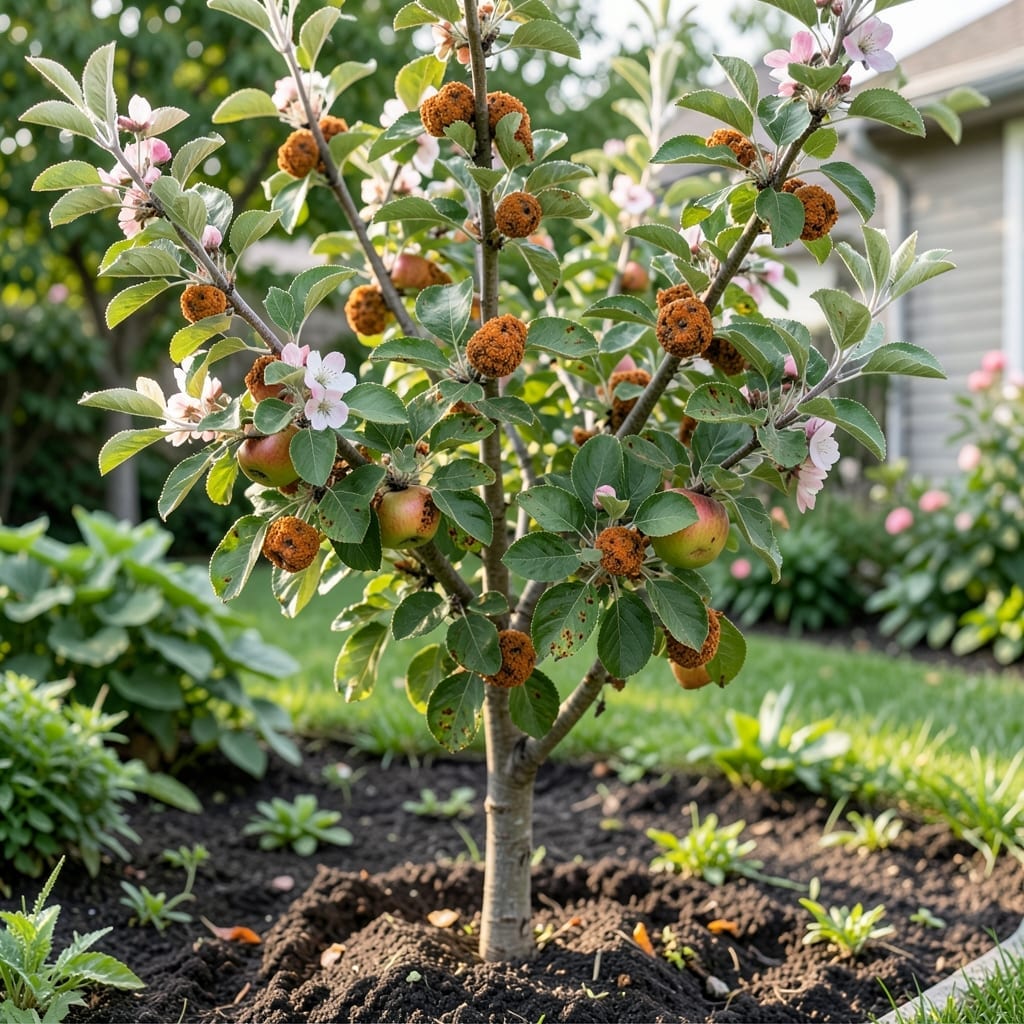
Orange spores on your apple leaves mean trouble. 🌱 I first spotted cedar rust three seasons ago—bright spots on leaves, then twisted, stunted growth that ruined my harvest. It’s sneaky, spreading from nearby cedars when conditions are just right.
The good news? It’s treatable without chemicals. A simple copper spray in early spring stops spores before they take hold. Remove infected branches immediately, and keep the area clean to break the cycle.
Your trees can bounce back fast. With the right approach, new growth stays vibrant and healthy, and next year’s fruit won’t suffer. Prevention is easier than you’d think—just a little vigilance goes a long way.
Works for backyard orchards, old trees, or even a single apple tree in your yard. Here’s how to keep them thriving.
Apple tree cedar rust (caused by the fungus Gymnosporangium juniperi-virginianae) is a complex disease that requires two host plants to complete its life cycle: cedar trees (or other juniper species) and apple trees (or related Malus species). Here’s why it happens:
The fungus alternates between cedar and apple hosts. In spring, spores from cedar galls (formed on juniper branches) are released and carried by wind to apple trees. Warm, wet conditions (55–75°F with moisture) trigger spore germination on apple leaves, leading to infection. Without both hosts nearby, the disease cannot persist.
Prolonged leaf wetness (6+ hours) and high humidity create ideal conditions for spore germination. Spring rains or heavy dew provide the moisture needed for the fungus to infect apple foliage. Regions with frequent spring rainfall see higher incidence rates.
The fungus thrives in moderate temperatures. Spores germinate best at 60–70°F, while severe infections occur when temperatures remain in this range for extended periods. Cooler or hotter conditions slow its spread.
Some apple cultivars (e.g., Jonathan, Golden Delicious, Rome) are highly susceptible due to genetic vulnerability. The fungus exploits weak leaf cuticles or wounds, entering through natural openings or damage from insects/pruning.
The fungus overwinters as mycelium in cedar galls. These galls (brown, gelatinous growths) release spores in spring, restarting the cycle. If cedar trees are within 1–2 miles of apple orchards, the risk of infection skyrockets.
To break the cycle, remove nearby cedar hosts or apply fungicidal sprays during wet springs. Monitoring weather and host proximity is key to prevention.
Tackling apple tree cedar rust involves addressing its fungal nature directly. Here’s how to fix each issue and prevent future flare-ups:
Cedar rust galls are the fungal source. Prune and destroy all galls on nearby cedar or juniper hosts before spring rains. Bag and trash them—do not compost. This cuts the fungus off at its root.
Apply fungicidal sprays (like sulfur or copper) to apple trees just as buds swell in early spring. Repeat every 10–14 days until petals fall. For organic gardens, neem oil or baking soda solutions (1 tbsp per gallon of water + a drop of soap) can help suppress spores. Always spray in dry, calm weather for best results.
Fungus thrives in wet, crowded conditions. Thin out branches to boost airflow and sunlight penetration. Water apple trees at the base (not overhead) to keep foliage dry. A drip irrigation system works wonders for prevention.
Consistency is key—combine these steps for the best defense against recurrence.
Keep them at least 1,000 feet apart to break the fungal cycle. The spores travel easily in wind, so distance is key to prevention.
Look for bright orange-yellow spots on leaves, often with a reddish border. On cedars, you’ll see brown, gelatinous galls on branches.
Yes! Spray neem oil or a baking soda solution (1 tbsp per gallon of water + soap) every 10-14 days in spring. Always apply in dry, calm weather.
Prune and destroy all galls before spring rains to eliminate the spore source. Bag them—don’t compost!