
Beautiful Plants For Your Interior
Beautiful Plants For Your Interior
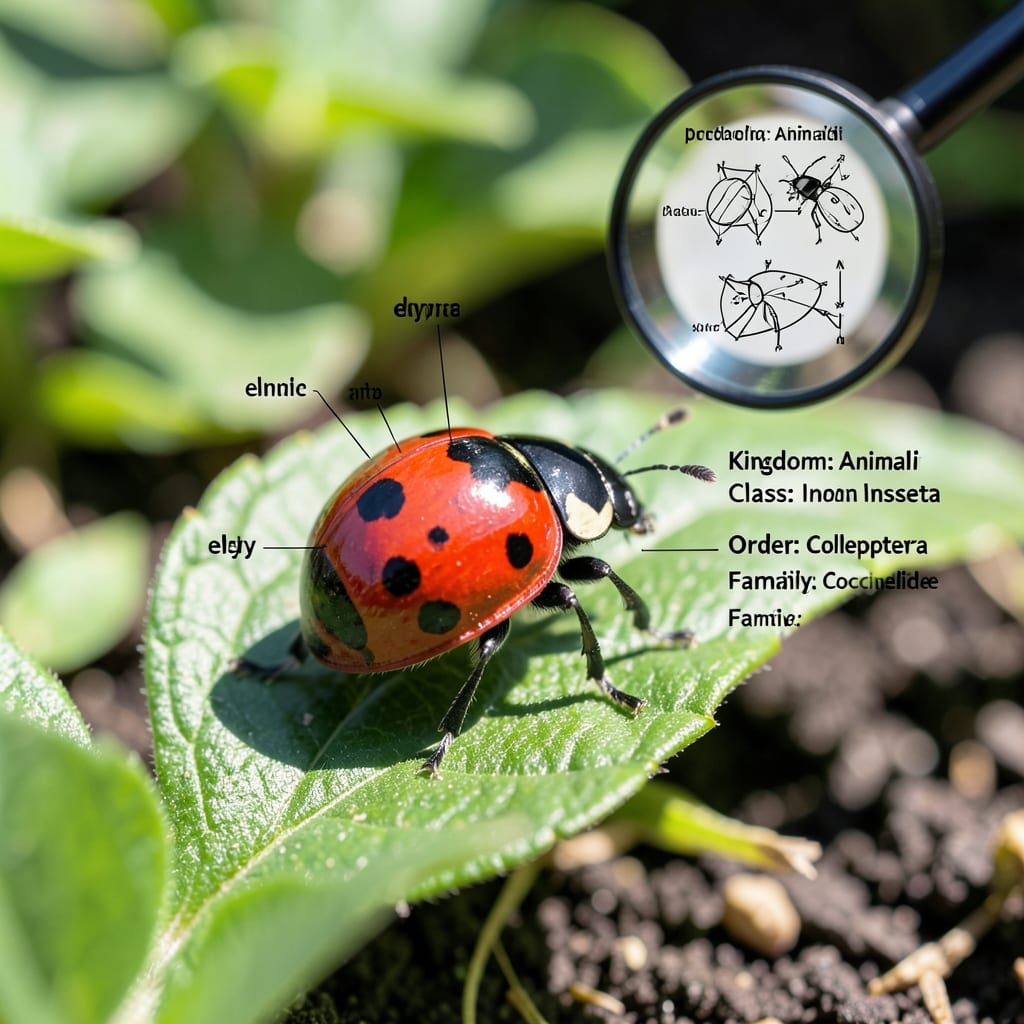
Ladybugs belong to the kingdom Animalia, phylum Arthropoda, class Insecta, order Coleoptera, family Coccinellidae, with most species in the genus Coccinella.
This classification places them among beetles, which I find fascinating because it highlights their hardened forewings—a defining trait of the Coleoptera order. Their bright colors and spotted patterns aren’t just pretty; they serve as warnings to predators. In my garden, I’ve noticed these tiny allies thrive in diverse climates, from temperate zones to tropical regions. ✨
💡 In This Article
Taxonomy organizes life into hierarchical groups based on shared traits. Ladybugs start at the broadest level, kingdom Animalia, grouping them with all animals. They share the phylum Arthropoda with insects, spiders, and crustaceans, characterized by exoskeletons and jointed legs. This phylum contains over 80% of all known animal species, highlighting its evolutionary success. 🔥
Within class Insecta, ladybugs join flies, bees, and butterflies. The defining features here include three body segments (head, thorax, abdomen) and six legs. The next level, order Coleoptera, narrows it to beetles—40% of all insect species—united by hardened forewings called elytra that protect delicate flying wings underneath. ✨
The family Coccinellidae distinguishes ladybugs from other beetles. Scientists identify this family by their dome-shaped bodies and distinctive color patterns. These traits aren’t just for show; the bright colors serve as aposematic signaling, warning predators of their foul taste. This evolutionary advantage has helped them thrive across diverse habitats. 💫
Most garden ladybugs belong to the genus Coccinella, which includes the iconic 7-spotted ladybug. This genus contains about 100 species worldwide, each adapted to specific environments. The classification doesn’t stop here—species are further divided based on minute differences in markings, size, and genetic makeup. ⚡
What makes this hierarchy fascinating is how each level reveals more about the organism’s relationships. For instance, sharing the Coleoptera order with fireflies shows their evolutionary connection, while the Coccinellidae family highlights their unique ecological role as predator insects that keep pest populations in check. 🌟
They belong to the order Coleoptera, defined by hardened forewings called elytra. These protect their delicate flying wings underneath, a signature trait of all beetles. This classification places them among 40% of all insect species.
Researchers examine spot patterns, body shape, and size. The 7-spotted ladybug has three spots per wing, while the Asian lady beetle is larger with more spots. Genetic analysis confirms subtle differences.
The vivid hues serve as aposematic signaling, warning predators of their bitter taste. This evolutionary adaptation helps them survive in diverse habitats worldwide. This trait is unique to the Coccinellidae family.
No, some imposters like the Mexican bean beetle mimic their appearance. True ladybugs have dome-shaped bodies and are beneficial predators of garden pests. Always check body shape and spot arrangement.