
Beautiful Plants For Your Interior
Beautiful Plants For Your Interior
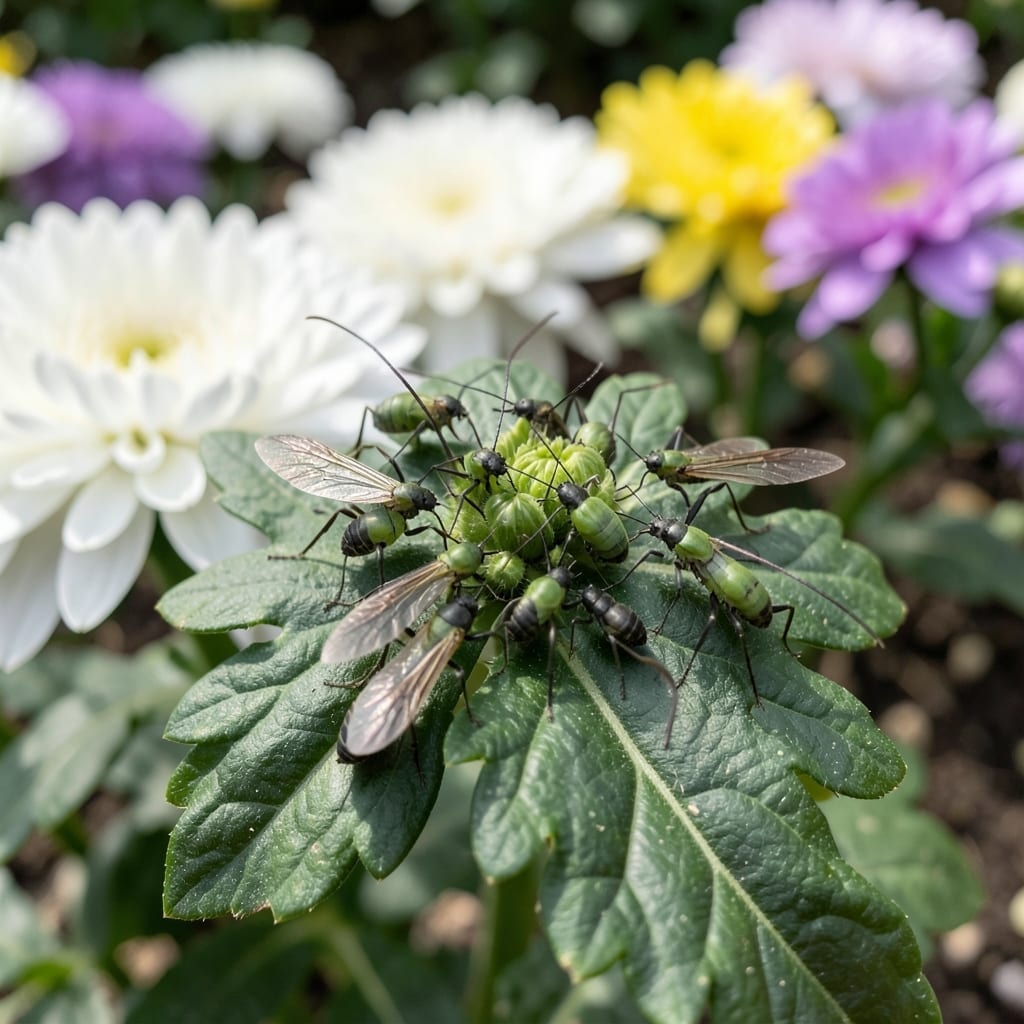
I noticed my mums covered in tiny green bugs last fall. Turns out, aphids love these plants as much as we do. They cluster on new growth and flower buds, sucking the life out of what should be your garden’s vibrant fall showstopper.
Here’s the thing—aphids multiply fast. One day you see a few, the next they’ve taken over. But with the right approach, you can stop them in their tracks before they ruin your blooms. I’ve tested several methods, and some work better than others.
You’ll restore your mums to their full glory within a week of treatment. The plants bounce back surprisingly fast once the pests are gone. No fancy equipment needed—just some basic supplies and a little persistence.
Works for potted mums too, not just garden plants. Let’s tackle this together.
Aphids flock to mums for several biological and environmental reasons. Understanding these triggers helps you prevent infestations before they start.
Excess nitrogen in soil promotes lush, soft growth—exactly the kind of tender new shoots aphids love. Mums heavily fed with high-nitrogen fertilizers produce succulent stems and leaves, which aphids pierce easily to feed on sap. Action: Switch to a balanced, slow-release fertilizer (e.g., 10-10-10) and avoid overfeeding, especially in early spring.
Both overwatering and drought stress weaken mums, making them more susceptible. Overwatered roots suffocate, reducing the plant’s ability to defend itself, while drought-stressed mums produce stressed tissues that emit volatile organic compounds (VOCs)—chemical signals that attract aphids. Action: Water at the base of the plant early in the day to allow foliage to dry, and maintain consistent moisture without waterlogging.
In gardens with limited biodiversity, aphid populations explode unchecked. Ladybugs, lacewings, and parasitic wasps—natural aphid predators—are often absent in monoculture landscapes or areas with heavy pesticide use. Action: Plant companion plants like marigolds, dill, or yarrow to attract beneficial insects, and avoid broad-spectrum pesticides that kill aphid enemies.
Aphids thrive in moderate temperatures (60–80°F) and high humidity. Mums grown in crowded, poorly ventilated spaces create a microclimate perfect for aphid reproduction. Action: Space mums 18–24 inches apart for airflow, and prune dense foliage to reduce humidity buildup.
Dealing with aphids on your mums doesn’t have to be complicated. Here are practical solutions tailored to each cause, plus tips to keep these pests from coming back.
If poor air circulation is inviting aphids, thin out dense foliage with sharp pruners. Space mums at least 18 inches apart so air can flow freely. This also helps sunlight reach all parts of the plant, making it less appealing to pests.
Overwatering creates a haven for aphids. Water mums at the base in the early morning so leaves dry quickly. Use drip irrigation or a soaker hose to avoid wetting the foliage. Stick your finger an inch into the soil—if it’s dry, it’s time to water.
💡 Pro Tip: A layer of mulch around the base retains moisture without promoting fungal growth or aphid infestations.
Stressed mums attract aphids. Fertilize lightly with a balanced, slow-release fertilizer to strengthen plants without encouraging excessive soft growth, which aphids love. Avoid high-nitrogen fertilizers that produce tender new shoots.
For visible aphids, blast them off with a strong stream of water from a hose. Follow up by spraying plants with insecticidal soap or neem oil, focusing on the undersides of leaves where aphids hide. Repeat every 5–7 days until they’re gone.
Inspect your mums weekly, focusing on new growth and leaf undersides. Early detection makes treatment much easier and prevents rapid infestation.
Yes! A strong water spray can dislodge aphids, and 1 tablespoon of dish soap in 1 quart of water makes an effective spray. Apply every 5-7 days until gone.
Recurring infestations often mean natural predators are absent. Plant companion flowers like marigolds to attract ladybugs and lacewings, which naturally control aphid populations.
Use insecticidal soap or neem oil first, as they’re gentle on plants. If needed, choose targeted pesticides labeled for mums and follow instructions carefully.