
Beautiful Plants For Your Interior
Beautiful Plants For Your Interior
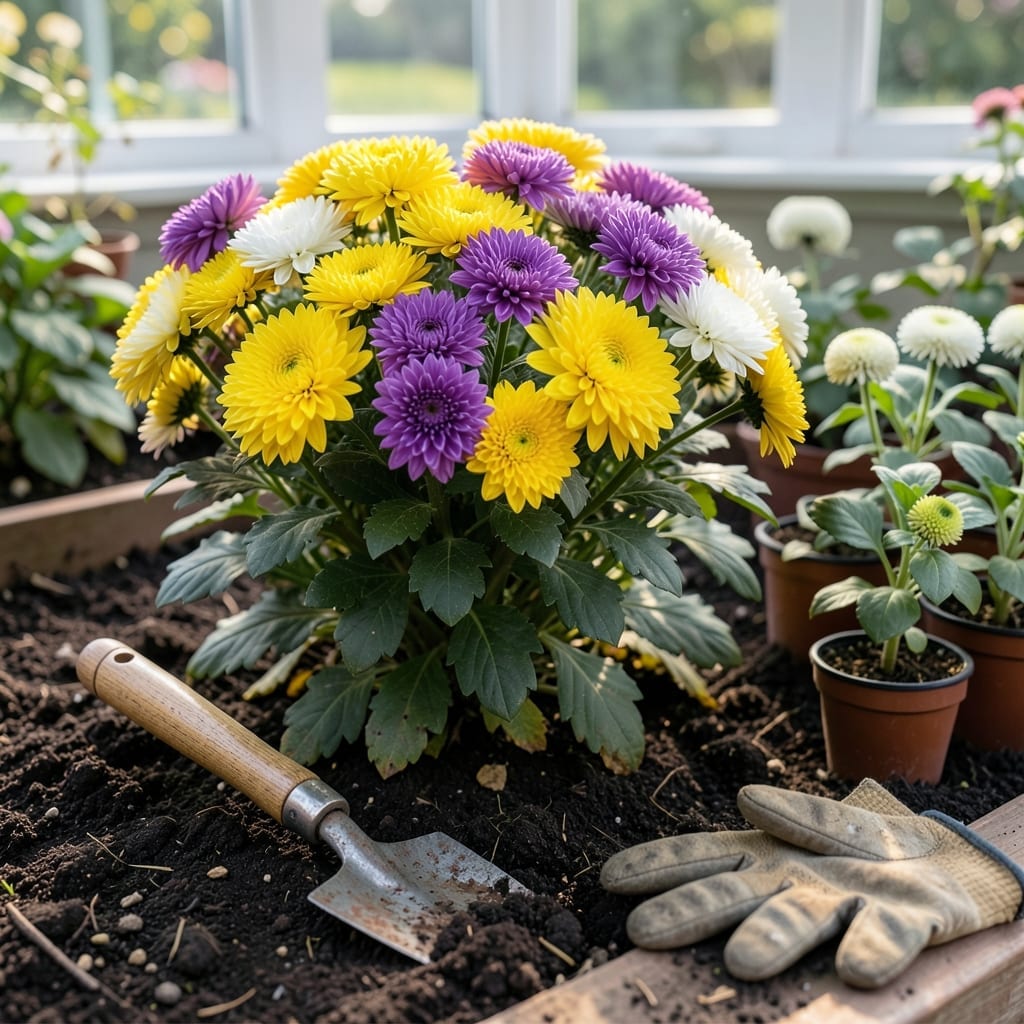
As summer fades, your garden doesn’t have to lose its color. Planting Chrysanthemums 🌼 in fall can transform your outdoor space with vibrant blooms just when you need them most.
But timing and technique are everything for long-term success. I’ve learned that getting these details right makes all the difference between thriving plants and a disappointing display.
Discover how to prepare your soil, choose the perfect spot, and care for your Chrysanthemums so they establish strong roots before winter hits. Let’s make your fall garden the envy of the neighborhood.

Fall is the perfect time to plant Chrysanthemums for a burst of color before winter arrives. I recommend planting 6-8 weeks before your first frost to give roots time to establish. This timing ensures your mums can handle the cold months ahead.
Choose a spot with full sun exposure—at least 6+ hours daily—and well-draining soil. Mums thrive in USDA zones 5-9, making them ideal for most gardens. Preparing the soil with compost improves their chances of survival.
Water your mums deeply immediately after planting, ensuring the soil settles around the roots. I’ve found that morning watering helps prevent fungal issues. Keep the soil moist but not soggy for the first few weeks.
Avoid fertilizing at planting time, as this can stress young plants. Instead, focus on strong root development with consistent moisture. Once established, mums are relatively drought-tolerant but perform best with regular care.
Mulching is critical for fall-planted mums. Apply a 2-3 inch layer of organic mulch like straw or shredded leaves. This insulates the roots and retains moisture, giving your plants a fighting chance against winter’s chill.
If you’re in a colder climate, consider potting your mums and moving them to a sheltered location during harsh freezes. This extra protection can make the difference between survival and loss, especially for less hardy varieties.
For the best results, choose hardy garden mums over florist varieties, as they’re bred to withstand outdoor conditions. Look for labels indicating perennial performance in your zone. This small step ensures your investment pays off year after year.
Finally, deadhead spent blooms to encourage more flowers and maintain a tidy appearance. With proper care, your fall-planted Chrysanthemums will reward you with vibrant color and healthy growth for seasons to come.
☀️Not all Chrysanthemums are created equal for fall planting. I’ve found that hardy garden mums outperform florist varieties in outdoor settings. Garden mums are bred to survive winter and return year after year in zones 5-9.
Florist mums, while beautiful, are often treated as annuals. They lack the cold tolerance needed for long-term survival. For autumn planting, focus on varieties labeled as perennial or hardy to ensure they thrive in your garden.
| Variety | Type | Hardiness | Best For |
|---|---|---|---|
| Garden Mums | Perennial | Zones 5-9 | Outdoor beds |
| Florist Mums | Annual | Non-hardy | Containers |
| Korean Mums | Perennial | Zones 4-9 | Cold climates |
For vibrant fall color, I recommend bronze, burgundy, or white varieties. These shades complement autumn foliage beautifully. ‘Sheffield Pink’ and ‘Clara Curtis’ are excellent hardy options with stunning blooms.
Consider the mature size when selecting varieties. Dwarf types stay compact at 1-2 feet, while standard mums reach 2-3 feet. This helps with spacing and garden design, ensuring your mums fit perfectly in your landscape.
Color coordination matters too. Pair yellow mums with purple asters for a striking contrast, or mix orange and red tones for a warm autumn palette. I love creating combinations that enhance my garden’s seasonal charm.