
Beautiful Plants For Your Interior
Beautiful Plants For Your Interior
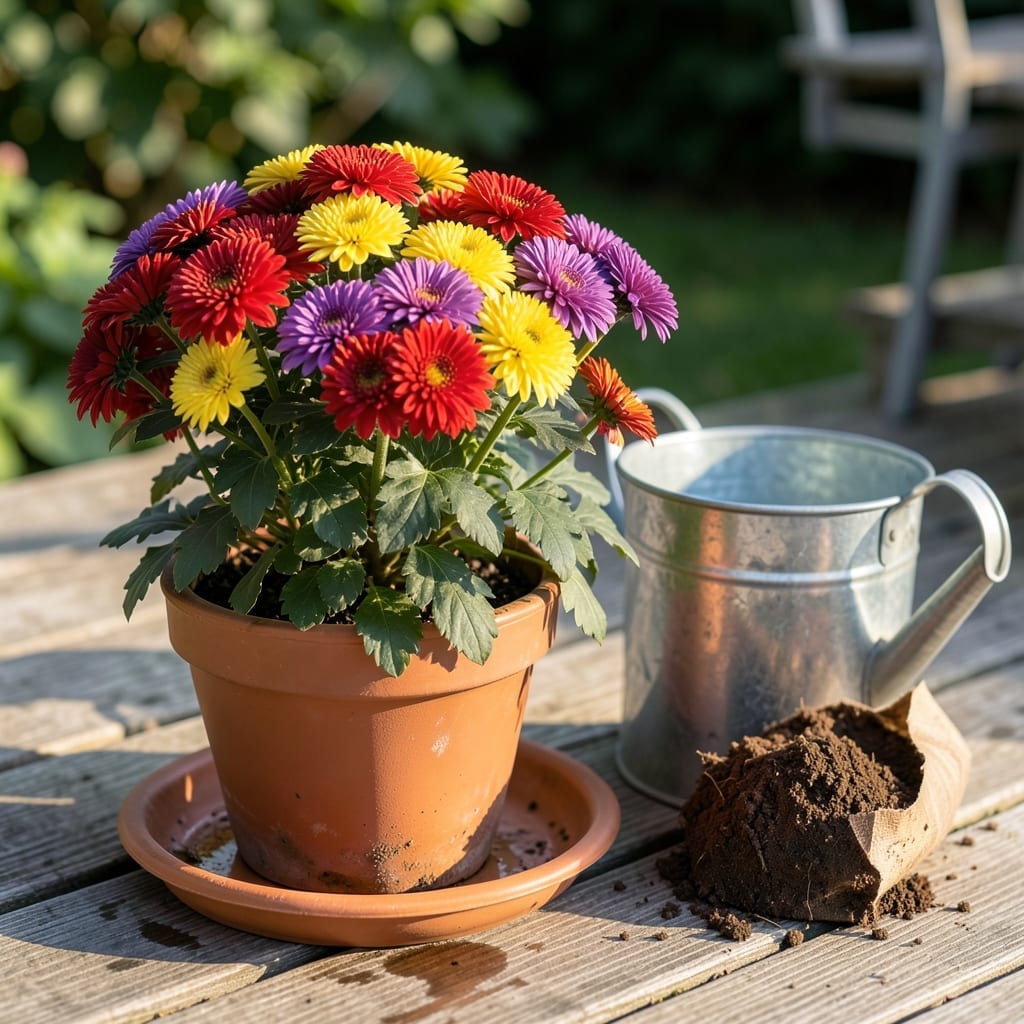
Potted Chrysanthemum 🌼 bring vibrant color to any space, but improper watering can quickly turn those lush blooms into wilted disappointments. Getting the routine right makes all the difference.
You might think watering is straightforward, yet many gardeners struggle with keeping their container mums healthy. The key lies in understanding their unique needs in pots versus the ground.
I’ll share the most important factors that determine your watering schedule, from soil moisture to seasonal changes. These insights will help you avoid common mistakes.
Discover how to maintain thriving mums in containers with practical tips that actually work. Let’s get started on keeping your plants vibrant all season long.
I’ve found that potted mums thrive when their watering schedule matches the seasonal changes. These vibrant fall favorites have different needs in spring, summer, and fall. Getting it right means longer blooms and healthier plants.
In my experience, container size and environmental factors like temperature and humidity play a huge role in how often you should water. Smaller pots dry out faster, while larger ones retain moisture longer.
During spring, I water my potted mums about once a week. The cooler temperatures and moderate sunlight mean the soil stays moist longer. Always check the top inch of soil before watering.
When summer heat arrives, I switch to watering every 3-5 days. The higher temperatures and intense sun dry out the soil quickly. If you’re in a hot climate, you might need to water daily.
In fall, as the blooms appear, I return to a weekly schedule. The cooler air and shorter days reduce evaporation. Keep the soil consistently moist but not soggy to support those gorgeous flowers.
For winter care, I water bi-weekly or even less. Dormant mums need very little water. Overwatering now can lead to root rot, so let the soil dry out more between waterings.
Remember, container size matters. My smaller pots (under 8 inches) often need water every 2-3 days in summer, while larger containers can go longer. Always check soil moisture with your finger.
I also adjust for humidity levels. In dry climates, mums may need more frequent watering. In humid areas, they can often go longer between drinks. Watch your plants—they’ll tell you what they need.
Finally, always water at the base of the plant to avoid wetting the foliage, which can lead to fungal diseases. Early morning is the best time to water, giving the plants time to dry before evening.
I’ve seen too many gardeners struggle with potted mums because they miss the subtle signs of thirst or drowning. Drooping leaves are often the first clue, but there’s more to it.
Yellowing foliage or crispy brown edges can signal both underwatering and overwatering. That’s why I always recommend the finger test—stick your finger 1 inch into the soil to check moisture.
If your mums show wilting blooms despite moist soil, they might be root-bound. I always check drainage holes for clogs that trap excess water.
A deep watering every 5-7 days works for most climates, but small pots dry out faster. I adjust based on temperature and humidity levels.
Remember, morning watering prevents fungal issues. I use a moisture meter for precision, especially with new plants in unfamiliar conditions.
Finally, container size matters—larger pots hold moisture longer. I’ve found terracotta dries fastest, so I monitor those daily in summer heat 🌿