
Beautiful Plants For Your Interior
Beautiful Plants For Your Interior
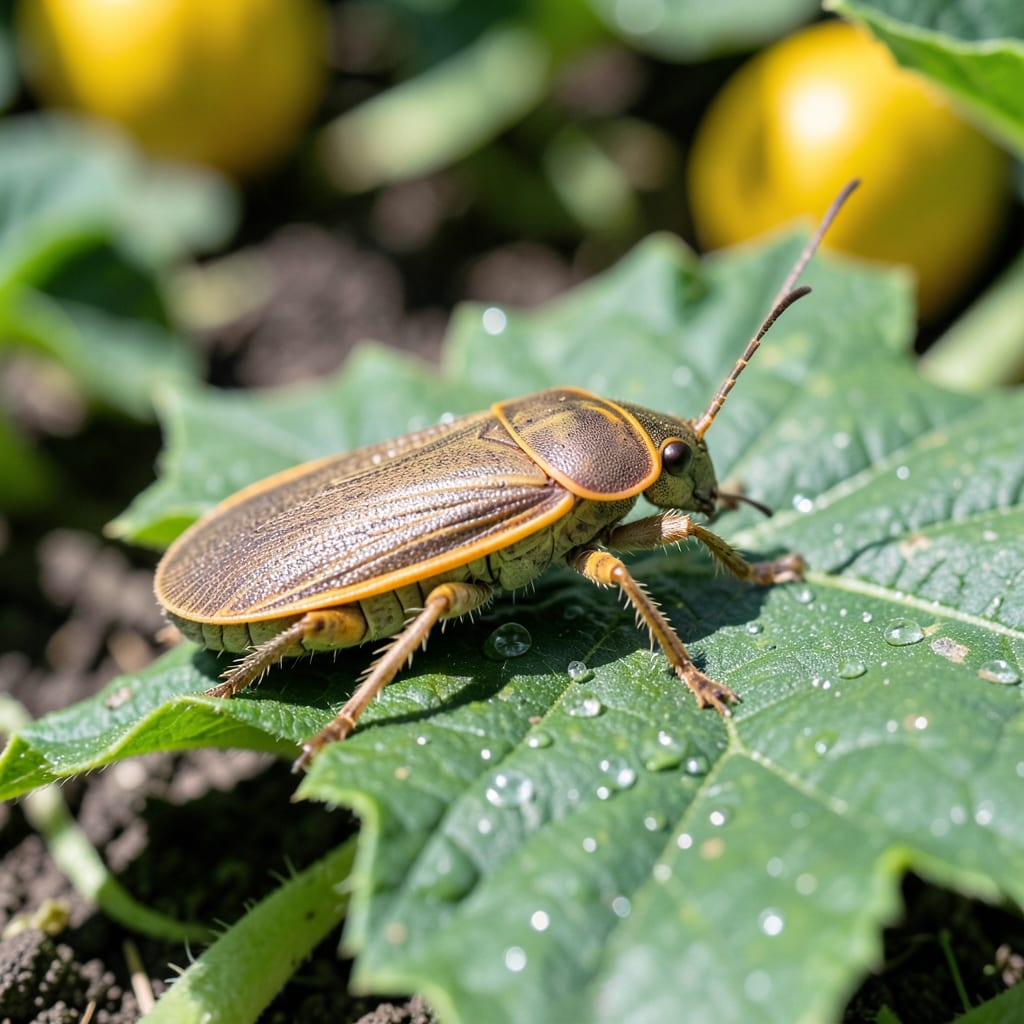
Yellow squash bugs are flat, shield-shaped pests that feed on squash plants, causing wilting and damage. Identify them by their yellow-brown bodies and remove them manually or with natural sprays.
I’ve found these pests often cluster under leaves or near the base of vines, making early detection tricky. Their feeding disrupts nutrient flow, which is why plants may suddenly wilt despite adequate water. 🔥 Using row covers early in the season can prevent infestations before they start.
💡 In This Article
These pests have a distinctive shield-like body shape, about 5/8 inch long with a brownish-yellow color that blends into squash leaves. Their flattened bodies allow them to hide in tight spaces under foliage. The nymphs are smaller with a more rounded shape and often appear in clusters near the base of plants.
Look for wilted leaves that don’t recover after watering, as this is the first sign of their feeding. They use piercing mouthparts to inject toxins while sucking plant juices, which disrupts the vascular system. This causes a characteristic wilting known as “anasa wilt” in severe cases. 🔥
Check undersides of leaves in the morning when bugs are less active. Their eggs are bronze-colored and laid in groups of 20-30 between leaf veins. Adults release a foul odor when disturbed, which helps distinguish them from similar-looking stink bugs.
Damage often appears first on newer growth as yellow spots that turn brown and crispy. Unlike cucumber beetles, they don’t create holes but instead cause systemic wilting. The most vulnerable plants are in the cucurbit family: squash, pumpkins, and cucumbers. ✨
Early detection is critical as a single mating pair can produce 200-300 offspring in a season. Their life cycle takes 4-6 weeks from egg to adult, with multiple generations possible in warm climates. This rapid reproduction makes consistent monitoring essential.
Look for their flat, shield-shaped bodies about 5/8 inch long in brownish-yellow. Unlike stink bugs, they release a distinct foul odor when disturbed. Their eggs are bronze and laid in neat groups of 20-30 on leaf undersides.
Early morning is ideal when they’re sluggish and clustered under leaves. Check leaf undersides and plant bases where they hide. Evening works too, but they become more active as temperatures rise.
Apply every 7-10 days to disrupt their life cycle. Mix 2 tablespoons of neem oil with 1 gallon of water and 1 teaspoon of dish soap. Always spray both leaf sides for full coverage.
Yes, they attack all cucurbits including pumpkins, cucumbers, and melons. They won’t bother unrelated plants, but will quickly spread between different squash varieties in your garden.