
Beautiful Plants For Your Interior
Beautiful Plants For Your Interior
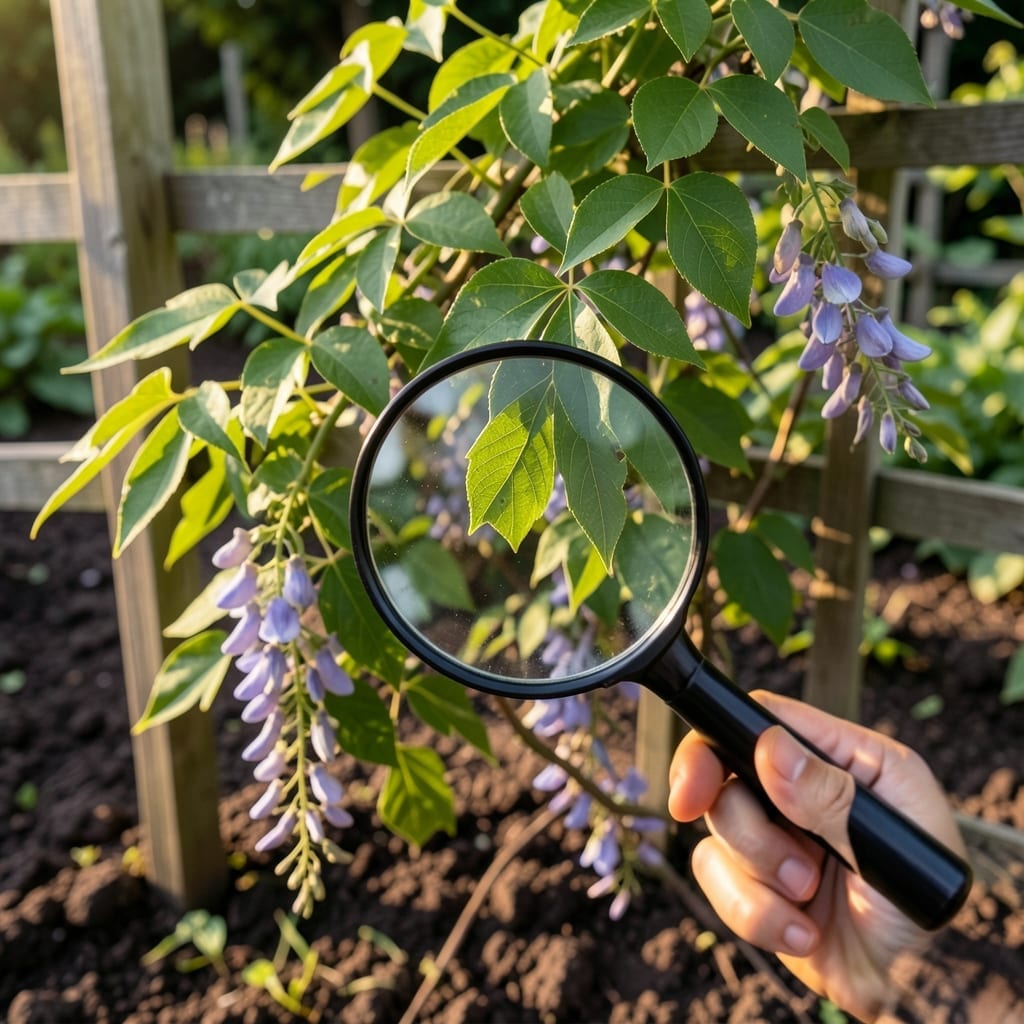
Yellowing leaves or brown spots on your wisteria aren’t just ugly—they’re the plant’s way of waving a white flag. I’ve seen these issues derail even established vines, but the good news is most problems are fixable once you know what you’re dealing with.
Between you and me, most wisteria leaf troubles boil down to three culprits: pests hiding on the undersides, fungal diseases spreading in wet weather, or soil that’s either too dry or too soggy. The Plant usually tells you exactly what’s wrong if you know where to look.
With a sharp eye and the right approach, you can turn those sad leaves around in 2-3 weeks. The key is catching issues early before they spread to the whole vine.
This guide will help you spot the difference between normal aging and a real problem, so you can keep your wisteria thriving all season long.
Understanding why wisteria leaves develop issues starts with identifying the underlying stressors. These problems often stem from environmental, biological, or cultural factors. Below are the most common causes, explained in clear, actionable terms.
Wisteria thrives in full sun to partial shade and well-draining soil. Extreme heat or drought can cause leaf scorch, where edges turn brown and crisp due to transpiration exceeding water uptake. Conversely, waterlogged soil from poor drainage or overwatering leads to root asphyxiation, starving leaves of oxygen and nutrients. Cold snaps in early spring may also damage emerging foliage, resulting in blackened or wilted leaves.
High humidity and poor air circulation create ideal conditions for leaf spot diseases (e.g., Cercospora or Phyllosticta). These fungi produce brown or purple-spotted leaves as they feed on plant tissues. Powdery mildew, a white fungal coating, thrives in dry foliage with high humidity. Bacterial blight (Pseudomonas syringae) causes water-soaked lesions that turn necrotic, often spreading via pruning tools or rain splash.
Aphids and scale insects pierce leaf cells to feed on sap, leading to yellowing (chlorosis) or curled, distorted growth. Their sticky honeydew residue also promotes sooty mold, a black fungal layer that blocks sunlight. Japanese beetles skeletonize leaves by chewing between veins, while spider mites (common in hot, dry weather) cause stippling—tiny yellow or white specks—due to cell damage.
Wisteria is a heavy feeder, and nutrient shortages manifest visibly. Nitrogen deficiency turns older leaves pale yellow as the plant redirects nitrogen to new growth. Iron chlorosis (from alkaline soil) causes interveinal yellowing in young leaves while veins stay green. Magnesium deficiency appears as yellow patches between veins on older leaves, often with necrotic spots.
Wisteria leaves can face a variety of problems, but most are fixable with the right approach. Below are practical solutions for common issues, paired with prevention tips to keep your plant thriving.
If your wisteria’s leaves are turning yellow, it’s often a sign of poor drainage or nutrient deficiency. Test your soil’s pH—wisteria prefers slightly acidic to neutral (6.0–7.0). Amend heavy clay soil with compost or sand to improve drainage. Fertilize in early spring with a balanced, low-nitrogen formula (e.g., 5-10-10) to avoid overstimulating foliage at the expense of blooms.
Prevention tip: 💡 Mulch with organic matter annually to maintain soil health and moisture balance.
For aphids, scale, or caterpillars, start with a strong blast of water to dislodge pests. Apply insecticidal soap or neem oil for mild infestations. For severe cases, use a horticultural oil or a targeted pesticide, following label instructions carefully. Check the undersides of leaves regularly for early signs of pests.
Prevention tip: 🎯 Encourage beneficial insects like ladybugs by planting companion flowers such as marigolds or alyssum nearby.
Powdery mildew or leaf spot thrive in damp conditions. Remove and destroy infected leaves immediately to prevent spread. Improve air circulation by thinning crowded branches. Apply a fungicide like copper sulfate or sulfur at the first sign of disease, and repeat as directed.
Prevention tip: ✨ Water at the base of the plant (not overhead) and space wisterias at least 10–15 feet apart to reduce humidity.
Brown, crispy edges (leaf scorch) often result from underwatering, excessive sun, or salt buildup in the soil. Water deeply 1–2 times per week during dry spells, ensuring the soil stays evenly moist but not soggy. If your wisteria is in full, harsh sun, consider adding afternoon shade with a lattice or nearby tree.
Prevention tip: 🌡️ Use rainwater or distilled water occasionally to flush out salts from tap water.
Yellow leaves often signal nutrient deficiency or poor drainage. Test soil pH and amend with compost if needed. Older leaves yellow first with nitrogen shortage.
Check undersides for aphids or scale insects. Look for curled leaves, sticky residue, or tiny holes. Spider mites cause stippling in hot, dry weather.
Brown spots usually mean fungal disease like leaf spot or bacterial blight. Improve air circulation and remove infected leaves immediately.
No, but affected leaves won’t recover. Adjust watering to 1-2 times weekly and provide afternoon shade to prevent new scorch.