
Beautiful Plants For Your Interior
Beautiful Plants For Your Interior
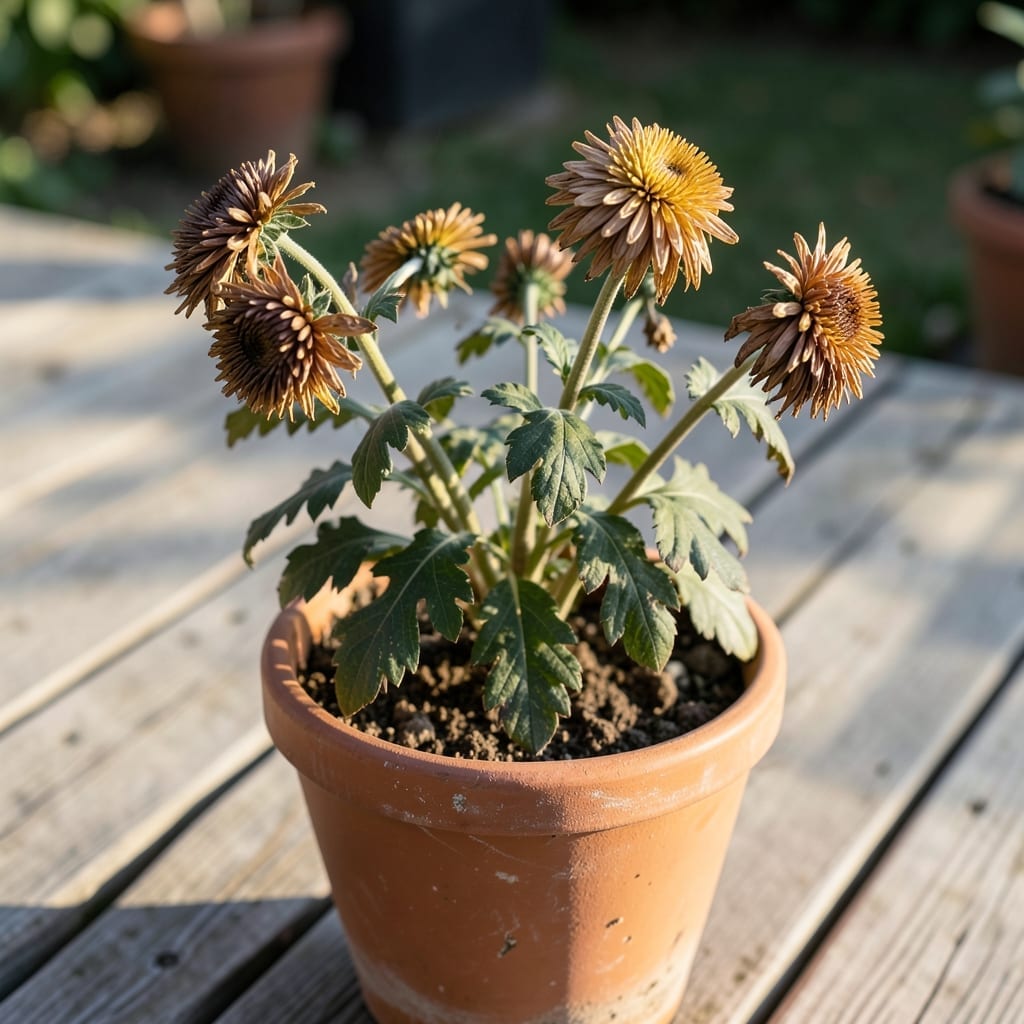
I’ve lost more potted mums than I care to admit. The wilting, the yellowing leaves—it’s heartbreaking when you’re trying to add a burst of fall color to your space.
Here’s the thing—most mums don’t die from neglect. They drown. Overwatering and poor drainage create the perfect storm for root rot, while too little water leaves them crispy. Then there’s the sunlight puzzle: too much fries them, too little starves them.
You’ll spot the difference between thirst and drowning by checking the soil 2 inches down. Dry? Water deeply. Soggy? Let it breathe. The right balance brings those vibrant blooms back to life.
With a few adjustments to water, light, and pot choice, your mums can thrive through the season and beyond. Let’s troubleshoot this together.
Potted mums are hardy, but they can still fall victim to a few common issues. Here’s why your plants might be struggling and what’s happening beneath the surface.
Mums hate soggy roots. Overwatering suffocates the roots by displacing oxygen in the soil, leading to root rot. Fungal pathogens like Phytophthora thrive in waterlogged conditions, causing roots to turn mushy and black. If your pot lacks drainage holes or sits in a saucer of water, excess moisture has nowhere to go.
On the flip side, too little water causes wilting and crispy leaves. Mums need consistent moisture, especially in hot or windy conditions. When soil dries out completely, the plant can’t absorb nutrients, and cellular damage occurs. Potted mums in black containers are especially vulnerable, as dark colors absorb heat, cooking the roots.
Yellowing leaves or stunted growth often signal a nutrient imbalance. Mums are heavy feeders and need nitrogen, phosphorus, and potassium. However, over-fertilizing can burn roots, leading to brown tips and wilting. A soil test can reveal deficiencies, while flushing the soil with water can correct salt buildup from excess fertilizer.
Spider mites, aphids, and whiteflies sap the life out of mums by feeding on their juices. These pests often hide under leaves, causing stippled or curled foliage. In severe cases, they introduce viruses or sooty mold, further weakening the plant. Regular inspections and neem oil treatments can keep them at bay.
Don’t give up on your potted mums just yet! With a few targeted fixes, you can nurse them back to health. Below are the most common issues and their solutions, paired with prevention tips to keep your plants thriving.
If your mums are wilting or yellowing, stop watering immediately. Check the soil by sticking your finger an inch deep—if it feels soggy, let it dry out completely before watering again. Repot the plant in fresh, well-draining soil if root rot is present (look for black, mushy roots).
Prevention tip: 💡 Use pots with drainage holes and water only when the top inch of soil is dry.
Mums love sunlight, but scorching midday rays can bleach leaves and cause stress. Move pots to a spot with morning sun and afternoon shade, especially in hot climates. If leaves look crispy or faded, it’s a sign they’re getting too much direct light.
Prevention tip: 🌡️ Monitor leaf color and adjust placement as seasons change.
Standing water is a death sentence for mums. If your pot lacks drainage holes, transfer the plant to one that does or add a layer of pebbles at the bottom. Elevate pots on feet or stands to improve airflow underneath.
Prevention tip: ✨ Always pair potted mums with saucers—but empty excess water after each watering.
Spider mites, aphids, and whiteflies love stressed mums. Spray leaves with neem oil or insecticidal soap weekly until pests disappear. For severe infestations, prune heavily affected areas and isolate the plant.
Prevention tip: 🎯 Inspect new plants before bringing them near your mums, and keep the area free of debris.
Yellowing leaves or stunted growth? Your mums might need a balanced, water-soluble fertilizer (10-10-10 or 20-20-20). Feed every 2–3 weeks during the growing season, but stop fertilizing in winter when growth slows.
Prevention tip: 📊 Test soil annually to check for deficiencies.
Water when the top 1 inch of soil feels dry. Check daily in hot weather, as pots dry out faster. Avoid watering on a fixed schedule—always check the soil first.
Yellow leaves often signal overwatering or poor drainage. Check roots for rot and ensure your pot has drainage holes. Nutrient deficiencies can also cause yellowing.
Yes! If the roots are still firm, cut back on water, move to shade, and trim dead foliage. With proper care, they often bounce back in 1-2 weeks.
Use a pot with drainage holes that’s slightly larger than the root ball. Terracotta pots are ideal as they allow soil to dry out between waterings.