
Beautiful Plants For Your Interior
Beautiful Plants For Your Interior
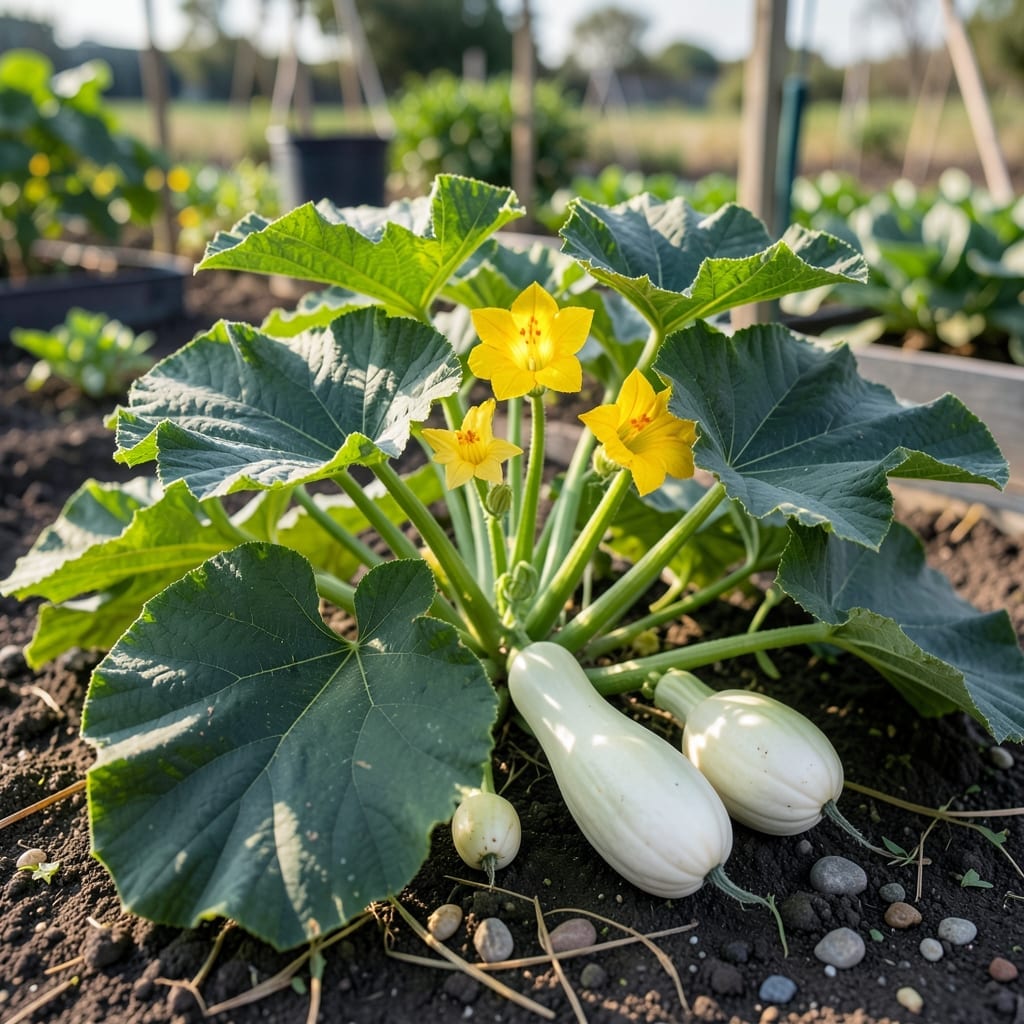
White summer squash changed how I think about garden harvests. These plants produce tender, mild-flavored fruits that keep coming all season long.
With the right care, you’ll spot healthy vines loaded with squash within 45-55 days. The key is watching for early signs of stress before problems take hold.
📚 In This Guide
Here’s how I keep my plants thriving with early detection and smart prevention strategies.
Inspect leaves daily for the first white, powdery spots that appear on the upper surfaces. These circular patches spread quickly in humid conditions and 60-80°F temperatures. I run my fingers gently over suspect areas—the texture feels like fine dust, not part of the leaf.
Don’t confuse this with downy mildew, which shows as yellow patches with white growth underneath. Powdery mildew stays on top and thrives in both dry and humid environments. Catching it when spots are still dime-sized makes treatment far more effective.
Thin out dense foliage by removing 10-15% of the oldest leaves at the plant’s base. This creates airflow that disrupts the mildew’s ideal stagnant environment. I use clean pruners and make cuts at a 45-degree angle to prevent water pooling on the wounds.
Space plants at least 3 feet apart in all directions. If you’re growing vertically, ensure trellised vines have 12 inches of air space between them. A small oscillating fan on low for 2-3 hours daily works wonders in greenhouses or still air conditions.
Water at soil level using a drip irrigation system or soaker hose, never from above. Wet foliage provides the perfect conditions for spores to germinate. I water in the early morning so any accidental leaf moisture has time to dry in the sun.
Reduce frequency but increase depth—give plants 1-1.5 inches of water weekly rather than light daily watering. This encourages deep root growth while keeping foliage dry. Mulch with 2-3 inches of straw to prevent soil splash that can spread spores upward.
Mix 1 teaspoon baking soda and 1 quart water with a drop of dish soap as a preventive spray. Apply this every 7-10 days or after rain, covering both leaf surfaces completely. The baking soda changes the leaf surface pH, making it inhospitable to fungal spores.
For organic control, use neem oil or sulfur-based sprays at the first sign of infection. Apply in the late afternoon to avoid burning leaves in hot sun. Always test sprays on a small area first—I once damaged an entire crop by skipping this step with a new product.
At the first sign of severe infection, remove affected leaves immediately using clean tools. Don’t compost these—mildew spores survive composting and will reinfect your garden. I seal them in a plastic bag and dispose with household trash.
If an entire plant becomes infected, pull it completely. This prevents the disease from spreading to healthy specimens. Wash your hands and tools with soapy water after handling infected plants to avoid cross-contamination to other areas of your garden.
Small adjustments make a big difference in keeping your plants healthy and thriving.
Early Detection Tip: Catching powdery mildew at the dime-sized stage as mentioned in Step 1 is crucial. I’ve found that inspecting leaves in the early morning when dew is present makes the white spots more visible against the darker, moisture-covered foliage.
Airflow Insight: The 12 inches of air space for trellised vines in Step 2 isn’t just a suggestion—it’s a game-changer. I learned this the hard way after losing half a crop to mildew spread between crowded plants. Use pruners at that 45-degree angle to prevent water pooling; it really does stop the problem before it starts.
Watering Wisdom: The 1-1.5 inches of weekly watering in Step 3 works best when delivered in one deep session rather than split into smaller amounts. This trains roots to grow deeper, making plants more resilient during dry spells while still avoiding the wet foliage that invites fungal growth.
Spray Timing: Applying the baking soda mixture every 7-10 days as outlined in Step 4 works perfectly, but I’ve discovered that late afternoon is ideal—leaves have time to dry before evening dew forms, and you avoid the leaf burn risk from midday sun.
Look for wilting, white powdery spots (powdery mildew), or water-soaked lesions. Yellowing leaves or stunted growth may also signal trouble. Inspect plants weekly for these signs.
Yes! Small surface spots can be cut off. Avoid eating squash with soft rot, mold, or deep lesions, as these may harbor harmful pathogens.
Rotate crops yearly, space plants for airflow, and water at the base (not leaves). Remove debris and use fungicides preventatively if disease is common in your area.
Try neem oil, baking soda sprays (1 tsp baking soda + 1 quart water + a drop of soap), or copper-based fungicides. These are effective for mild powdery mildew or fungal issues.
Yellowing can stem from overwatering, nutrient deficiencies (like nitrogen), or diseases like mosaic virus. Check soil moisture and test for pests or pathogens.