
Beautiful Plants For Your Interior
Beautiful Plants For Your Interior
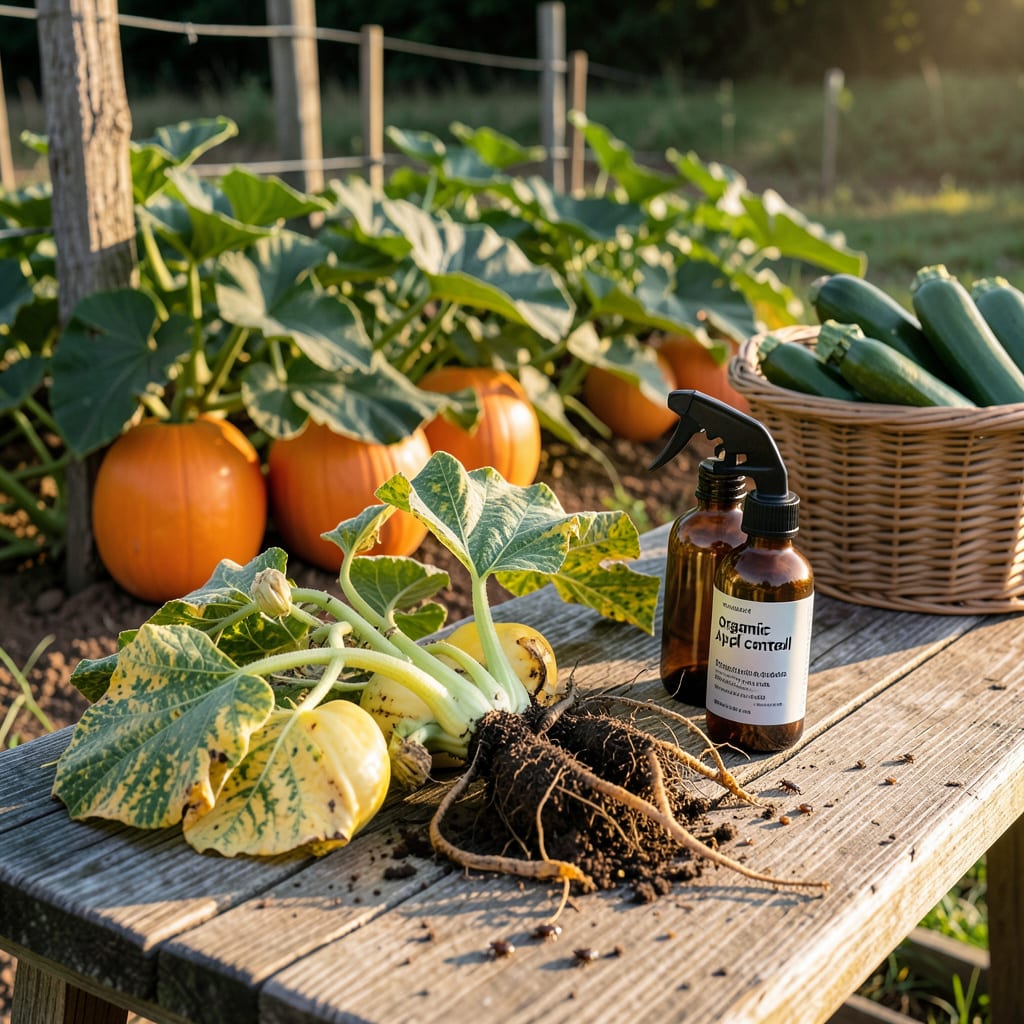
That yellow mottling on your squash leaves isn’t just ugly—it’s a red flag. I’ve lost entire crops to mosaic virus, but I’ve since learned how to spot it early and stop the spread before it ruins your harvest.
Catching it fast is key. Remove infected plants, control aphids, and keep your garden clean. With the right approach, you can save the rest of your garden and even prevent future outbreaks.
📚 In This Guide
Here’s the organic approach I use to manage this issue and protect your squash plants.
Inspect your squash plants for signs like mottled yellow and green leaves, stunted growth, or distorted fruits. The moment I spot these symptoms, I pull the entire plant—roots and all—to prevent the virus from spreading to healthy plants.
Real talk: it’s hard to remove a plant you’ve nurtured, but leaving it in the garden puts everything else at risk. Bag the infected plant in a sealed trash bag and dispose of it far from your garden. Do not compost it—this virus can survive in compost and reinfect future crops.
Aphids are the primary carriers of this virus, so controlling them is critical. I spray infected plants with a strong stream of water to knock aphids off, focusing on the undersides of leaves where they hide. Repeat this every 2-3 days until the population is under control.
For severe infestations, I use insecticidal soap or neem oil, applying it in the early morning or late evening when bees are less active. Always follow the label instructions for dilution and frequency. Introducing beneficial insects like ladybugs or lacewings also helps keep aphid numbers in check naturally.
This virus can linger on gardening tools, so I disinfect pruners, trowels, and even my hands after handling infected plants. A solution of 1 part bleach to 9 parts water works well—soak tools for at least 5 minutes, then rinse and dry thoroughly.
To prevent future outbreaks, avoid planting squash or related crops (like cucumbers or melons) in the same spot for at least 2-3 years. I rotate my crops annually, planting non-host crops like beans or corn in areas where squash was previously grown. This breaks the virus’s life cycle and reduces its presence in the soil.
Some squash varieties are bred to resist this virus. I look for seeds labeled as resistant, such as ‘Butternut Waltham’ or ‘Zucchini Elite.’ While no variety is completely immune, resistant plants are less likely to succumb to infection.
Healthy plants are better equipped to fend off viruses, so I prioritize good cultural practices. Water at the base of plants to keep foliage dry, and avoid overhead irrigation, which can spread the virus. Mulch around plants to suppress weeds and reduce stress, and fertilize appropriately to ensure vigorous growth without overfeeding.
Here are practical strategies to strengthen your organic defense against garden viruses.
The Identification Factor: In Step 1, don’t wait for symptoms to worsen. The moment you see mottled yellow and green leaves or distorted fruits, remove the entire plant immediately. I’ve learned that even a day’s delay can allow the virus to spread to neighboring healthy plants, defeating your prevention efforts.
Timing Secret: For Step 2, that 2-3 day interval for spraying aphids is critical. Aphids reproduce quickly, so sticking to this schedule prevents populations from exploding. I set phone reminders to stay consistent—missing even one cycle can set you back weeks in the battle against these virus carriers.
Disinfection Tip: In Step 3, the 5-minute soak in that 1:9 bleach solution isn’t just a suggestion. I once rushed this step and saw the virus resurface on tools I thought were clean. Take the full 5 minutes, then rinse and dry thoroughly to ensure complete disinfection.
Rotation Strategy: The 2-3 year rotation mentioned in Step 3 is your long-term shield. I track my plantings in a garden journal to avoid accidentally replanting squash family crops too soon. Beans and corn work perfectly as rotation crops, and they’ll improve your soil health too.
Look for yellow or green mottling on leaves, stunted growth, and distorted or curled foliage. Infected plants may also produce deformed or discolored fruit. Early detection helps prevent spread.
Unfortunately, no. There’s no cure for the virus once a plant is infected. Remove and destroy affected plants immediately to protect nearby healthy ones. Focus on prevention for future crops.
Use virus-free seeds, rotate crops, and control aphids (the primary carriers). Plant resistant varieties and practice good garden hygiene, like sanitizing tools. Companion planting with repellent herbs can also help.
Prevention should start before planting. Treat seeds with hot water (122°F for 25 minutes) to kill the virus, and monitor plants early in the growing season for signs of infection.
No chemicals can cure the virus. However, insecticides (organic or synthetic) can control aphid populations, reducing the risk of transmission to healthy plants.
