
Beautiful Plants For Your Interior
Beautiful Plants For Your Interior
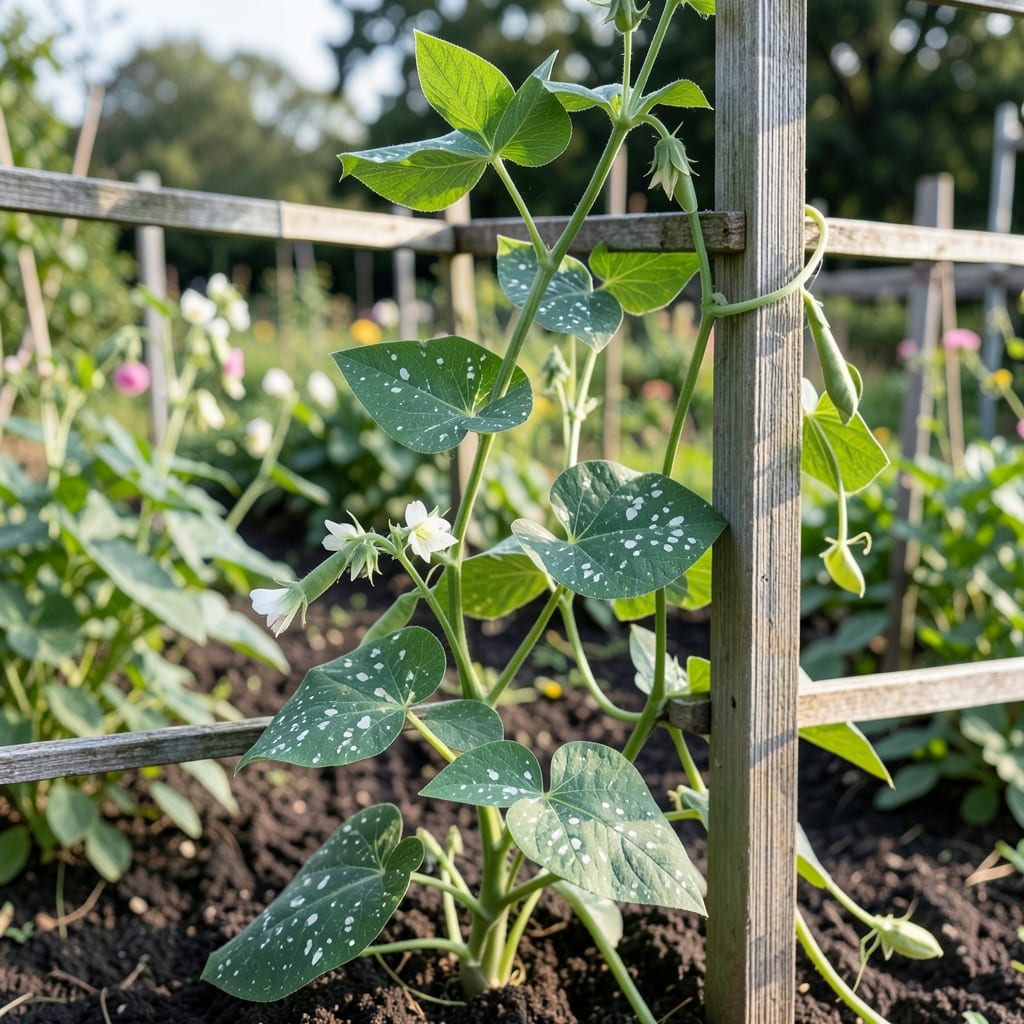
White spots on pea leaves sent me scrambling for answers last spring. Turns out it’s usually powdery mildew or downy mildew, both common fungal issues in pea patches.
I learned the hard way that crowded plants and wet foliage create the perfect conditions. The solution starts with better airflow and a simple baking soda spray that stops spores in their tracks.
Prevention is easier than treatment, so I now space plants 6-8 inches apart and water at the base. This keeps leaves dry and reduces the risk significantly.
Early action saves your crop—once I caught it quickly, my peas still produced a full harvest. Here’s how to spot it and stop it before it spreads.
White spots on pea plant leaves often signal underlying issues that disrupt healthy growth. Below are the most common causes, explained with actionable insights.
Powdery mildew and downy mildew are frequent culprits. Powdery mildew (Erysiphe pisi) thrives in dry, warm conditions with high humidity, forming white, powdery patches. Downy mildew (Peronospora viciae) prefers cooler, damp environments, creating yellowish-white spots on leaf undersides. Both spread via spores and weaken photosynthesis.
Inconsistent watering or splashing water on foliage can promote fungal growth. Overhead irrigation leaves moisture on leaves, creating ideal conditions for spores to germinate. Conversely, drought stress weakens plants, making them more susceptible to infections.
Insects like aphids and spider mites pierce leaf tissues, causing stippling or white speckling. Their feeding damage can also introduce secondary infections. Check leaf undersides for tiny pests or webbing.
Excessive sunlight or heat can scorch leaves, leading to white or bleached spots. Similarly, nutrient deficiencies (e.g., calcium or magnesium) may cause discoloration. Test soil pH (ideal: 6.0–7.5) and amend as needed.
Here’s how to tackle the most common causes of white spots on your pea plants, with simple fixes and prevention tips to keep them thriving.
If the spots are powdery, prune crowded foliage to boost air circulation. Remove affected leaves and dispose of them far from your garden. Prevention tip: 💡 Space plants 4–6 inches apart and water at the base to keep leaves dry.
Overhead watering can create perfect conditions for fungal growth. Switch to drip irrigation or water early in the morning so leaves dry quickly. Prevention tip: ✨ Use mulch to prevent soil splashing onto leaves.
For white spots caused by pests like aphids, spray leaves with a mix of 1 tsp neem oil and 1 quart of water. Repeat every 5–7 days until pests vanish. Prevention tip: 🎯 Introduce beneficial insects like ladybugs to keep pests in check.
Yellowing leaves with white spots may signal a magnesium deficiency. Work compost or Epsom salt (1 tbsp per gallon of water) into the soil. Prevention tip: 🌡️ Test soil annually and amend as needed for balanced nutrition.
Powdery mildew is the most likely culprit, thriving in warm, dry conditions with high humidity. It spreads quickly in crowded plants, so improve airflow by spacing them 6-8 inches apart.
Yes! Overhead watering leaves foliage damp, creating perfect conditions for fungal spores. Switch to drip irrigation or water at the base to keep leaves dry.
A natural spray of 1 tsp neem oil per quart of water works well against aphids or mites. Apply every 5-7 days until pests are gone.
If caught early, your plants can recover fully. Remove affected leaves immediately and adjust care to prevent spread. Most pea plants bounce back quickly!