
Beautiful Plants For Your Interior
Beautiful Plants For Your Interior
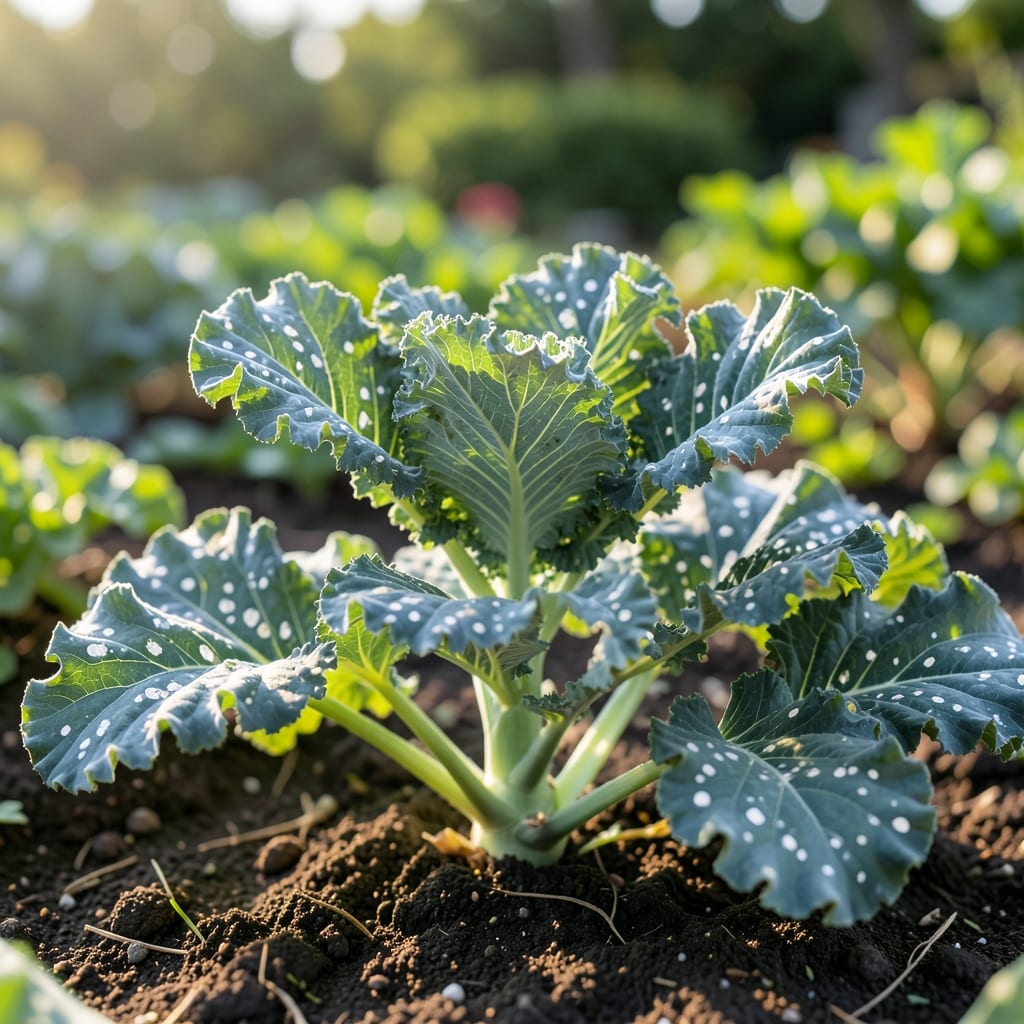
White spots on your kale leaves can be alarming. I’ve seen my share of these marks, and the good news is they’re often harmless. Most cases come from powdery mildew, insect activity, or just mineral deposits from water.
The safety question depends on the cause. Powdery mildew won’t hurt you, but pest damage might need a closer look. I always wash my kale thoroughly before deciding—most white spots wash right off.
Prevention is simpler than you think. Good air circulation and proper watering stop most issues before they start. I’ve cut my kale problems in half just by spacing plants 18 inches apart.
Don’t toss your crop at the first white spot. With the right approach, you can keep enjoying homegrown kale all season long.
White spots on kale can stem from several natural and environmental factors. Understanding these causes helps you assess safety and take preventive action.
Powdery mildew is a fungal disease caused by Podosphaera or Erysiphe species. It thrives in humid conditions with poor airflow, creating a white, powdery coating on leaves. This fungus spreads via spores and weakens the plant but is not harmful to humans if ingested after washing.
Hard water or tap water high in calcium or magnesium can leave chalky white residues on kale leaves as it evaporates. These mineral deposits are harmless and can be rinsed off. Check your water source if spots appear after watering.
Insects like aphids, whiteflies, or cabbage worms may lay eggs or leave behind white excretions. While the spots themselves are inert, the pests can introduce bacteria. Inspect leaves closely—if the spots are raised or clustered, they may be eggs or pest-related.
Extreme temperature swings or excessive sunlight can cause physiological stress, leading to white or yellowish patches. This is the plant’s reaction to oxidative damage and doesn’t indicate contamination. Affected leaves remain safe to eat if not moldy.
White spots on kale often stem from different causes, but each has a simple fix. Here’s how to address them and keep your greens in top shape.
If the spots look powdery, trim affected leaves with clean scissors and discard them (do not compost). Spray remaining leaves with a mix of 1 tablespoon baking soda + 1 quart water + a drop of dish soap. For prevention, improve air circulation by spacing plants and watering at the base in the morning. 💡 Pro tip: Avoid overhead watering to reduce moisture on leaves.
Hard water or spray residues can leave chalky white spots. Soak kale in a vinegar-water solution (1:3 ratio) for 5–10 minutes, then rinse. To prevent buildup, use filtered or distilled water for washing, and store kale unwashed in the fridge to avoid premature mineral absorption.
Tiny white dots or webbing? Rinse leaves under cold water to remove pests like spider mites. Apply neem oil spray (follow label instructions) or introduce ladybugs to your garden as natural predators. ✨ Prevention: Inspect leaves regularly and keep your garden free of debris where pests thrive.
If the spots are fuzzy (like mold), discard the leaf. For future harvests, pick kale early in the morning when it’s driest, and store it in a paper towel-lined container to absorb excess moisture. 🎯 Key: Eat or freeze kale within 3–5 days to minimize fungal risks.
Yes, most mineral deposits and surface mold can be removed with a thorough rinse. Use a vinegar-water solution (1:3 ratio) for stubborn mineral spots. Always dry leaves completely after washing.
Fuzzy white spots often indicate mold. Discard affected leaves immediately, as mold can spread. Prevent future growth by storing kale in a paper towel-lined container in the fridge.
Powdery mildew is harmless to humans. Washing removes most spores, but cooking kale further ensures safety. This fungus won’t hurt you but can weaken plants if left untreated.
Space plants 18 inches apart for airflow. Water at the base in the morning to keep leaves dry. Use filtered water for washing to avoid mineral buildup.