
Beautiful Plants For Your Interior
Beautiful Plants For Your Interior
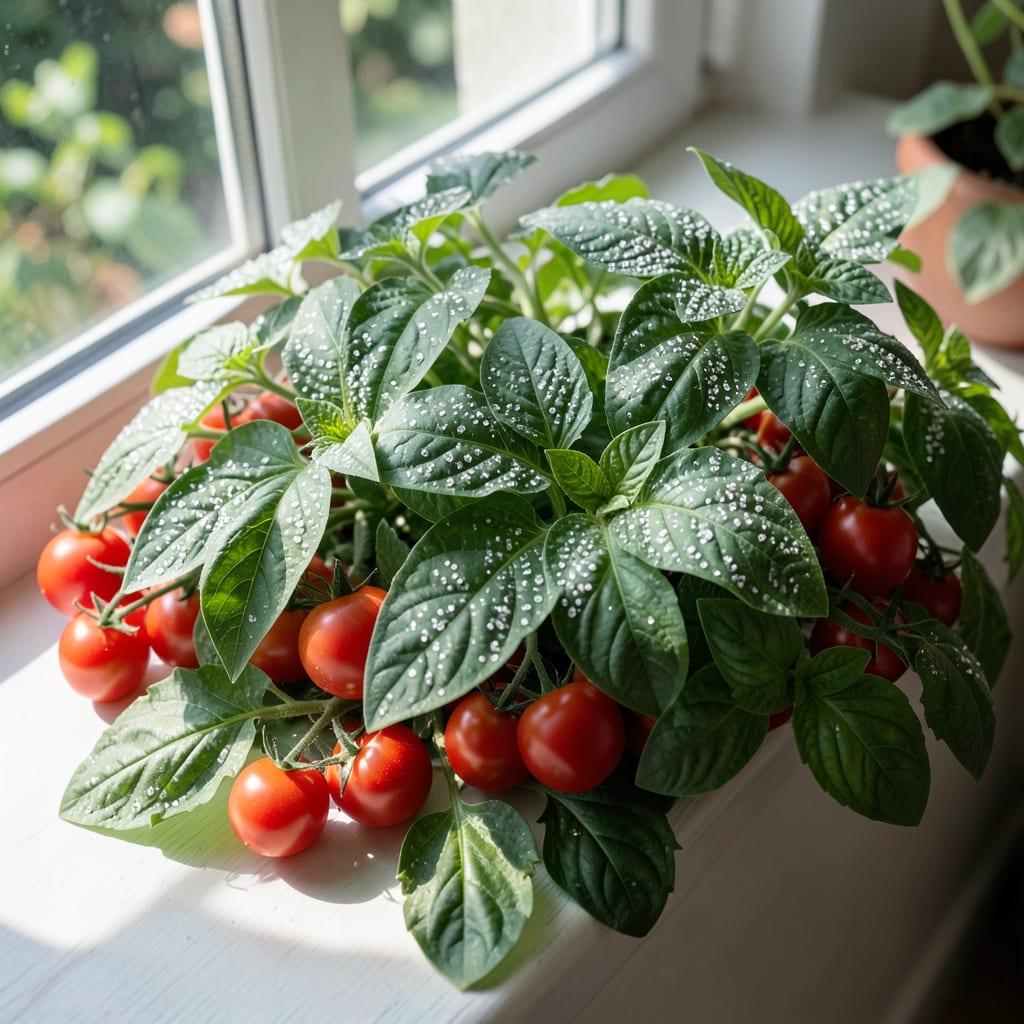
Those white dots on your tomato leaves aren’t just unsightly—they’re a warning sign. I’ve seen powdery mildew turn healthy plants into struggling ones in days if left unchecked.
The culprit is usually a fungal infection thriving in warm, humid conditions. Poor air circulation and wet foliage make it worse. The good news? This is fixable with early action.
Start with a simple inspection: check leaf undersides and stems for white, powdery spots. Then, adjust watering habits and improve airflow around your plants.
With the right steps, you’ll stop the spread and keep your tomatoes productive. Prevention is easier than cure, so let’s tackle this head-on.
White dots on tomato leaves often signal underlying issues that disrupt plant health. Below are the most common causes, explained with actionable insights.
Powdery mildew is a primary culprit, thriving in warm, humid conditions. This fungus (Leveillula taurica or Podosphaera xanthii) forms white, powdery spots as it spreads across leaf surfaces, blocking sunlight and weakening photosynthesis. High humidity (60-80%) and poor air circulation accelerate its growth.
Sap-sucking pests like whiteflies and spider mites leave behind white stippling or dots as they feed. Their saliva damages leaf cells, creating tiny necrotic spots. Check leaf undersides for webbing (mites) or sticky honeydew (whiteflies).
Hard water or foliar sprays high in calcium/magnesium can leave white mineral residues after evaporation. These dots are superficial but may mimic disease symptoms. Test by wiping the leaf—if the spots disappear, it’s mineral buildup.
Extreme heat or sunscald can cause white, blistered patches on leaves exposed to intense sunlight. Unlike fungal dots, these are irregular and often affect upper leaves first. Ensure consistent watering and shade cloth during heatwaves.
Pro tip: 🔍 Use a magnifying glass to distinguish between fungal spores (fuzzy), pest damage (textured), or mineral deposits (crusty).
Tackle those pesky white dots on your tomato leaves with these targeted solutions. Each cause has a clear fix—follow these steps to restore your plants to health.
Mix 1 tablespoon of baking soda, 1 teaspoon of dish soap, and 1 gallon of water in a spray bottle. Apply to affected leaves every 5–7 days until the issue clears. Prevention tip: 💡 Space plants for better airflow and water at the base to keep leaves dry.
Spray leaves with neem oil or insecticidal soap to smother pests. Repeat every 3–5 days until gone. Prevention tip: 🎯 Introduce beneficial insects like ladybugs to your garden for natural pest control.
Use a balanced fertilizer rich in calcium, magnesium, or potassium, depending on the deficiency. Follow package instructions for application rates. Prevention tip: ✨ Test soil annually and amend as needed to maintain nutrient balance.
Let the soil dry out slightly between waterings and ensure pots have drainage holes. If roots are waterlogged, repot in fresh, well-draining soil. Prevention tip: 🌡️ Water early in the day to allow excess moisture to evaporate.
Remove and destroy infected leaves to prevent spread. Apply a copper-based fungicide as directed. Prevention tip: 🔥 Rotate crops yearly and avoid overhead watering to reduce disease risk.
Yes, fungal spores and pests can travel to nearby plants. Isolate affected tomatoes and treat immediately with neem oil or a baking soda spray.
No, they could also be pest damage or mineral deposits. Check for webbing (mites) or crusty residue (minerals) to confirm the cause.
With consistent spraying, you should see improvement in 7–10 days. Remove severely damaged leaves to speed up recovery.
Yes, but only if done early. Remove leaves with heavy infestations and dispose of them far from your garden to prevent reinfection.
