
Beautiful Plants For Your Interior
Beautiful Plants For Your Interior
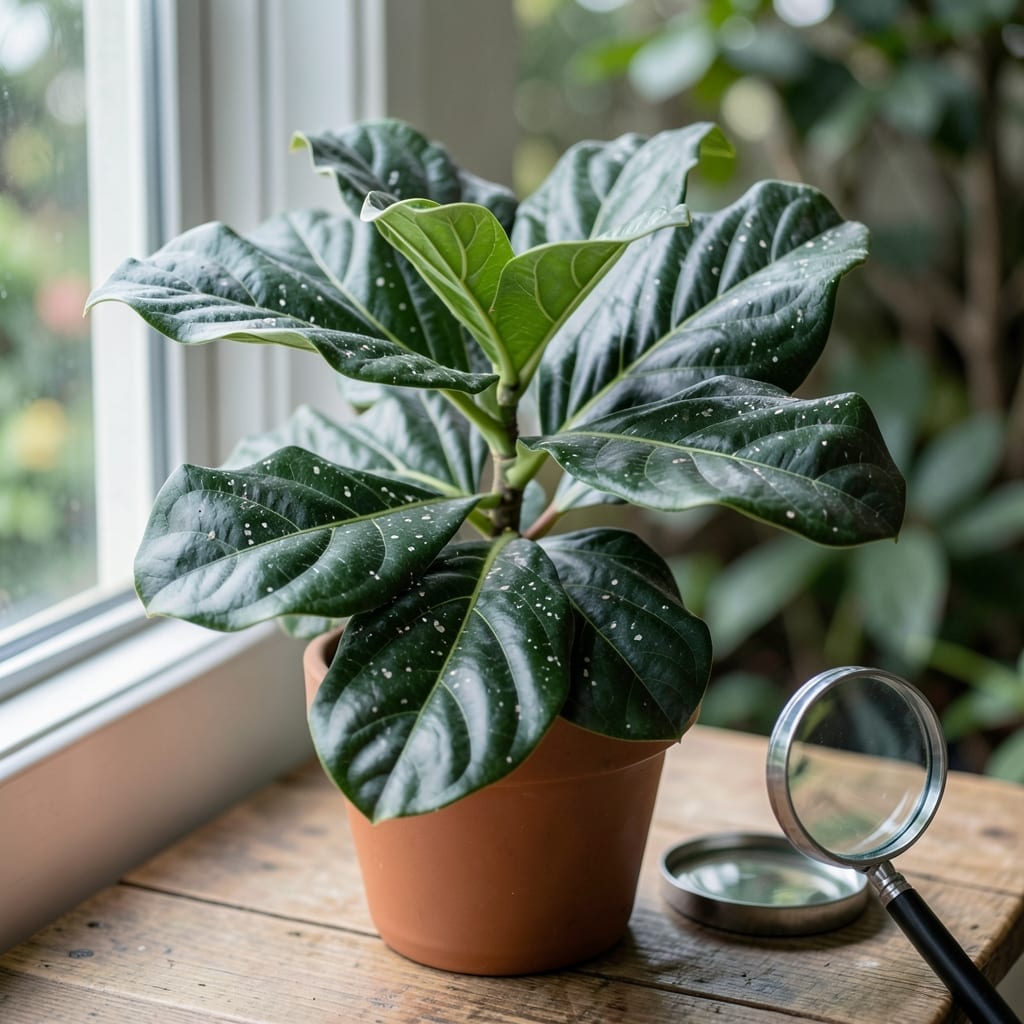
Those white spots on your ficus aren’t just unsightly—they’re a cry for help. I’ve seen this exact pattern before, and the solution starts with identifying whether you’re dealing with mineral buildup or a spreading fungal issue.
Most cases trace back to water chemistry or humidity problems. Hard water leaves chalky deposits, while fungal spores thrive in damp conditions with poor air flow. The good news? Both are fixable with the right approach.
You’ll notice the difference within 7-10 days of treatment. Leaves regain their deep green color, new growth comes in clean, and your plant stops looking like it’s wearing a dusting of flour.
Works for all ficus varieties, from weeping figs to rubber plants. Here’s how to diagnose and treat it properly.
White spots on your ficus leaves can stem from several underlying issues, each with distinct triggers. Understanding the root cause helps you address the problem effectively.
Hard water contains high levels of dissolved minerals like calcium and magnesium. When you water your ficus, these minerals can accumulate on the leaves as the water evaporates, leaving behind chalky white residues. This is especially common if you use tap water or mist your plant frequently. While not harmful to the plant’s health, these deposits can block sunlight absorption if left unchecked.
Fungal pathogens like Powdery Mildew or Downy Mildew often manifest as white, powdery spots on ficus leaves. These fungi thrive in humid, poorly ventilated environments and can spread rapidly if not treated. Powdery mildew appears as a dry, white coating, while downy mildew may present as yellowish or grayish-white patches on the undersides of leaves. Fungal spores can also be introduced through contaminated soil or nearby infected plants.
Certain pests, such as mealybugs or scale insects, leave cottony or waxy white deposits on leaves as they feed on plant sap. Mealybugs resemble tiny cotton balls, while scale insects may appear as small, hard bumps. These pests weaken the plant by draining its nutrients and can also introduce secondary infections through their feeding wounds.
Excessive heat, direct sunlight, or sudden temperature fluctuations can cause physiological stress in ficus plants, leading to white or bleached spots on the leaves. This often happens when the plant is exposed to intense sunlight without acclimation or placed near heat sources like radiators. Stress-induced spots are usually irregular and may be accompanied by leaf drop.
White spots on your ficus leaves can stem from different causes, but each has a straightforward fix. Here’s how to tackle the most common issues:
If tap water is the culprit, switch to distilled or rainwater for misting and watering. Wipe leaves gently with a damp cloth to remove existing spots. To prevent buildup, flush the soil monthly with distilled water to leach out excess minerals.
Prevention tip: 💡 Use a humidity tray with pebbles and distilled water to maintain moisture without direct contact.
For powdery mildew or other fungal issues, remove infected leaves immediately to stop the spread. Treat the plant with a copper-based fungicide or a DIY mix of 1 teaspoon baking soda per quart of water, sprayed weekly until the spots disappear. Improve airflow around the plant and avoid overhead watering to discourage fungal growth.
Prevention tip: ✨ Space plants apart and prune dense foliage to enhance air circulation.
Mealybugs and scale insects leave white, cottony spots. Wipe leaves with a cotton swab dipped in rubbing alcohol to remove pests on contact. For larger infestations, apply neem oil or insecticidal soap every 5–7 days until gone. Isolate the plant to prevent pests from spreading to others.
Prevention tip: 🎯 Inspect new plants before bringing them indoors and quarantine them for a week.
If spots appear due to low humidity or temperature fluctuations, move your ficus to a stable environment. Aim for 40–60% humidity and temperatures between 60–75°F. Group plants together or use a humidifier to create a consistent climate.
Prevention tip: 🌡️ Keep your ficus away from drafts, AC vents, or heaters.
Yes, minerals in tap water can leave chalky deposits as it evaporates. Switching to distilled water for misting and wiping leaves regularly prevents buildup.
Fungal spots often look powdery or appear on leaf undersides. They spread quickly in humid conditions and may have a musty smell. Treat with fungicide immediately.
Mineral deposits won’t harm the plant but won’t disappear without cleaning. Fungal or pest-related spots will worsen without treatment. Act within 7-10 days for best results.
For mineral deposits, wipe leaves with a damp cloth. For pests, use a rubbing alcohol swab. Fungal spots require removing affected leaves and applying fungicide.