
Beautiful Plants For Your Interior
Beautiful Plants For Your Interior
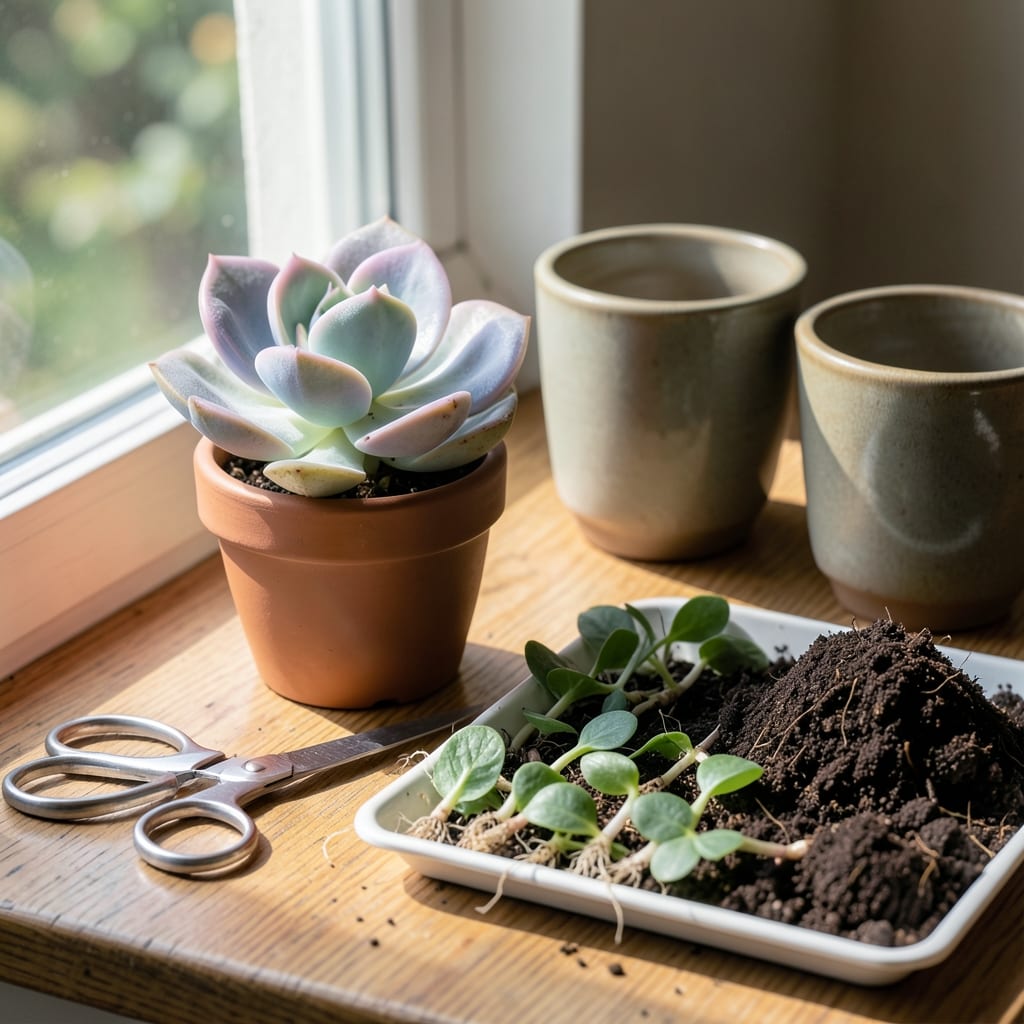
Proplifting is the act of taking plant cuttings or propagation material from public or private spaces without permission, often for personal propagation or sharing.
I see this practice most often in community gardens where rare or desirable plants grow. It’s driven by the thrill of free propagation, but I always remind fellow growers that it can harm the parent plant and violate property rights. Ethical propagation through seed sharing or asking for cuttings is always the better route. ⚡
💡 In This Article
This practice happens because many plants root easily from stem or leaf cuttings. Succulents like jade plants and snake plants often get targeted since a single leaf can sprout new roots in 2-4 weeks with just water or soil.
The process involves snapping off a healthy section, letting the cut callus, then placing it in a growing medium. This method works because plants naturally produce auxins, hormones that trigger root development from damaged tissues. 🌟
Growers focus on plants with high propagation success rates. Pothos, philodendrons, and coleus root so reliably in water that even beginners see 90%+ success. The ideal cutting has at least 2-3 nodes (growth points) where roots will emerge.
Some plants like rosemary or lavender need slightly woodier stems, while others like African violets can propagate from just a single leaf. The ease varies by species, but most common houseplants respond well to this method. ✨
Timing matters too. Spring and early summer cuts root fastest because plants are in active growth. I’ve seen pothos cuttings double in size during these months compared to winter attempts. The parent plant’s health affects success too—stressed or diseased plants produce weaker cuttings that may fail to thrive.
Always choose vigorous, pest-free specimens for best results. 🔥
Specialized tools help serious propagators. A sharp, sterilized blade makes clean cuts that heal faster. Rooting hormone (containing 0.1-0.3% IBA) can speed up the process for tricky plants. Some use humidity domes or heat mats to create ideal conditions, especially for tropical species that need consistent warmth and moisture to root. 💫
What most don’t realize is that some plants propagate better through other methods. Spider plants produce plantlets on long stems, while some succulents grow new plants from fallen leaves. The propagation method depends on the plant’s natural reproduction strategy, which is why research is key before attempting any cutting.
Most use clean, sharp tools to snip stem sections just below a node. Succulent lovers often twist off healthy leaves with a gentle wiggle to avoid damage.
It can harm the parent plant and spread diseases to entire collections. Many see it as theft, especially from public gardens or private property without permission.
Pothos, philodendrons, and coleus root reliably in water with 90%+ success. These forgiving plants need just 2-3 nodes to grow new roots in 2-4 weeks.
Yes, many areas consider it petty theft. Fines often range from $50-$500, depending on local laws and the plant’s value.