
Beautiful Plants For Your Interior
Beautiful Plants For Your Interior
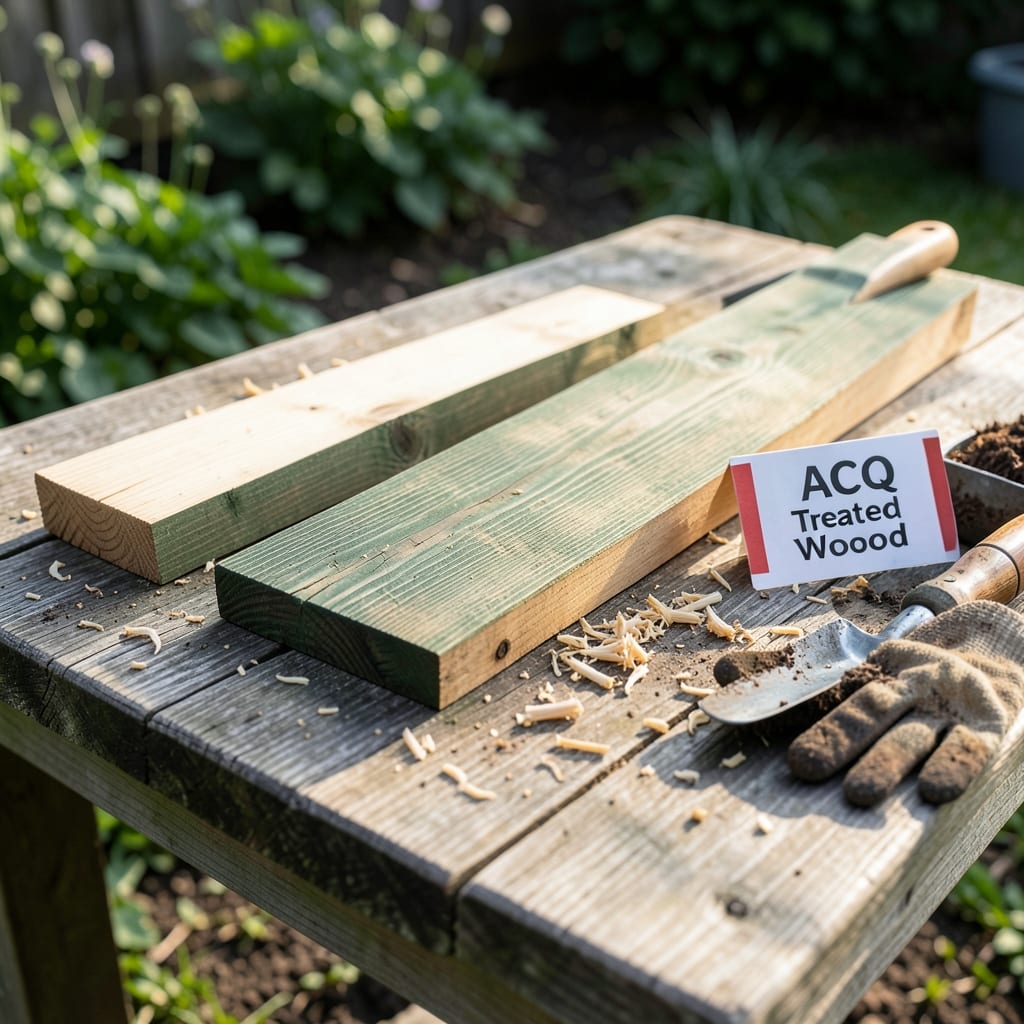
ACQ lumber is pressure-treated wood infused with alkaline copper quaternary compounds to resist rot, insects, and fungal decay for outdoor use.
I’ve used this type of treated wood for years in decks and raised beds because it stands up to moisture and pests better than untreated options. The copper compounds create a protective barrier that deters termites and prevents fungal growth, making it ideal for outdoor projects. It’s a safer alternative to older treatments like CCA, which contained arsenic. ✨
What I love is its versatility—perfect for fences, playgrounds, and even garden boxes since it’s non-toxic to plants once fully cured.
💡 In This Article
The ACQ process uses a water-based solution to force alkaline copper quaternary compounds deep into wood under high pressure. This creates a protective barrier that deters fungi, termites, and other wood-destroying organisms by disrupting their cellular functions.
The copper acts as a natural biocide, while the quaternary ammonium compounds enhance its effectiveness against a broader range of pests. 🔥
Unlike older treatments like CCA, ACQ contains no arsenic, chromium, or other heavy metals, making it safer for the environment and human contact. The treatment typically uses concentrations of 0.15-0.40 lbs of copper per cubic foot of wood, depending on the intended use. This ensures long-term protection without compromising the wood’s structural integrity. ✨
What makes ACQ so effective is its ability to penetrate the wood’s cellular structure. The alkaline nature of the solution helps it bind to the wood fibers, creating a stable, leach-resistant barrier. This means the protection lasts even in wet conditions, which is why it’s ideal for outdoor projects exposed to rain, snow, and humidity.
💫
The treatment process itself involves placing the wood in a pressurized cylinder, where the ACQ solution is forced into the cells. The wood is then dried to remove excess moisture, leaving behind a clean, non-oily finish that’s ready for painting or staining.
This process ensures the wood is protected from the inside out, not just on the surface. ⚡
ACQ-treated lumber typically lasts 20-40 years in above-ground applications and 10-20 years in ground contact, outperforming many other treatments. Its durability and safety profile have made it a popular choice for residential and commercial projects alike. 🌟
Yes, once fully cured (2-4 weeks), it’s safe for edible plants. The copper compounds bond to the wood and won’t leach at harmful levels.
In above-ground uses like decks, expect 20-40 years. For ground contact (fence posts), it typically lasts 10-20 years.
Use stainless steel, hot-dipped galvanized, or coated screws/bolts rated for treated lumber. Regular steel fasteners may corrode faster.
It contains no arsenic or chromium, making it safer for humans and pets. The copper-based formula is just as effective against rot and insects.