
Beautiful Plants For Your Interior
Beautiful Plants For Your Interior
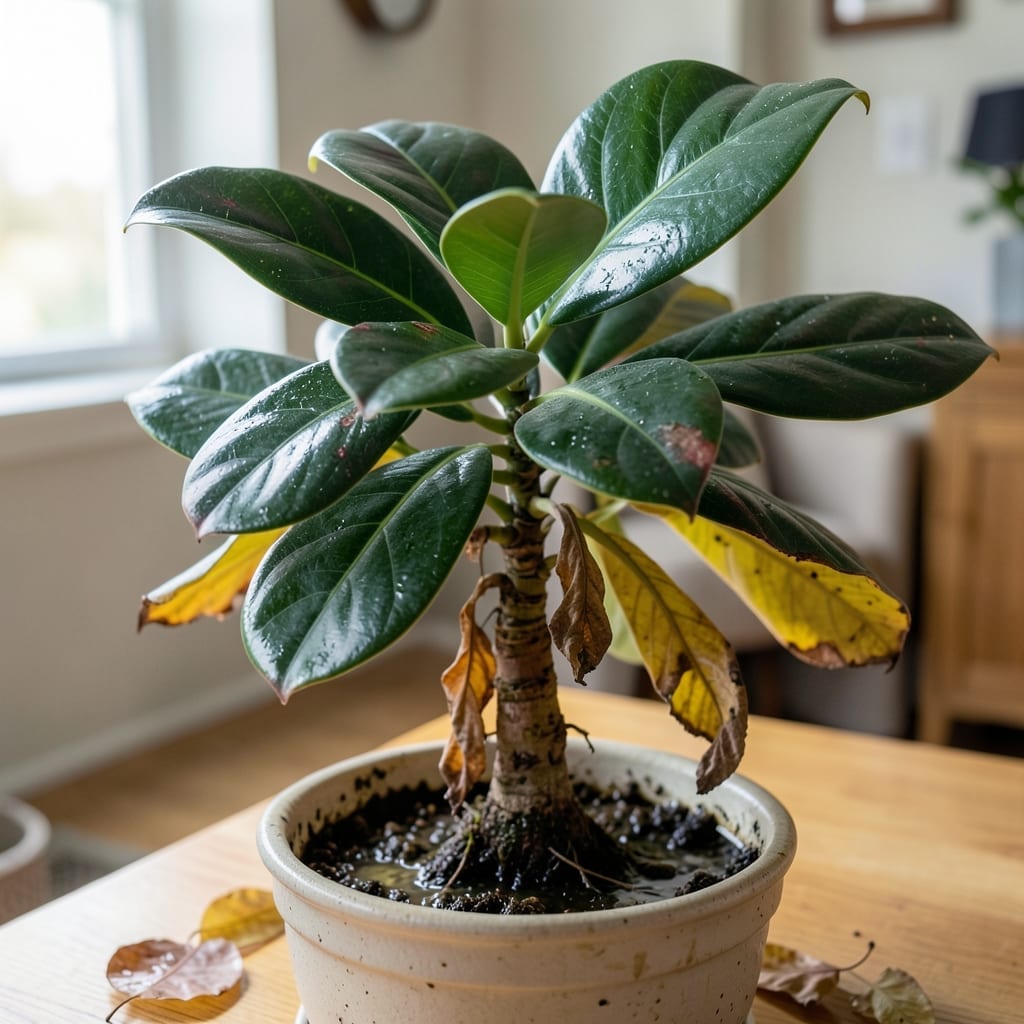
Yellow leaves and drooping stems are your first warning signs. I’ve watched my rubber plant go from perky to pathetic in 48 hours when the soil stays soggy too long.
The leaves turn soft, nearly translucent, and may develop brown spots. Touch the soil—if it feels like a wet sponge, that’s the culprit. Root rot sets in next, and that’s when things get serious.
Here’s the thing—this isn’t a death sentence. Catch it early, and your plant can bounce back with a few simple fixes. Adjust your watering, check the drainage, and give it time to recover.
Between you and me, most rubber plants die from kindness, not neglect. Learning the signs saves you from loving your plant to death.
Overwatering your rubber plant (Ficus elastica) isn’t just about giving it too much love—it’s about disrupting the delicate balance of its root environment. Here’s the science behind why it happens, broken down into actionable causes:
Rubber plants thrive in well-draining soil, but when water can’t escape, the roots drown. Compacted or clay-heavy soil traps moisture, suffocating the roots and preventing oxygen uptake. Fix it: Use a pot with drainage holes and a mix of perlite or sand to improve aeration.
Watering on a rigid schedule (e.g., “every Monday”) ignores the plant’s actual needs. Rubber plants prefer their soil to dry out partially between waterings. Overdoing it leads to waterlogged soil, where roots rot instead of absorb nutrients.
Too-large containers hold excess moisture, as the roots can’t absorb it all. This creates a soggy, anaerobic (oxygen-free) environment, ideal for root rot fungi like Phytophthora. Fix it: Repot into a snugger container with fresh, dry soil.
In dim, humid conditions, evaporation slows, leaving soil damp longer. Rubber plants in such spots need less frequent watering to compensate. Pair this with poor airflow, and you’ve got a recipe for edema (cell bursting) and fungal growth.
If your rubber plant is showing signs of overwatering, don’t worry—it’s often fixable with the right steps. Here’s how to address each issue and prevent future problems:
Stop watering immediately and let the soil dry out completely. Remove any yellow or mushy leaves with clean scissors to redirect energy to healthy growth. Prevention tip: Check the top 1-2 inches of soil before watering—if it’s dry, it’s time to water; if damp, wait. 💡
This usually means root rot. Gently remove the plant from its pot, trim any black or mushy roots with sterilized shears, and repot in fresh, well-draining soil. Use a pot with drainage holes to avoid soggy conditions. Prevention tip: Opt for a terra cotta pot—it wicks away excess moisture better than plastic. ✨
Scrape off the top layer of soil if you see mold or a white crust. Replace it with fresh, dry soil and improve airflow around the plant. Avoid misting the leaves to reduce humidity. Prevention tip: Add a layer of perlite or sand to the soil mix to enhance drainage. 🌡️
If the soil stays wet for days, repot the plant in a mix designed for succulents or add perlite and coarse sand to improve aeration. Ensure the pot has drainage holes. Prevention tip: Water only when the soil is dry halfway down the pot—use your finger to test! 🎯
Press your finger 1-2 inches into the soil. If it feels soggy or damp, hold off on watering. Also look for yellowing leaves or a musty smell from the soil.
This often signals early overwatering. The plant can’t absorb oxygen through waterlogged roots, causing stress. Stop watering and let the soil dry out completely.
Yes, if caught early. Remove the plant, trim black/mushy roots, and repot in fresh, dry soil. Use a clean pot with drainage holes to prevent recurrence.
Wait until the top 2-3 inches of soil are dry. This may mean watering every 10-14 days instead of weekly. Always check soil moisture first.