
Beautiful Plants For Your Interior
Beautiful Plants For Your Interior
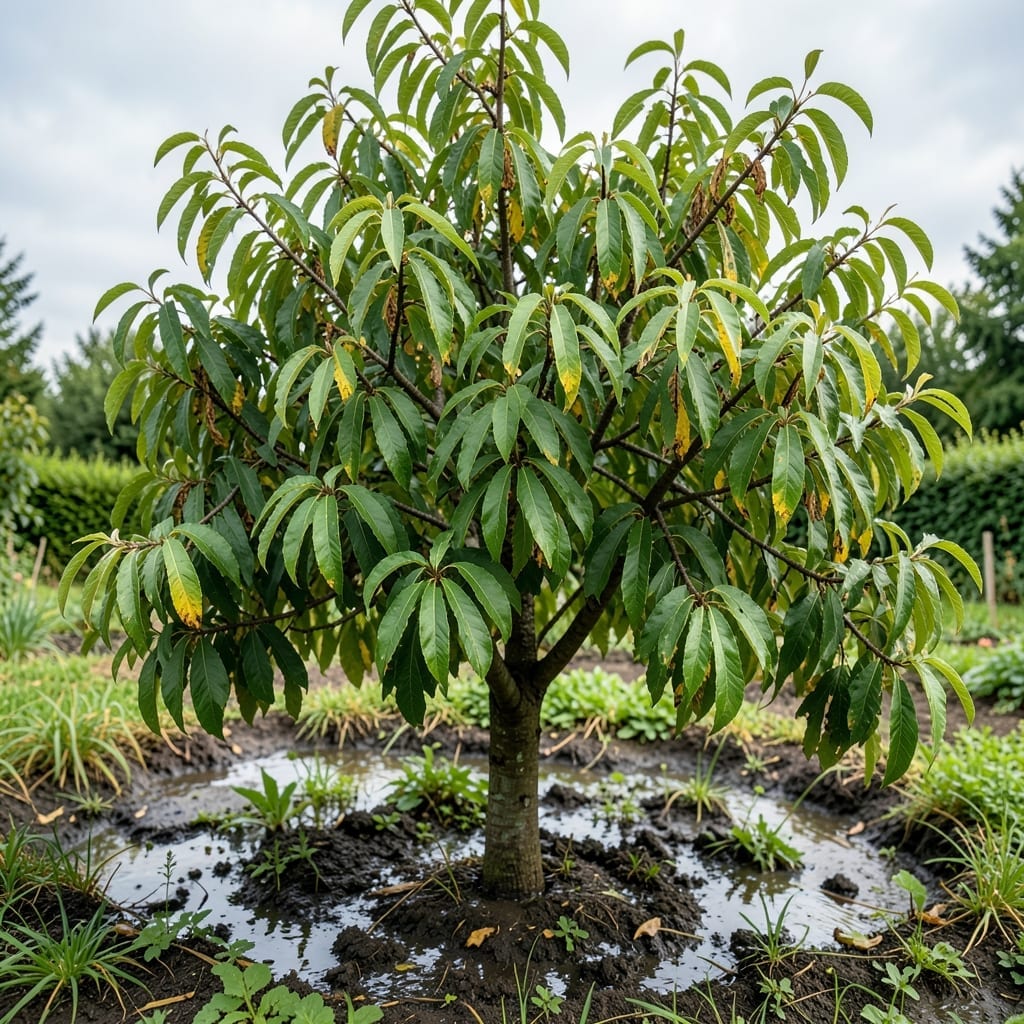
I’ve seen too many peach trees slowly drown from kindness. Yellowing leaves that look burned at the edges, soft brown spots on the bark—these aren’t signs of thirst but of too much water.
The soil stays soggy long after rain, and the leaves wilt even when the ground is wet. Roots can’t breathe, rot sets in, and the tree starts dropping fruit before it ripens.
Catching it early saves the tree. Stop watering immediately, check drainage, and let the top 2-3 inches of soil dry out between waterings.
Prevention is simpler than cure: mulch properly, water deeply but less often, and watch for these warning signs before they spread.
Overwatering a peach tree disrupts its natural balance, leading to visible symptoms like wilting leaves and soggy soil. Here’s why it happens:
Peach trees thrive in well-drained soil, and overwatering saturates the root zone, displacing oxygen. Roots need air pockets to respire; without them, they suffocate. This condition, called hypoxia, weakens the tree’s ability to absorb nutrients, causing leaves to yellow, wilt, or drop prematurely.
Heavy clay or compacted soils retain moisture for too long, preventing proper drainage. Even moderate watering can lead to waterlogging in these conditions. The extended saturation fosters root rot pathogens like Phytophthora or Armillaria, which attack the tree’s vascular system, further impairing water and nutrient uptake.
Light, daily watering encourages shallow root growth, making the tree more susceptible to stress. Peach trees develop deep roots when watered deeply but infrequently. Shallow roots can’t access moisture or oxygen efficiently, increasing the risk of overwatering symptoms even if the total water volume seems reasonable.
Cool, overcast weather or high humidity slows evaporation, prolonging soil moisture retention. If you don’t adjust watering schedules for these conditions, the soil stays soggy. Additionally, cold soil temperatures reduce root metabolic activity, making it harder for the tree to process excess water.
If your peach tree is showing signs of overwatering, act quickly to prevent root rot and other serious issues. Here’s how to address each problem:
If the soil stays waterlogged, stop watering immediately. Aerate the soil by gently loosening the top 2–3 inches with a garden fork to help it dry faster. For chronic drainage issues, amend the soil with compost or sand to improve structure. Consider planting in a raised bed or mounded area if your yard has heavy clay soil.
Cut back on watering and let the top 1–2 inches of soil dry out between sessions. Peach trees thrive on deep, infrequent watering—aim for 1–2 inches of water per week, including rainfall. Use a moisture meter or the finger test to check soil dampness before watering again.
💡 Pro Tip: Water early in the morning to reduce evaporation and fungal risks.
If you spot mushrooms, mold, or a rotten smell, root rot may have set in. Trim away any black, mushy roots with sterilized pruners. Apply a fungicide labeled for root rot, and repot or transplant the tree into fresh, well-draining soil if possible.
✨ Prevention Tip: Install a rain gauge to track natural water input and adjust accordingly.
Yellow leaves signal root stress from too much moisture. Soggy soil blocks oxygen, preventing roots from absorbing nutrients. This often starts with lower leaves and spreads upward.
If caught early, yes. Stop watering, let soil dry to 2-3 inches deep, and improve drainage. Severe cases with root rot may need fungicide treatment or repotting.
Water deeply 1-2 times per week, allowing soil to dry between sessions. Use the finger test: only water if the top 1-2 inches feel dry.
This indicates poor drainage. Amend with compost or sand, or plant in a raised bed. Avoid watering until the top 3 inches are dry.