
Beautiful Plants For Your Interior
Beautiful Plants For Your Interior
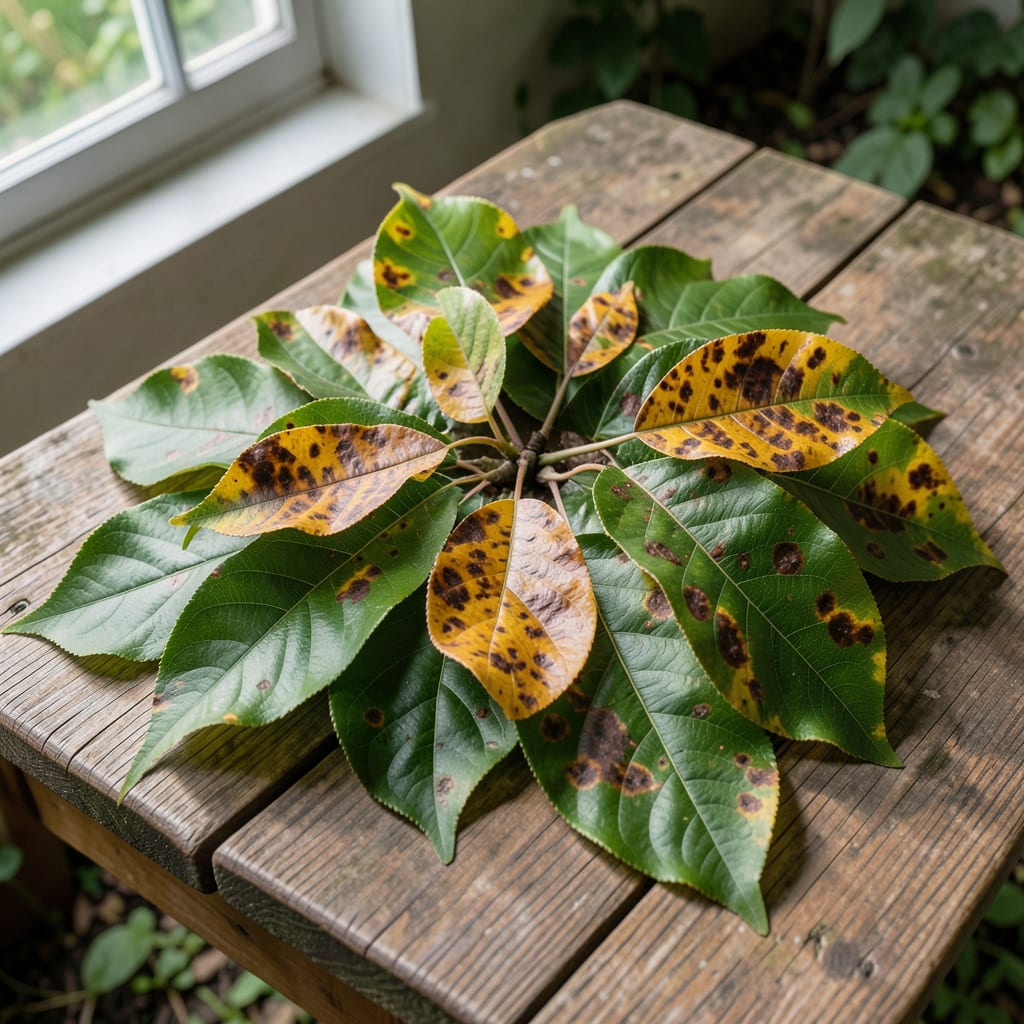
Those brown spots on your peach tree leaves aren’t just ugly—they’re a warning sign. I’ve seen entire harvests lost to ignored leaf problems, but early action can save your tree and next year’s fruit.
Peach leaf curl, bacterial spot, and fungal infections each leave distinct marks. The patterns tell you exactly what you’re dealing with—if you know how to read them. Most cases clear up with simple organic treatments.
You’ll be removing affected leaves, applying the right spray, and preventing next year’s outbreak. The tree rebounds faster than you’d expect, often within 2-3 weeks of treatment.
Works for backyard trees, orchards, or even potted peaches. Here’s how to diagnose and fix it.
Brown spots on peach tree leaves often signal underlying issues that disrupt the tree’s health. Below are the most common causes, explained with actionable insights to help you diagnose and address them.
Fungi like Peach Leaf Curl (Taphrina deformans) and Brown Rot (Monilinia spp.) thrive in wet, humid conditions. Peach Leaf Curl causes reddish-brown blisters that later turn grayish, while Brown Rot creates circular, tan-to-brown spots with a fuzzy center. These pathogens overwinter in bark and fallen debris, releasing spores in spring that infect new growth. Action: Remove and destroy infected leaves, improve air circulation, and apply copper-based fungicides before bud break.
Insects such as aphids, mites, or scale pierce leaf tissues, creating entry points for secondary infections. Their feeding often leaves behind sticky honeydew, which fosters sooty mold—appearing as dark, irregular spots. Action: Inspect leaves for pests (look for webbing, sticky residue, or visible insects) and treat with horticultural oil or insecticidal soap at first signs.
Overwatering, poor drainage, or drought can stress the tree, leading to leaf scorch or nutrient deficiencies that manifest as brown patches. Excess moisture also promotes fungal growth. Action: Ensure consistent moisture (1–2 inches of water weekly) and mulch to retain soil moisture without waterlogging.
A lack of essential nutrients like potassium, magnesium, or calcium can cause interveinal browning or tip burn. For example, potassium deficiency often starts as yellowing edges that progress to brown, crispy spots. Action: Conduct a soil test and amend with balanced organic fertilizers (e.g., compost or kelp meal) to correct imbalances.
Tackling brown spots on your peach tree leaves starts with identifying the cause. Below are targeted solutions for the most common issues, along with prevention tips to keep your tree healthy.
If fungal diseases like peach leaf curl or brown rot are the culprit, act fast. Prune infected leaves and branches immediately and discard them (do not compost). Apply a copper fungicide or neem oil spray to the tree, following label instructions. For severe cases, repeat treatments every 7–10 days until symptoms subside.
Prevention: Improve airflow by thinning branches. Water at the base of the tree to keep leaves dry, and apply a dormant fungicide spray in late winter before buds swell.
For pests like aphids, mites, or scale insects, start with a strong blast of water to dislodge them. Follow up with insecticidal soap or horticultural oil, focusing on the undersides of leaves. For stubborn infestations, introduce beneficial insects like ladybugs or lacewings.
Prevention: Inspect leaves regularly for early signs of pests. Encourage natural predators by planting companion flowers like marigolds or alyssum nearby.
If brown spots stem from overwatering, drought, or nutrient deficiencies, adjust your care. Water deeply but less frequently to prevent root rot, and ensure the soil drains well. For nutrient issues, conduct a soil test and amend with organic compost or a balanced fertilizer as needed.
Prevention: Mulch around the base to retain moisture and regulate soil temperature. Avoid overhead watering to reduce leaf stress.
If chemical sprays or fertilizers caused the spots, rinse the leaves thoroughly with water to remove residue. Stop using the product and switch to gentler, organic alternatives. Test new products on a small area first.
Prevention: Always follow application rates and avoid spraying during extreme heat or direct sunlight.
Pro tip 💡: Keep a gardening journal to track treatments and environmental conditions. This helps pinpoint patterns and prevent future issues.
Fungal spores can travel via wind or water, potentially affecting nearby peach trees. Remove infected leaves immediately and avoid overhead watering to prevent spread.
With proper treatment, new healthy growth appears in 2-3 weeks. Severely damaged leaves won’t heal but will be replaced by fresh ones.
Fruit is generally safe if spots are only on leaves. However, for fungal issues like brown rot, discard any fruit showing signs of infection.
Apply copper fungicide in early spring before buds swell. Maintain good airflow and clean up fallen leaves to reduce spore buildup.
