
Beautiful Plants For Your Interior
Beautiful Plants For Your Interior
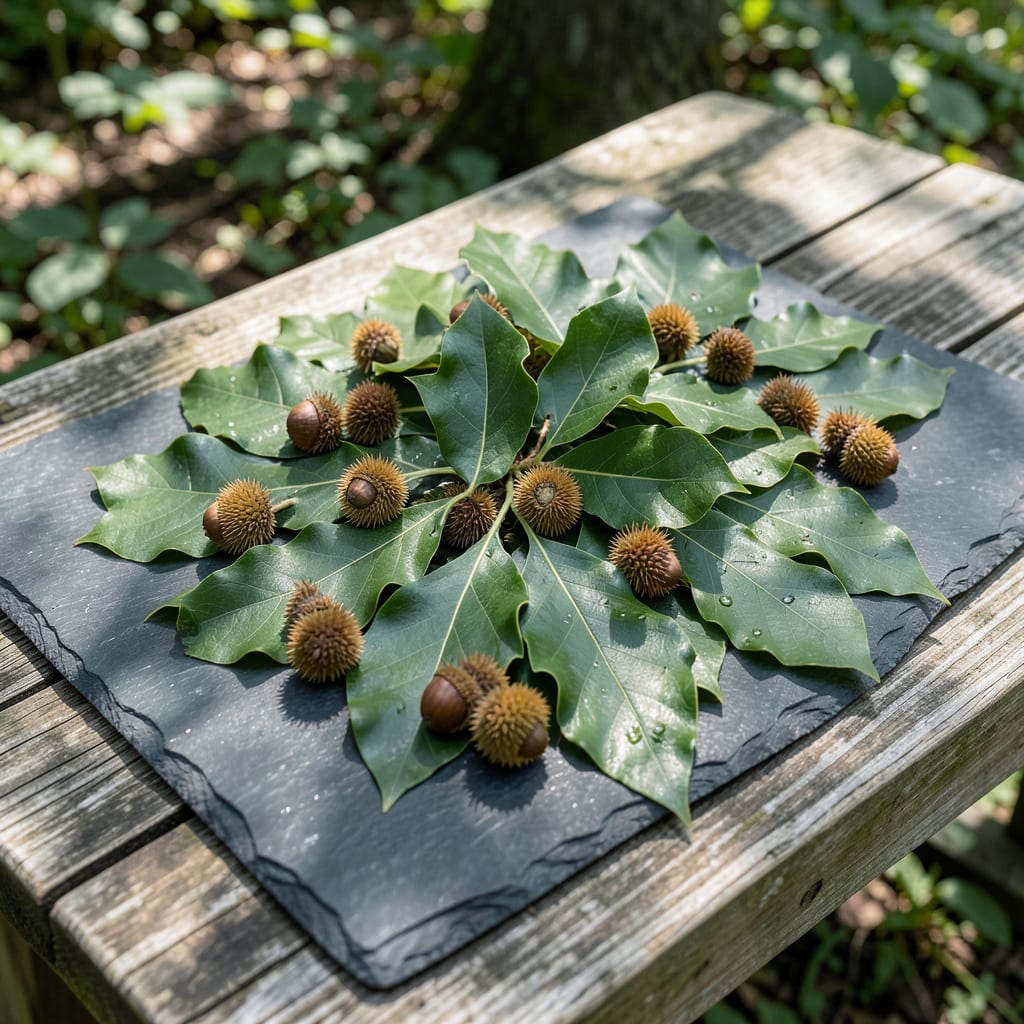
I still remember the first time I held a beech nut in my palm—smooth, triangular, and nestled in its spiky husk. The leaves are just as distinctive: oval, wavy-edged, and a glossy green that turns copper in fall.
These features aren’t just pretty—they tell you everything about the tree’s health, age, and even the best seasons for planting. Spot them right, and you’ll never confuse a beech with its lookalikes again.
📚 In This Guide
Here’s how I reliably distinguish beech trees from lookalikes in any garden or forest setting.
Beech leaves are oval-shaped with a pointed tip and measure 2-4 inches long. The edges are the key identifier—look for fine, wavy teeth that are nearly invisible unless you run your fingers along the margin. This subtle serration feels like tiny bumps rather than sharp points.
Hold the leaf up to the light. You’ll notice the veins run parallel to each other and curve toward the tip, creating a distinctive pattern. The leaf surface is smooth and slightly shiny, with a light green color in spring that deepens to dark green by summer.
Beech leaves grow alternately along the stem, not in pairs or clusters. Each leaf attaches with a short, stout petiole (the stem connecting leaf to branch). Unlike oak leaves, beech leaves don’t have lobes—they maintain that simple, elongated oval shape throughout their growth.
Feel the texture. The surface is thin but leathery, with a slight stiffness when fresh. In autumn, they turn golden bronze and often remain on the tree through winter, a characteristic called marcescence. This trait makes beech trees easy to spot in cold months when most other deciduous trees are bare.
Beech fruit, called beech nuts or mast, grows in spiny husks that split open when ripe. Each husk contains 1-2 triangular nuts that are ½ inch long with smooth, shiny brown shells. The husks themselves are woody and covered in soft, needle-like spines about ½ inch long.
You’ll find these growing in clusters along the branches, typically appearing in late summer to early fall. The nuts inside are edible but bitter raw—squirrels and wildlife often collect them before they fully ripen. Look for empty husks on the ground as another identification clue.
Beech trees have smooth, silver-gray bark that remains unbroken even as the tree matures. This is one of the most reliable identifiers year-round. The branches grow horizontally, creating a wide, spreading canopy that provides dense shade.
In winter, the combination of persistent copper-colored leaves and the tree’s distinctive bark makes identification straightforward. Young trees often retain more leaves than mature specimens. The nuts and leaves together provide the most definitive identification, especially when comparing to similar species like chestnut or oak.
Small details can make a big difference when you’re learning to spot these trees with confidence.
The Texture Test: In Step 2, don’t just look at the leaves—feel them. That thin but leathery surface with slight stiffness is unique to beech. I once mistook a hornbeam for beech until I ran my fingers over the leaf and realized the texture was all wrong.
Seasonal Color Clues: The light green color in spring mentioned in Step 1 deepens to dark green by summer, then turns golden bronze in autumn. This progression is a great way to confirm you’re looking at the right tree, especially if you’re identifying it across different seasons.
Husk Inspection: For Step 3, pay close attention to the spiny husks. The soft, needle-like spines are about ½ inch long, and each husk holds 1-2 triangular nuts. If you find empty husks on the ground, that’s a sure sign squirrels have been at work.
Bark Advantage: Step 4 highlights the smooth, silver-gray bark as a year-round identifier. Unlike many trees that develop ridges or furrows as they age, beech bark stays remarkably smooth, which is a dead giveaway even in winter when leaves are sparse.
Beech leaves emerge in spring, while the fruit (beech nuts) typically develop in late summer to early fall, ripening by September or October. The timing can vary slightly based on climate and tree health.
Beech nuts are edible but should be roasted to remove mild toxicity. Leaves are not typically consumed. Always ensure proper preparation and avoid raw consumption for safety.
Beech leaves are oval, smooth-edged, and light green, turning golden-brown in fall. The fruit, or mast, is a small, triangular nut encased in a spiny husk that splits open when ripe.
Beech trees produce nuts irregularly, often in a cycle called “masting.” Stress, weather, or age can also affect fruit production. Patience and proper care can help restore yield.
Yes! Plant fresh beech nuts in fall for best results. Soak them in water for 24 hours, then sow in well-drained soil. Germination may take months, so be patient.
