
Beautiful Plants For Your Interior
Beautiful Plants For Your Interior
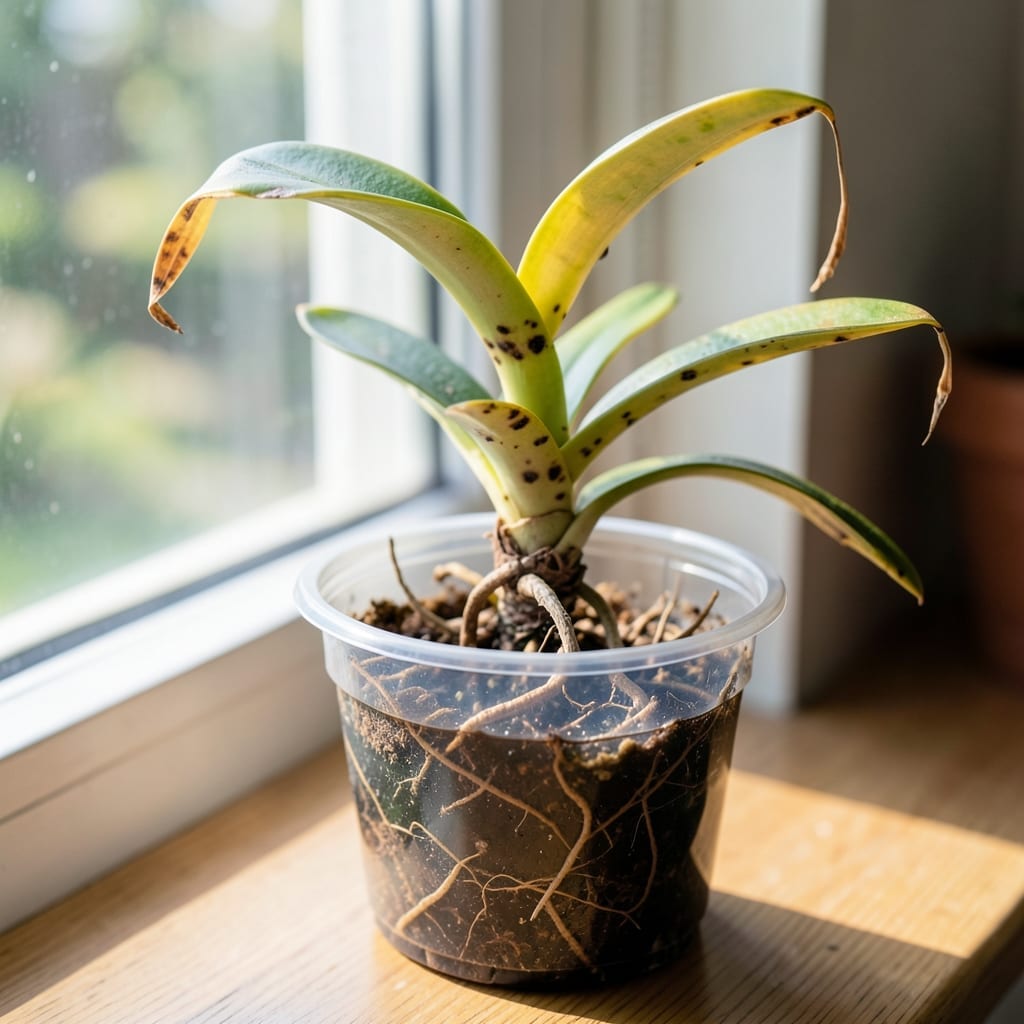
Yellow leaves and mushy roots are your first warning signs. I’ve rescued dozens of orchids from the brink by catching these early—before the damage becomes irreversible.
The leaves turn a sickly yellow, often starting at the base, while roots shift from firm and silver-green to soft and brown. A healthy orchid should never sit in water, yet that’s exactly how this problem starts.
Left unchecked, the rot spreads upward, turning stems black and dropping leaves like dominoes. The good news? With quick action, most plants bounce back within 2-3 weeks of proper care.
Prevention is simpler than cure—just water when the roots look dry and silver, not green and plump. Here’s how to stop it for good.
Overwatering orchids often stems from well-intentioned but misguided care. Unlike typical houseplants, orchids—especially epiphytic varieties like Phalaenopsis—evolve to thrive on air and minimal moisture, not soggy soil. Here’s why it happens:
Orchids planted in dense, non-porous potting mixes (e.g., regular soil) or containers without drainage holes trap water. Roots suffocate when oxygen can’t reach them, leading to rot. Science note: Anaerobic conditions (lack of oxygen) disrupt cellular respiration, causing root cells to die.
Many growers water on a rigid schedule (e.g., “every Monday”) instead of checking moisture levels. Orchid roots need to dry slightly between waterings to absorb oxygen. Overwatering fills the air pockets in the medium, drowning the roots.
Cool environments (<60°F/15°C) slow evaporation, while high humidity (70%+) reduces transpiration. Together, they prolong dampness in the pot, creating a breeding ground for Phytophthora and other root-rot pathogens.
Oversized pots hold excess moisture that roots can’t absorb quickly. A pot 1–2 inches larger than the root ball is ideal. Too much space = soggy medium = root asphyxiation.
Actionable fix: Use bark-based mixes, ensure pots have drainage, and water only when the top inch of medium feels dry.
If your orchid is showing signs of overwatering, don’t panic—it’s often fixable with the right steps. Here’s how to address the most common issues and restore your plant’s health:
If the leaves are turning yellow, stop watering immediately and let the potting mix dry out completely. Orchids thrive on a “soak and dry” method: Water only when the top inch of the medium feels dry. Use a chopstick or wooden skewer to check moisture deep in the pot.
Prevention tip: 💡 Water in the morning so excess moisture evaporates during the day. Always use pots with drainage holes.
For mushy, black, or foul-smelling roots, act fast. Remove the orchid from its pot, rinse the roots with lukewarm water, and trim away all rotten roots using sterilized scissors. Soak the remaining healthy roots in a diluted hydrogen peroxide solution (1 part 3% peroxide to 3 parts water) for 10 minutes to disinfect.
Repot in fresh, chunky orchid mix (bark-based) and a clean pot. Avoid watering for 5–7 days to let the roots heal.
Prevention tip: 🌡️ Use a clear pot to monitor root health and ensure proper airflow around the roots.
If the potting mix stays soggy, it’s likely too dense. Replace it with a fast-draining mix of bark, perlite, and charcoal. Elevate the pot on a tray of pebbles to improve air circulation underneath.
Prevention tip: ✨ Repot your orchid every 1–2 years to refresh the medium and prevent compaction.
Overwatering can disrupt the plant’s ability to absorb moisture, leading to dehydration-like symptoms. Increase humidity around the orchid by placing it on a humidity tray or using a humidifier. Mist the leaves lightly in the morning, but avoid getting water in the crown.
Prevention tip: 🎯 Group orchids together to create a microclimate with higher humidity.
Water only when the top inch of mix feels dry, typically every 7-10 days. Use the “soak and dry” method: drench thoroughly, then let it dry out completely.
Yes! Trim rotten roots, repot in fresh bark mix, and hold off watering for 5-7 days. Most recover within 2-3 weeks with proper care.
Previous overwatering may have damaged roots, preventing proper hydration. Check for mushy roots and repot if needed. Healthy roots should be firm and silver-green.
Use clear plastic pots with drainage holes to monitor root health. Place inside a decorative cache pot and remove after watering to prevent soggy conditions.