
Beautiful Plants For Your Interior
Beautiful Plants For Your Interior
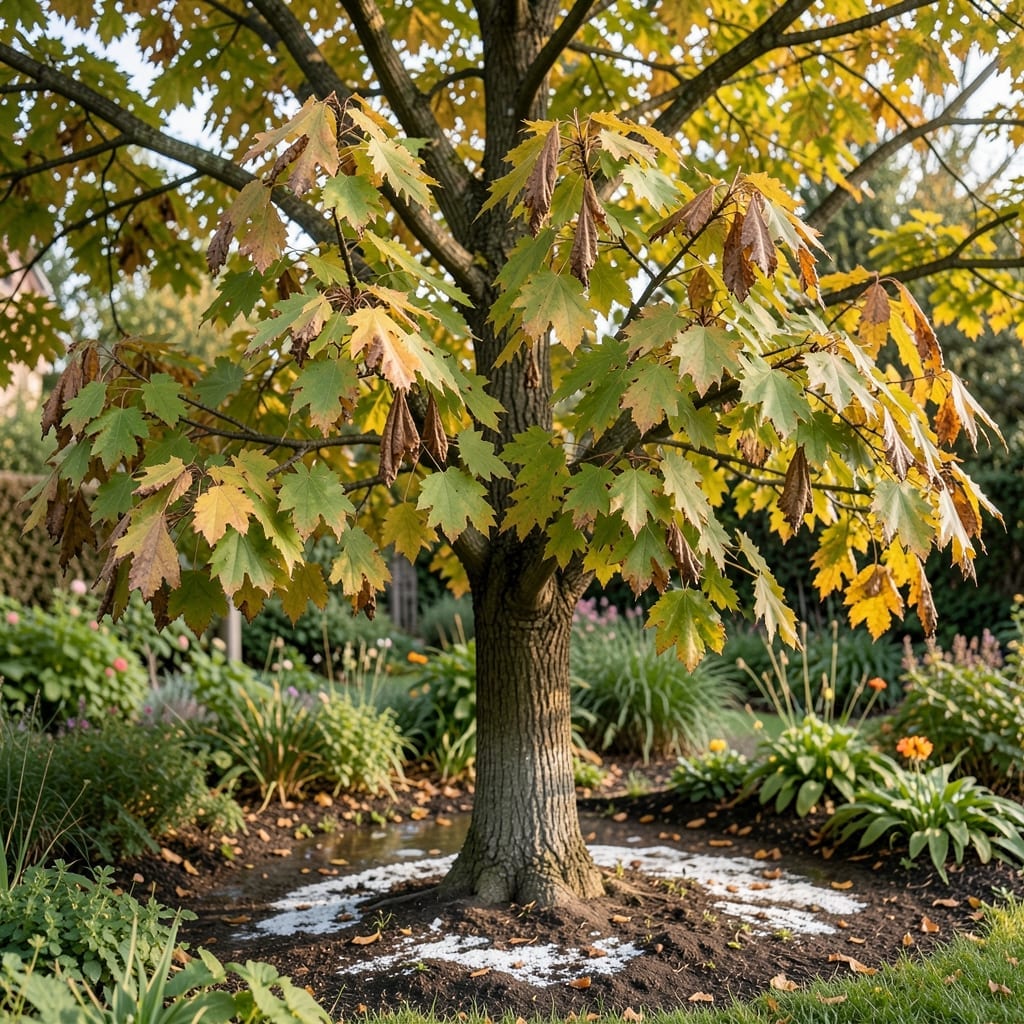
Your maple’s leaves turning yellow in summer? That’s a red flag. 🌿 I’ve seen this too many times—overwatering shows up as drooping branches and leaves that look more like fall arrived early than healthy summer growth.
The roots are drowning, unable to breathe in soggy soil. You might notice new leaves staying small or edges turning brown, while the soil stays wet long after watering. It’s not thirst—it’s too much of a good thing.
Left unchecked, the tree weakens, becomes vulnerable to disease, and may even lose branches. The fix starts with checking your watering habits and improving drainage. Stop watering immediately and let the soil dry out between cycles.
Works for all maple varieties, from Japanese to sugar. Here’s how to spot it early and turn things around.
Overwatering a maple tree doesn’t always mean too much water—it often means too little oxygen. 🌧️ Here’s why it happens:
Maples thrive in well-draining soil. When planted in heavy clay or compacted ground, water pools around the roots, suffocating them. The soil’s inability to drain creates anaerobic conditions, where roots can’t absorb oxygen, leading to rot and nutrient uptake failure.
Many gardeners assume more water equals healthier growth, but maples only need 1–1.5 inches of water per week (including rainfall). Frequent, shallow watering prevents deep root development, making the tree dependent on surface moisture. Over time, this weakens the root system and invites fungal diseases like Phytophthora.
Planting a maple too deep—where the root flare (the widened base of the trunk) is buried—traps moisture against the bark. This encourages rot and restricts oxygen flow. The root flare should always sit above soil level to allow proper drainage and air circulation.
While mulch helps retain moisture, excessive layers (over 3–4 inches) can smother the roots. Piled-up mulch against the trunk (a “mulch volcano”) traps water, promoting decay. Keep mulch away from the trunk and use it to improve soil structure, not suffocate the tree.
Once you’ve spotted the signs of overwatering, act quickly to help your maple tree recover. Here’s how to tackle each issue with practical fixes and prevention tips.
If the soil is waterlogged, stop watering immediately and check the drainage. Use a shovel to loosen compacted soil around the roots, and mix in organic matter like compost or sand to improve aeration. For potted maples, ensure the container has drainage holes and switch to a well-draining potting mix. Prevention tip: 💡 Always test soil moisture with your finger—water only when the top 1-2 inches are dry.
Yellow leaves often signal root stress from too much water. Trim affected foliage to redirect the tree’s energy, then reduce watering frequency. Water deeply but less often—maples prefer 1-2 inches per week, including rainfall. Prevention tip: ✨ Use a rain gauge to track natural water intake and avoid overdoing it.
If roots are dark, mushy, or smell foul, root rot may be the culprit. Prune damaged roots with sterilized shears and treat the remaining roots with a fungicide. Repot or replant in fresh, dry soil. Prevention tip: 🌡️ Avoid overhead watering and ensure the planting site has good airflow to discourage fungal spores.
Wilting can result from oxygen-starved roots. Prune dead or dying branches to reduce stress, then mulch lightly (1-2 inches) to retain moisture without suffocating roots. Prevention tip: 🎯 Water at the base of the tree, not the leaves, and do it early in the day so excess moisture evaporates.
Check the soil first—if it’s soggy and smells sour, overwatering is likely. Yellow leaves from excess water often appear uniformly pale, while drought stress causes crispy, curling edges.
Yes, if caught early. Let the soil dry to a depth of 3–4 inches before watering again. Trim damaged leaves to help the tree redirect energy to healthy growth.
Mix compost or sand into the top 6 inches of soil to loosen it. For potted trees, ensure the container has drainage holes and use a well-draining potting mix.
Prune the mushy, dark roots and treat with fungicide. Repot or replant in fresh, dry soil and avoid watering for at least a week. Early action is key!