
Beautiful Plants For Your Interior
Beautiful Plants For Your Interior
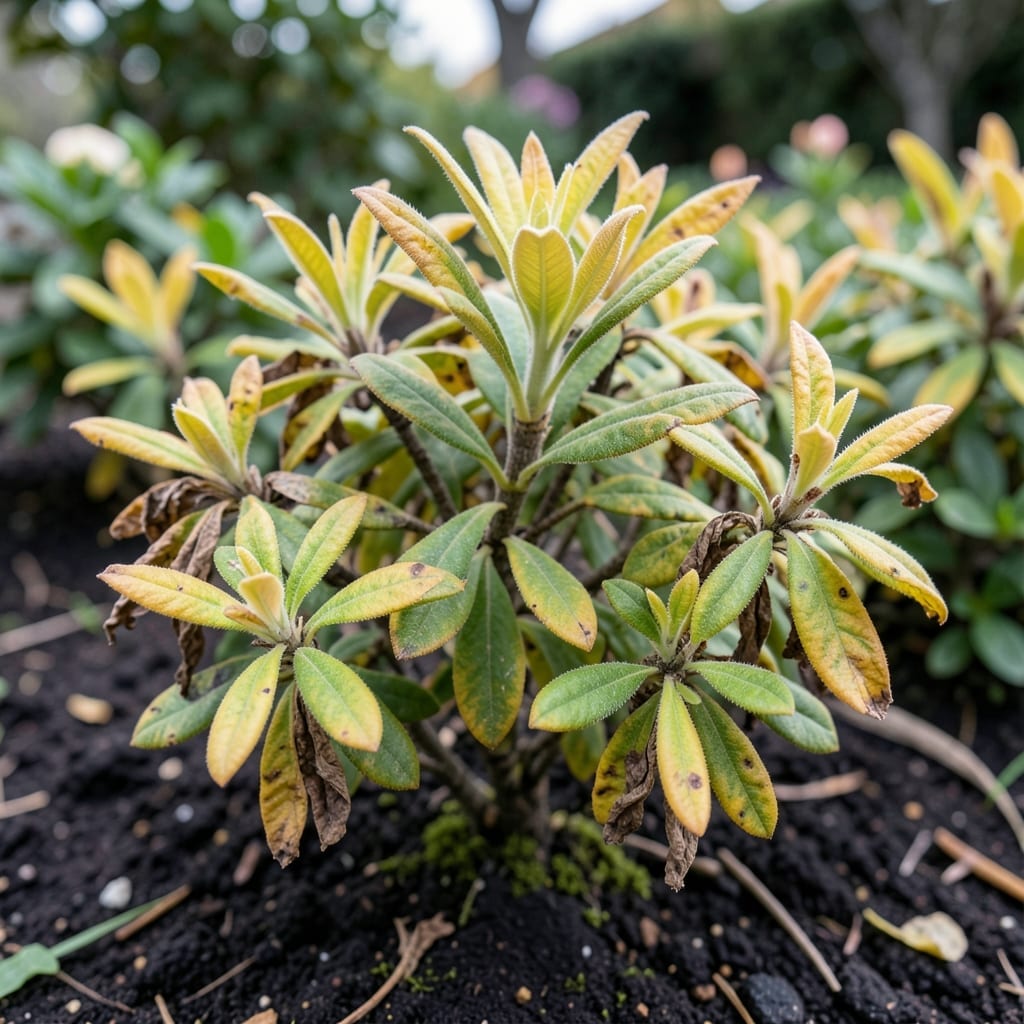
Your azalea’s yellow leaves and droopy branches might scream “thirsty,” but here’s the twist—it’s probably drowning. I’ve rescued more than a few by learning this one visual clue: soft, blackened stems at the base.
Overwatering suffocates roots, turning leaves yellow between veins while edges stay green. The soil stays soggy days after watering, and new growth wilts like it’s bone-dry. Most gardeners misdiagnose this as underwatering.
Pull back the mulch—if roots are mushy and dark instead of firm and white, you’ve found your culprit. The fix starts with letting soil dry between waterings.
Prevention is simpler than cure: 1-inch of water weekly, in well-draining soil. Your azalea will bounce back with crisp leaves and vibrant blooms next season.
Overwatering azaleas often stems from a few common mistakes. Understanding the root causes can help you adjust your care routine.
Soggy soil is the most direct cause of overwatering. Azaleas thrive in well-draining, acidic soil. If planted in heavy clay or compacted soil, water pools around the roots, suffocating them and preventing oxygen uptake. This leads to root rot, a fungal disease that turns roots mushy and brown.
Azaleas prefer consistently moist soil, not waterlogged conditions. Many gardeners mistakenly water on a rigid schedule rather than checking soil moisture first. Stick your finger 1-2 inches into the soil—if it feels damp, wait to water. Overwatering disrupts the plant’s ability to absorb nutrients, causing yellowing leaves and stunted growth.
Potted azaleas often suffer from overwatering if the container lacks drainage holes. Without an escape route, excess water sits at the bottom, creating a drowning effect. Always choose pots with drainage and use a high-quality, peat-based potting mix designed for acid-loving plants.
Cool, cloudy weather slows evaporation, leaving soil wetter for longer. If you don’t adjust your watering habits during these periods, you risk overwatering. Similarly, azaleas in shaded areas retain moisture longer than those in full sun. Always tailor your watering to the current climate and location.
If your azalea is showing signs of overwatering, don’t panic—there are simple steps to revive it. Here’s how to address each issue and prevent future problems.
Fix: Stop watering immediately and let the soil dry out. Check the roots for rot—trim any mushy, dark roots with clean shears. Repot the plant in fresh, well-draining soil if the damage is severe.
Prevention: Water only when the top 1-2 inches of soil feel dry. Use a moisture meter for accuracy.
Fix: Improve drainage by amending the soil with compost or perlite. If the plant is in a container, ensure the pot has drainage holes. Reduce watering frequency and avoid letting the plant sit in saucers of water.
Prevention: Plant azaleas in raised beds or containers with good drainage. Mulch lightly to retain moisture without waterlogging.
Fix: Prune affected leaves and stems to encourage new growth. Move the plant to a location with better airflow and indirect sunlight to help it recover.
Prevention: Avoid overhead watering to prevent fungal issues. Water at the base of the plant early in the day.
💡 Pro Tip: Azaleas thrive in acidic, well-draining soil. Test your soil’s pH and amend it with sulfur or peat moss if needed to maintain a pH of 4.5–6.0.
Check for yellowing leaves with green veins or soft, dark stems. Soggy soil that stays wet for days is a red flag.
Roots suffocate in waterlogged soil, blocking nutrient uptake. This causes chlorophyll breakdown, turning leaves yellow between veins.
Yes! Stop watering, trim rotten roots, and repot in fresh, well-draining soil. Most bounce back within 2-3 weeks if caught early.
Use acidic, well-draining mix with compost or perlite. Raised beds or containers with drainage holes work best.