
Beautiful Plants For Your Interior
Beautiful Plants For Your Interior
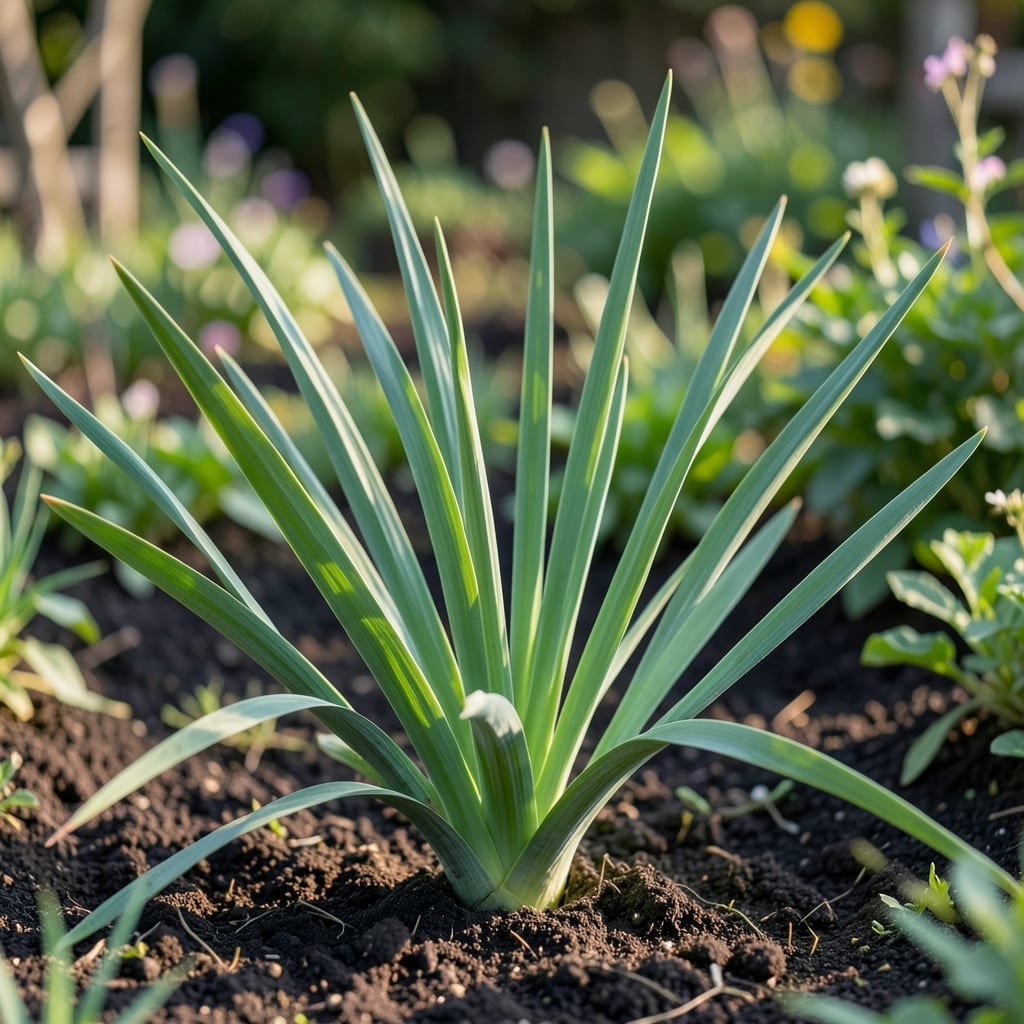
Iris leaves are long, flat, and sword-shaped with a smooth, slightly waxy surface. They grow in a fan-like formation from the base, typically a rich green to blue-green color, and can reach 12 to 36 inches in length depending on the variety.
What stands out about these leaves is their architectural elegance in gardens. I notice their upright growth habit creates striking vertical accents that contrast beautifully with rounded shrubs or flowering plants. 🌟 The waxy coating helps them retain moisture, making irises particularly resilient in varying weather conditions.
💡 In This Article
The sword-like shape isn’t just aesthetic—it’s a functional adaptation. These long, flat blades maximize sun exposure for photosynthesis while minimizing water loss through their smooth, waxy cuticle. This surface coating gives them that subtle sheen you notice when sunlight hits at just the right angle. 🌟
Color tells a story about variety and health. While most irises sport deep green to blue-green foliage, some Japanese irises develop striking purple-tinged bases. The intensity shifts with age—new growth emerges lighter, almost chartreuse, before deepening as it matures. This color gradient helps gardeners identify the newest fans.
Growth pattern serves as a fingerprint for identification. Unlike many plants with alternating leaves, irises produce all their foliage from the base in overlapping layers. This fan formation creates a natural sculpture that can reach 12 to 36 inches tall, with some Siberian varieties pushing 4 feet under ideal conditions.
The stiff upright habit resists flopping even in heavy rain.
Texture offers another clue. Run your fingers along the length and you’ll feel a smooth surface with a slight resistance—this is the waxy layer at work. The edges are clean and entire (unlobed), distinguishing them from similar-looking plants like daylilies which have slightly wavy margins. ✨
Seasonal changes bring subtle transformations. In spring, the leaves emerge rolled like scrolls before unfurling. By late summer, some varieties develop a subtle glaucous (powdery blue) coating that enhances their drought tolerance. This adaptive feature helps explain why irises thrive in everything from boggy soil to dry slopes.
For comparison, bearded iris leaves are typically 1-2 inches wide and grayer-green than Siberian irises, which have narrower 0.5-1 inch blades. This width difference alone can help you tell them apart in a mixed garden bed. 💫
The waxy layer helps reduce water loss and protects against harsh weather. This glaucous coating also gives some varieties a subtle blue-green tint, especially in Siberian irises.
Iris leaves are flatter, stiffer, and have smooth edges. Daylily leaves are slightly wavy and more pliable, with a deeper green color. Iris fans grow from the base in overlapping layers.
Most share the sword-like shape, but width varies by type. Bearded irises have 1-2 inch wide leaves, while Siberians are narrower at 0.5-1 inch. Japanese irises often have broader, more tropical-looking foliage.
Watch for yellowing, brown tips, or soft mushy leaves. Healthy leaves stay upright and firm. Spotting or streaking may indicate fungal issues or nutrient deficiencies.