
Beautiful Plants For Your Interior
Beautiful Plants For Your Interior
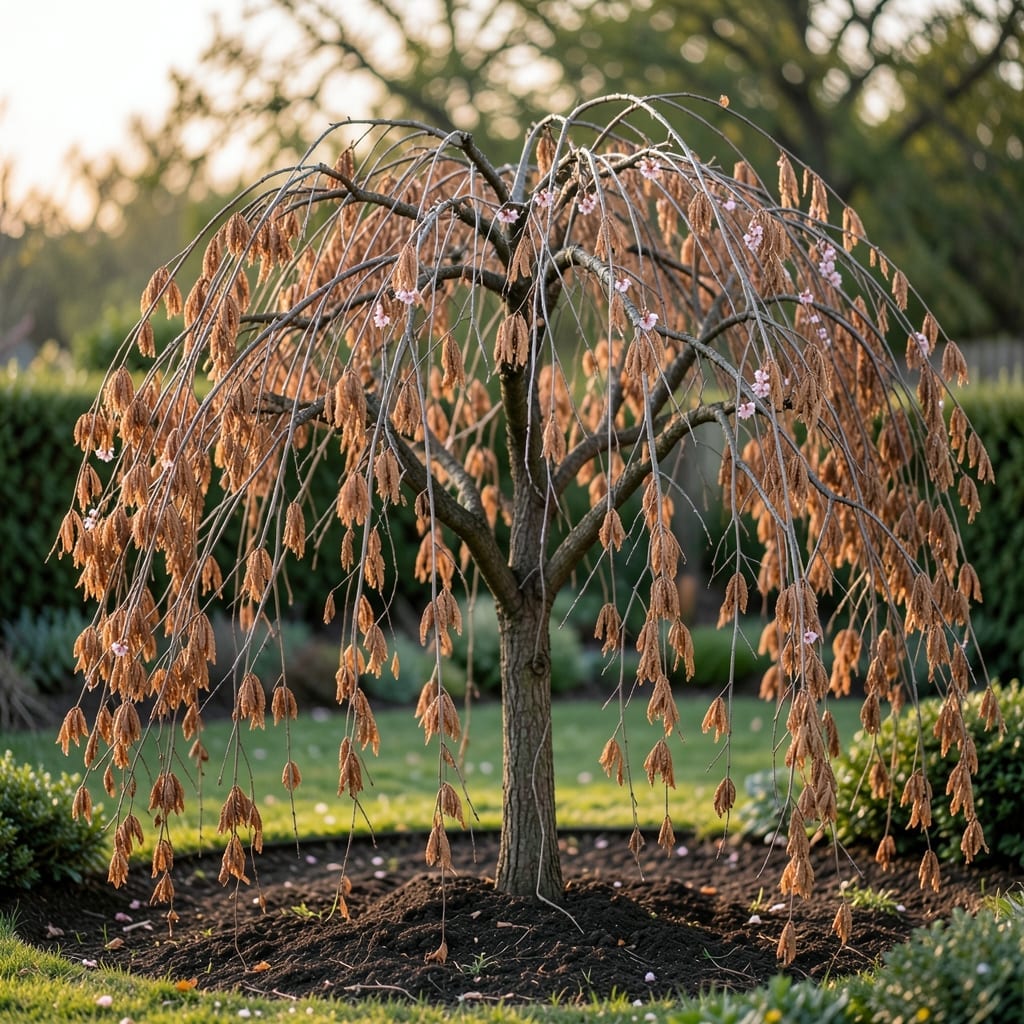
Nothing feels worse than watching your weeping cherry fade. I’ve been there, staring at yellowing leaves and brittle branches, wondering what went wrong.
Most issues stem from watering mistakes, fungal infections, or pest damage. The good news? Once you identify the problem, recovery is often simpler than you think.
With the right adjustments, you’ll see new growth within weeks. That drooping canopy can bounce back stronger than before.
Let’s diagnose the issue and get your tree thriving again. The first step is easier than you expect.
A weeping cherry tree in distress often signals underlying issues that disrupt its health. Here are the most common causes, explained with actionable insights:
Weeping cherries thrive in well-draining, slightly acidic soil (pH 6.0–6.5). Compacted or waterlogged soil suffocates roots, while alkaline soil locks out essential nutrients like iron. Test your soil and amend with compost or sulfur to correct imbalances.
Inconsistent moisture levels stress the tree. Overwatering leads to root rot (look for yellowing leaves and mushy roots), while drought causes leaf scorch and premature drop. Water deeply once weekly (more in extreme heat), ensuring the top 2–3 inches of soil dry between waterings.
Common culprits include aphids (curled leaves, sticky residue), bacterial leaf scorch (brown, crisp edges), and fungal cankers (sunken, oozing bark). Inspect regularly and treat with horticultural oil or copper fungicide at first signs. Prune infected branches 3–4 inches below visible damage to prevent spread.
Late frosts can kill blossoms and young growth, while heatwaves scald bark (look for cracks or peeling). Protect trees with burlap wraps in winter and mulch (2–3 inches deep) to insulate roots year-round. Avoid planting in low-lying areas where cold air settles.
Pruning at the wrong time (e.g., late summer) or with unclean tools invites disease. Sterilize pruners with rubbing alcohol before cuts, and prune only in late winter to remove deadwood while the tree is dormant.
Don’t give up on your weeping cherry just yet! With the right fixes, you can often nurse it back to health. Below are targeted solutions for common issues, plus tips to keep problems from returning.
Fix: Check soil moisture 2 inches deep—it should feel like a wrung-out sponge. If bone-dry, water deeply (1–2 inches per week, more in extreme heat). If soggy, stop watering and let the soil dry out. For poor drainage, amend the soil with compost or create a small berm to redirect excess water.
Prevention: Mulch with 2–3 inches of organic material to retain moisture and prevent runoff. Use a moisture meter to avoid guesswork. 💡
Fix: Prune infected branches (sterilize tools with rubbing alcohol between cuts) and dispose of debris far from the tree. Apply a copper-based fungicide for leaf spot or canker, following label instructions. For root rot, improve drainage and treat with a biofungicide like Bacillus subtilis.
Prevention: Space trees properly for airflow, avoid overhead watering, and rake up fallen leaves to reduce spores. ✨
Fix: Blast aphids or mites off with a strong water spray. For borers, use a systemic insecticide labeled for trees (apply in early spring). Neem oil works for mild cases—spray in the evening to avoid harming bees.
Prevention: Inspect the tree weekly for early signs (holes, sticky residue, or chewed leaves). Encourage beneficial insects like ladybugs with pollinator-friendly plants. 🎯
Fix: Test your soil (kits are available at garden centers). Amend with compost for organic matter or add a balanced fertilizer (10-10-10) in early spring. For iron deficiency (yellow leaves with green veins), apply chelated iron.
Prevention: Feed annually in spring and mulch to slowly improve soil health. Avoid over-fertilizing, which can burn roots. 🌡️
Fix: Prune dead or split branches in late winter (before new growth starts). Protect young trees with burlap wraps or frost cloth during extreme cold snaps.
Prevention: Plant in a sheltered spot if you’re in a borderline hardiness zone. Water deeply before winter to insulate roots. ❄️
Check for dry, crispy leaves and soil pulling away from the roots. Water deeply when the top 2-3 inches of soil feel bone-dry. A moisture meter can help confirm.
Remove infected branches 3-4 inches below damage and apply a copper-based fungicide. Always sterilize pruning tools with rubbing alcohol between cuts.
If the roots are mushy and black, recovery is unlikely. For early stages, stop watering, improve drainage, and treat with a biofungicide like Bacillus subtilis.
Prune in late winter while the tree is dormant. Avoid pruning in summer or fall, as this can spread disease or stress the tree.