
Beautiful Plants For Your Interior
Beautiful Plants For Your Interior
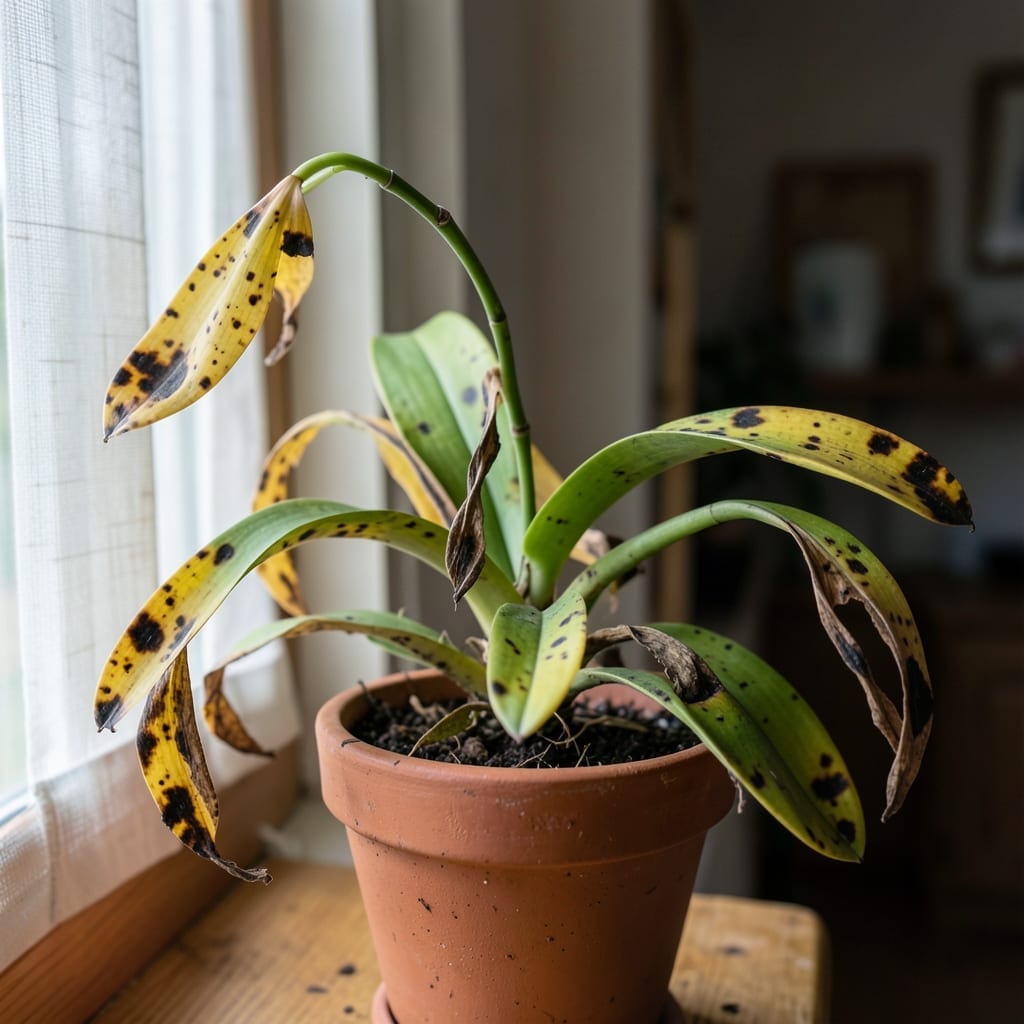
Yellow spots, black edges, or wrinkled leaves—your orchid is trying to tell you something. I’ve seen all of these on my own plants, and each symptom points to a different fix.
Overwatering, pests, or wrong light levels usually show up first in the leaves. Once you know what to look for, diagnosing the problem takes seconds instead of hours.
With the right adjustments, you’ll see new growth within 2-3 weeks. The key is catching issues early before they spread to the roots or blooms.
Works for Phalaenopsis, Cattleya, and other common orchid types. Let’s get those leaves looking vibrant again.
Understanding the root causes of discolored, wilting, or damaged orchid leaves is key to reviving your plant. Here are the most common culprits, explained with actionable insights:
Orchids thrive in well-aerated environments. When waterlogged, roots suffocate, leading to yellowing leaves (chlorosis) and root rot. The Phalaenopsis and Cattleya species are especially sensitive. Fix: Use orchid-specific bark mix and water only when the medium is almost dry (every 7–10 days). Ensure pots have drainage holes.
Orchids need bright, indirect light. Direct sunlight causes sunburn—look for bleached or brown patches on leaves. Conversely, insufficient light leads to dark green, floppy leaves and no blooms. Fix: East-facing windows are ideal. Use sheer curtains to diffuse harsh light or supplement with grow lights (12–14 hours/day).
Over-fertilizing with high-nitrogen formulas can cause leaf tip burn (necrosis) or rapid, weak growth. Deficiencies (e.g., magnesium or iron) may yield interveinal chlorosis (yellowing between veins). Fix: Use a balanced orchid fertilizer (20-20-20) diluted to half-strength, applied every 2–4 weeks during active growth.
Spider mites, scale, and mealybugs sap nutrients, causing stippled, sticky, or deformed leaves. Check leaf undersides for webbing or white cottony clusters. Fix: Isolate the plant, wipe leaves with 70% isopropyl alcohol, and apply neem oil or insecticidal soap weekly until pests are gone.
Orchids prefer 60–80°F (15–27°C) days and a 10°F (5°C) drop at night. Low humidity (<40%) leads to dry, wrinkled leaves, while high humidity without airflow invites fungal infections. Fix: Use a humidity tray or humidifier (aim for 50–70%) and ensure gentle air circulation with a fan.
If your orchid’s leaves are looking sad, don’t panic—most issues are fixable with a few simple adjustments. Below, we break down the most common causes and their solutions, so you can nurse your plant back to health.
Soggy roots and yellowing leaves often mean too much water. Fix it: Remove the orchid from its pot, trim any mushy black roots with sterilized scissors, and repot in fresh, well-draining bark mix. Water only when the top inch of the mix is dry. Prevention tip: 💡 Use pots with drainage holes and avoid letting orchids sit in saucers of water.
Dark green, floppy leaves? Your orchid needs more light. Reddish or bleached leaves? It’s getting too much. Fix it: Move it to a spot with bright, indirect light (an east-facing window is ideal). If natural light is limited, supplement with a grow light. Prevention tip: ✨ Rotate the pot occasionally for even exposure.
Sticky residue, black spots, or webbing signal pests like scale or spider mites. Fix it: Isolate the plant and wipe leaves with a damp cloth or neem oil solution. For fungal issues (brown spots), remove affected leaves and improve airflow. Prevention tip: 🎯 Inspect leaves regularly and keep humidity between 40-70%.
Wrinkled or leathery leaves may indicate temperature swings or dry air. Fix it: Keep orchids in a stable environment (60-80°F) and use a humidity tray or humidifier. Avoid drafts from vents or AC. Prevention tip: 🌡️ Group orchids together to naturally boost humidity.
Weak growth or pale leaves often mean your orchid needs feeding. Fix it: Use a balanced, water-soluble fertilizer (20-20-20) diluted to half strength every 2-4 weeks during active growth. Flush the pot with water monthly to prevent salt buildup. Prevention tip: 📊 Stick to a consistent fertilizing schedule, but reduce or stop in winter.
Water only when the top 1 inch of bark mix is dry, typically every 7-10 days. Overwatering causes yellow leaves and root rot. Always use pots with drainage holes.
Yellowing often signals overwatering or poor drainage. Check roots for mushiness and repot in fresh mix if needed. Nutrient deficiencies can also cause this.
Yes! Wrinkling usually means low humidity or temperature stress. Move to a stable 60-80°F spot and increase humidity to 50-70%. New growth will appear healthier.
Bright, indirect light is ideal. East-facing windows work perfectly. Avoid direct sun (causes burns) or deep shade (leads to weak growth).