
Beautiful Plants For Your Interior
Beautiful Plants For Your Interior
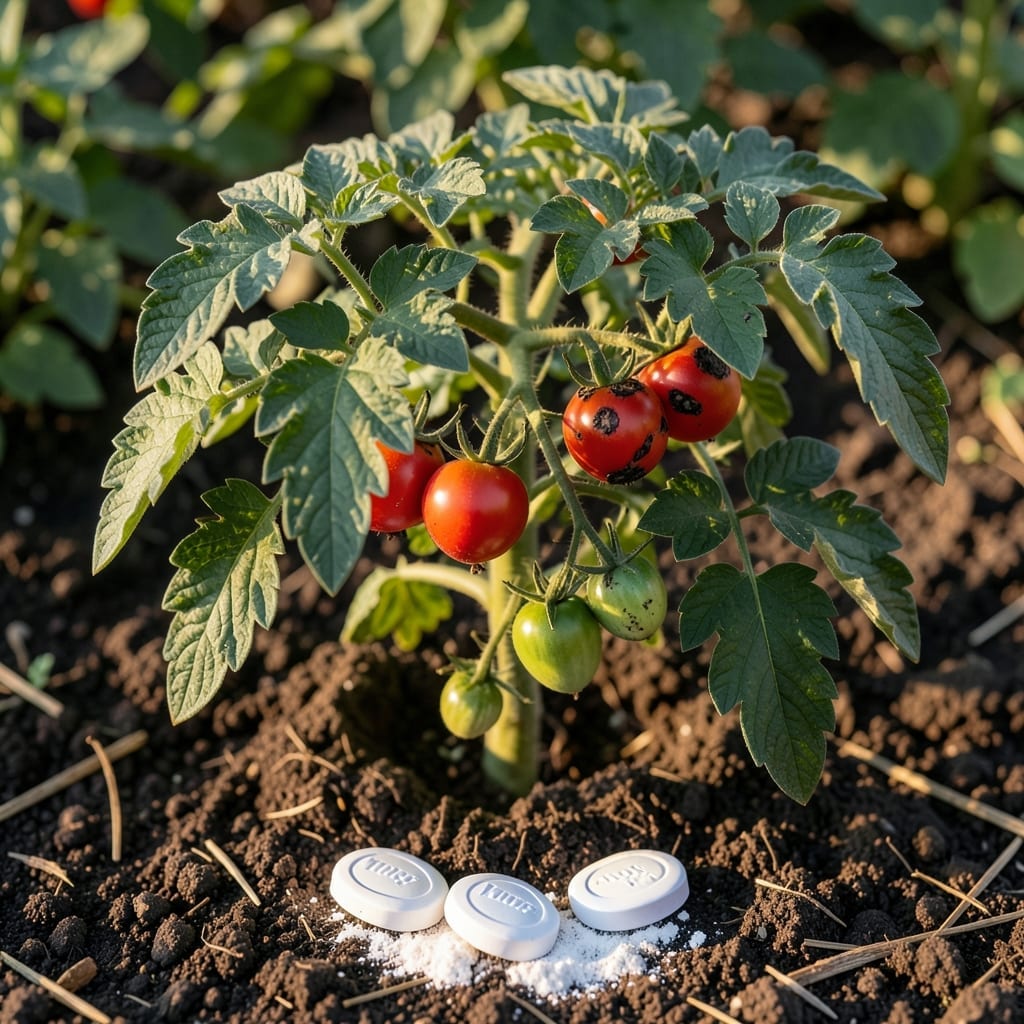
That sunken black spot on your tomatoes isn’t rot—it’s a calcium cry for help. I lost half my harvest to blossom end rot last summer before realizing it’s not a disease but a deficiency.
Turns out, Tums tablets crushed into the soil deliver calcium right where it’s needed. The fix is simpler than you’d think: one antacid per plant weekly works wonders for tomatoes and peppers.
You’ll see new fruit forming without those ugly dark patches within 2-3 weeks. The plants bounce back fast, and the next harvest looks perfectly healthy.
Works best when you catch it early and keep soil moisture consistent. Here’s how to save your crop.
Blossom end rot in tomatoes is primarily triggered by a calcium deficiency in the developing fruit, but the root causes go deeper than just a lack of this nutrient in the soil. Here’s why it happens:
Fluctuations in soil moisture disrupt calcium uptake. When the soil swings from too dry to too wet, the plant’s roots struggle to absorb calcium consistently, even if it’s present. Deep, regular watering (1–2 inches per week) helps maintain steady uptake. Mulching can also stabilize moisture levels.
If your soil lacks sufficient calcium, the plant can’t access what it needs. Sandy or highly acidic soils (pH < 6.0) often test low in calcium. A soil test is the best way to confirm this. Amend with lime (calcium carbonate) or gypsum (calcium sulfate) to correct the imbalance.
During periods of fast growth (e.g., after heavy fertilization or warm spells), tomatoes demand more calcium than the roots can supply. This can lead to localized deficiencies in the fruit. Avoid over-fertilizing with nitrogen, which promotes leafy growth at the expense of calcium distribution.
Compromised roots—from over-tilling, nematodes, or transplant shock—can’t absorb calcium efficiently. Ensure healthy root systems by minimizing disturbance, using compost for soil structure, and avoiding excessive nitrogen early in the season.
Stop blossom end rot in its tracks with these targeted fixes. Each solution addresses a specific cause, and we’ve included prevention tips to keep your tomatoes healthy all season long.
If your soil lacks calcium, your tomatoes can’t develop properly. Fix it by amending the soil with crushed eggshells, lime, or a calcium-rich fertilizer. For a quick boost, dissolve Tums tablets (calcium carbonate) in water and apply as a foliar spray or soil drench. Use 2-3 tablets per gallon of water, and repeat every 2 weeks until symptoms improve.
Prevention tip: 💡 Test your soil’s calcium levels before planting. Aim for a pH between 6.0 and 6.8 to ensure calcium is available to the roots.
Fluctuating soil moisture disrupts calcium uptake, leading to blossom end rot. Fix it by watering deeply and regularly—about 1-2 inches per week, depending on your climate. Use a drip irrigation system or soaker hoses to deliver water directly to the roots and avoid wetting the leaves.
Prevention tip: 🌡️ Mulch around the base of your plants with straw or wood chips to retain moisture and regulate soil temperature.
Tomatoes growing too quickly can outpace their calcium supply. Fix it by pruning suckers (the small shoots between the main stem and branches) to redirect energy toward fruit development. Avoid over-fertilizing with nitrogen, which promotes leafy growth at the expense of fruit.
Prevention tip: ✨ Choose tomato varieties known for steady growth, such as Roma or Celebrity, and space plants properly to reduce competition for nutrients.
Compacted or nutrient-poor soil can limit root development and calcium absorption. Fix it by loosening the soil around the root zone and mixing in organic matter like compost or well-rotted manure. This improves drainage and aeration while adding essential nutrients.
Prevention tip: 🎯 Rotate your tomato crops yearly to prevent soil depletion and reduce disease buildup.
Use 2-3 regular Tums tablets crushed into the soil around each plant base. For a foliar spray, dissolve 2-3 tablets per gallon of water and apply weekly.
Inconsistent moisture disrupts root absorption. When soil swings from dry to wet, roots can’t pull calcium steadily, even if it’s present. Maintain 1-2 inches of water weekly for best results.
Yes! Crushed eggshells, lime, or gypsum work well. Tums are convenient because they dissolve quickly. For organic gardens, eggshells take longer but provide lasting benefits.
With consistent treatment, new fruit should show improvement within 2-3 weeks. Existing affected tomatoes won’t recover, but future ones will form normally.