
Beautiful Plants For Your Interior
Beautiful Plants For Your Interior
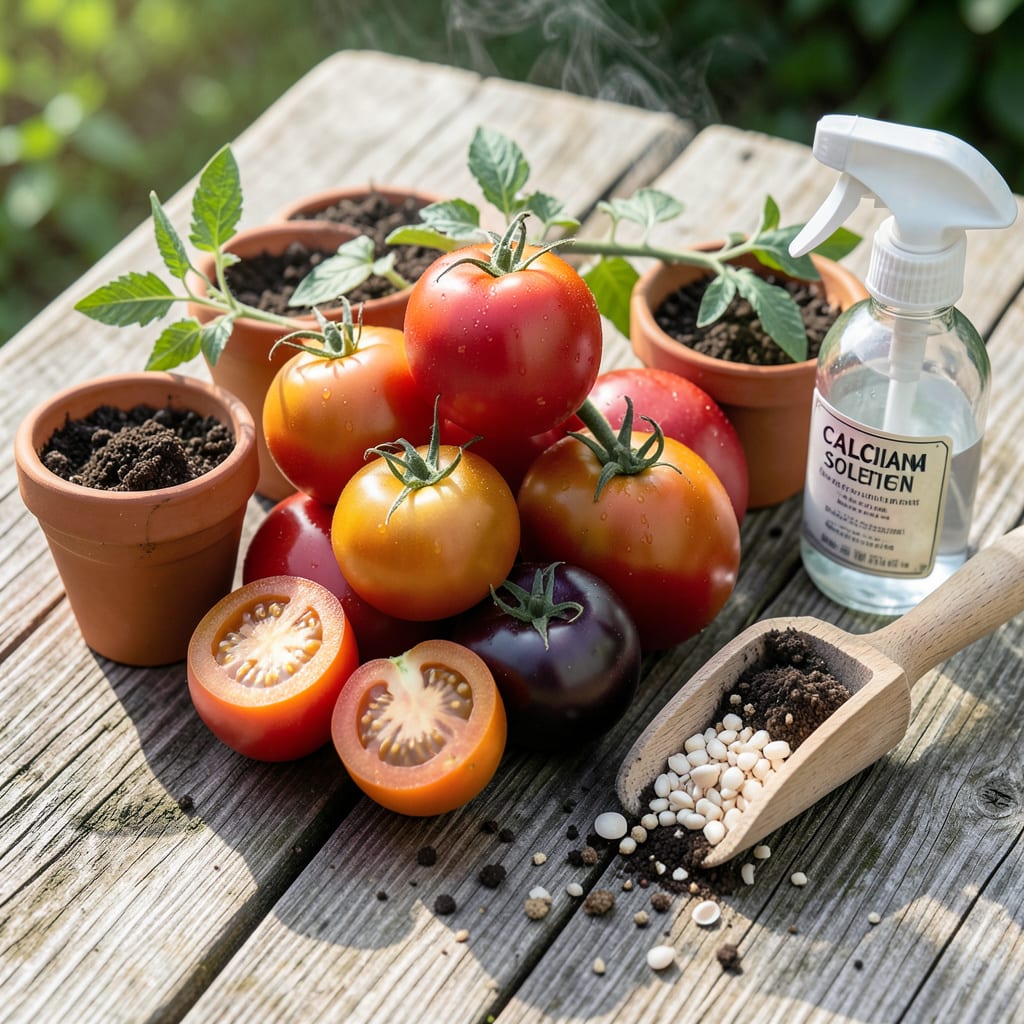
That sunken, black spot on your tomatoes breaks my heart every time. Blossom end rot hits when calcium can’t reach the fruit fast enough, usually from uneven watering or poor soil.
I learned the hard way that even perfect soil can fail if you let plants dry out between deep waterings. The solution is simpler than you think: consistent moisture and a calcium boost before problems start.
You’ll spot the first signs as small, water-soaked spots on the blossom end that darken and spread. Catch it early, and you can still save most of your crop with quick adjustments.
Works for all tomato varieties, whether you’re growing in containers or in-ground. Here’s how to fix it for good.
Blossom end rot isn’t caused by a virus or pest—it’s a calcium deficiency in the developing fruit, often triggered by environmental or cultural factors. Here’s the science behind why it happens:
Fluctuations in soil moisture disrupt calcium uptake. When the soil swings from bone dry to soggy, plant roots struggle to absorb calcium consistently. Even if your soil has enough calcium, inconsistent watering can lock it out, starving the fruit.
Some soils—especially sandy or heavily leached types—naturally lack sufficient calcium. If your soil test reveals low calcium levels, the plant can’t pull what it needs, no matter how well you water. Organic matter like compost can help, but severe deficiencies may require amendments.
During heatwaves or growth spurts, tomatoes guzzle water and nutrients faster than their roots can supply. Calcium is less mobile in the plant, so fast-growing fruit (like those in a heatwave) often develop rot at the blossom end first, where calcium arrives last.
Damaged roots (from cultivation, pests, or disease) reduce calcium absorption. Similarly, soil pH outside the 6.0–6.8 range can make calcium insoluble, rendering it unavailable to the plant even if it’s present.
Blossom end rot can be frustrating, but these targeted solutions will help you reverse the damage and prevent future outbreaks. Address the root causes with these practical fixes:
Fluctuating soil moisture disrupts calcium uptake. Water deeply and consistently—aim for 1–2 inches per week, more in extreme heat. Use drip irrigation or soaker hoses to deliver water directly to roots and avoid wetting foliage. Mulch with straw or compost to retain moisture and reduce evaporation.
Prevention tip: 💡 Check soil moisture 2 inches deep—if dry, it’s time to water. Avoid letting soil swing from soggy to bone-dry.
Add calcium directly to the soil or foliage. Work crushed eggshells, gypsum, or lime into the soil at planting (follow package rates). For a quick fix, spray plants with a calcium chloride solution (1 tbsp per gallon of water) every 1–2 weeks. Avoid high-nitrogen fertilizers, which can block calcium absorption.
Prevention tip: ✨ Test your soil before planting. Amend with calcium-rich materials if levels are low (ideal pH: 6.2–6.8).
Extreme heat or cold can hinder calcium movement. Use shade cloth during heatwaves to reduce stress. In cooler climates, row covers can help maintain steady temperatures. Avoid over-fertilizing, as excess salts can also impede calcium uptake.
Prevention tip: 🌡️ Plant tomatoes when soil temps are consistently above 55°F (13°C) to encourage strong root growth.
Fast-growing plants may outpace calcium supply. Prune suckers (side shoots) to direct energy toward fruit production. Avoid overwatering or over-fertilizing, which can cause sudden growth spurts. Choose determinate varieties if you struggle with consistent care—they grow more predictably.
Prevention tip: 🎯 Space plants 18–24 inches apart to reduce competition for water and nutrients.
Yes, crushed eggshells are a great natural calcium source. Rinse, dry, and crush them finely before working into soil at planting. They break down slowly, so mix them in 2-3 months before planting for best results.
Water deeply 2-3 times per week, providing 1-2 inches total. Use your finger to check soil 2 inches deep—if dry, it’s time to water. Consistency matters more than frequency.
All varieties can develop it, but large-fruited types like beefsteaks are most susceptible. Cherry tomatoes often show resistance. Variety matters less than consistent care and calcium availability.
Remove affected fruit immediately to redirect energy. Apply a calcium chloride spray (1 tablespoon per gallon) to leaves every 7-10 days. This provides quick uptake where soil applications can’t.
