
Beautiful Plants For Your Interior
Beautiful Plants For Your Interior
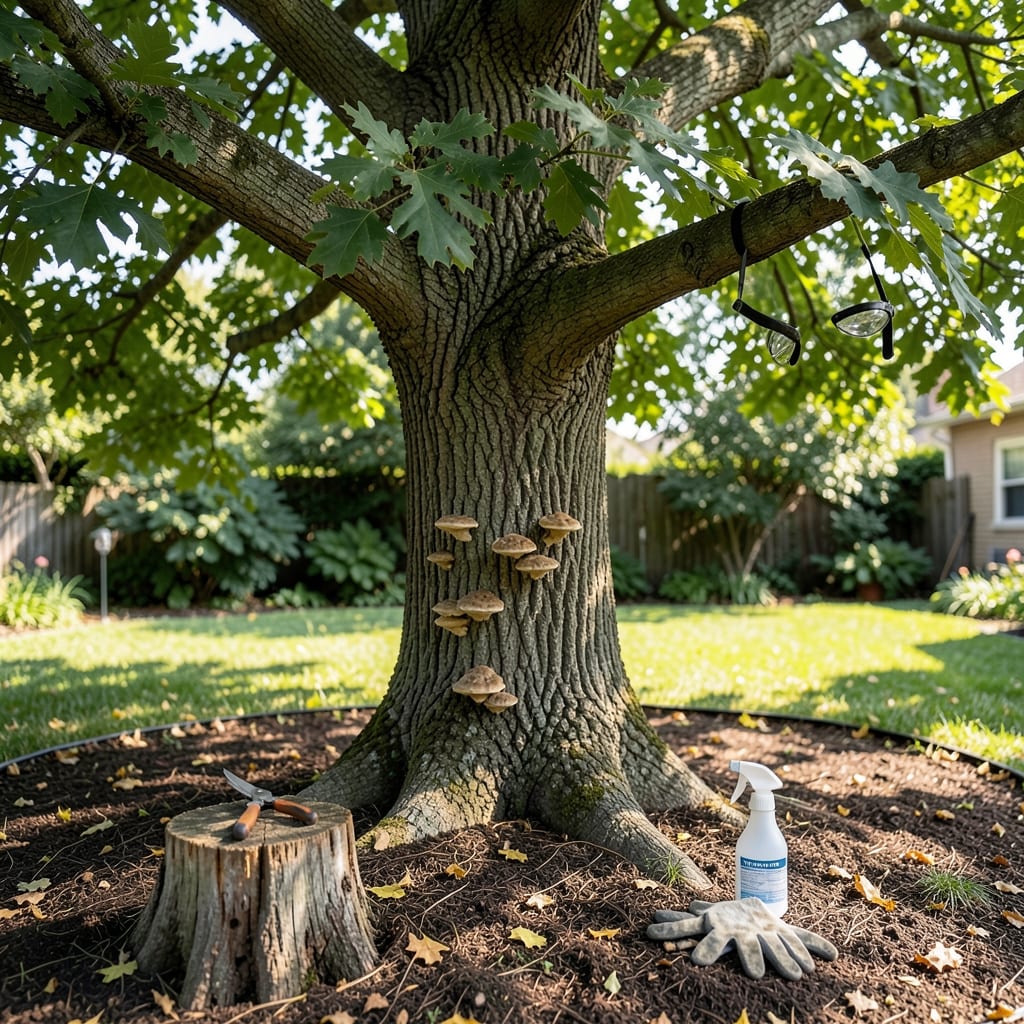
That white crust on your oak isn’t just ugly—it’s actively killing the tree. I’ve lost two maples to fungus before learning the right way to fight back.
Most people grab a spray bottle and call it a day, but real removal starts with proper identification and a 3-step process that stops the spread. You’ll need gloves, pruners, and patience.
Within 2-3 weeks, you’ll see new growth where the fungus was. The bark heals, the tree strengthens, and you’ve bought yourself years of healthy shade.
Works for hardwoods and softwoods, but some cases need a pro. Here’s how to know the difference.
Tree fungus doesn’t appear out of thin air—it thrives under specific conditions that weaken a tree’s defenses. Understanding these causes helps you prevent and address infections early. Below are the most common triggers, explained in clear, scientific terms.
Fungi love damp environments. Overwatering, compacted soil, or inadequate drainage creates a waterlogged root zone, starving roots of oxygen and inviting fungal pathogens like Phytophthora or Armillaria. Even prolonged rain or leaky irrigation systems can set the stage for infection.
Open wounds from improper pruning, storm damage, or lawn equipment expose a tree’s vascular system to spores. Fungi such as Ganoderma and Inonotus enter through these breaks, colonizing the wood. Always sterilize tools and make clean cuts at the right angle to minimize risk.
A stressed tree—whether from drought, poor soil, or pest infestations—lacks the energy to fend off fungi. Nutrient deficiencies, particularly in nitrogen or potassium, weaken cellular walls, making it easier for pathogens like Verticillium to take hold. Regular soil testing and balanced fertilization can bolster a tree’s natural resistance.
Many fungi, including Powdery Mildew and Anthracnose, spread via airborne spores. Wind, rain, or even contaminated gardening tools can transfer these microscopic invaders from infected plants or soil. Sanitizing equipment and removing fallen infected leaves can reduce spore load in your landscape.
Tackling tree fungus starts with identifying the issue and applying the right fix. Here’s a practical breakdown of solutions for common fungal problems, along with prevention tips to keep your trees healthy.
If you spot white, powdery patches on leaves, prune the affected areas immediately to stop the spread. Dispose of the clippings in sealed bags to avoid reinfection. Follow up by spraying the tree with a baking soda solution (1 tablespoon baking soda, 1 teaspoon dish soap, and 1 gallon of water) or a neem oil treatment. Prevention tip: 💡 Improve air circulation by thinning branches and avoiding overhead watering.
Yellowing leaves, wilting, and stunted growth often signal root rot. Dig around the base to check for dark, mushy roots. Trim the affected roots and repot or replant the tree in well-draining soil. Add organic matter like compost to boost soil health. Prevention tip: 🌡️ Avoid overwatering and ensure the planting area has proper drainage.
Brown or black spots on leaves? Remove infected foliage and clean up fallen leaves to reduce spores. Apply a copper-based fungicide to the tree and surrounding soil. For mild cases, a garlic or chamomile tea spray can work as a natural alternative. Prevention tip: ✨ Water at the base of the tree to keep leaves dry and space trees properly to reduce humidity.
Sunken, dead areas on bark (cankers) need swift action. Prune 4–6 inches below the canker with sterilized tools, and dispose of the material. Disinfect the wound with a 10% bleach solution or rubbing alcohol. Prevention tip: 🎯 Avoid wounding trees (e.g., with lawnmowers) and apply mulch to protect the base.
For all cases, sterilize pruning tools between cuts with rubbing alcohol to prevent spreading the fungus. Early intervention is key—don’t wait until the problem escalates!
Look for discolored leaves, unusual growths on bark, or white powdery patches. Early signs include yellowing foliage or dark spots. Act quickly to prevent spreading.
No, never compost infected material. Spores can survive and spread. Seal and dispose of all fungal waste in the trash to protect other plants.
If the fungus covers over 30% of the tree or returns after treatment. Pros have access to stronger fungicides and can assess structural damage.
Yes, a 10% bleach solution works well for sterilizing tools between cuts. Rinse thoroughly and dry to prevent rust.