
Beautiful Plants For Your Interior
Beautiful Plants For Your Interior
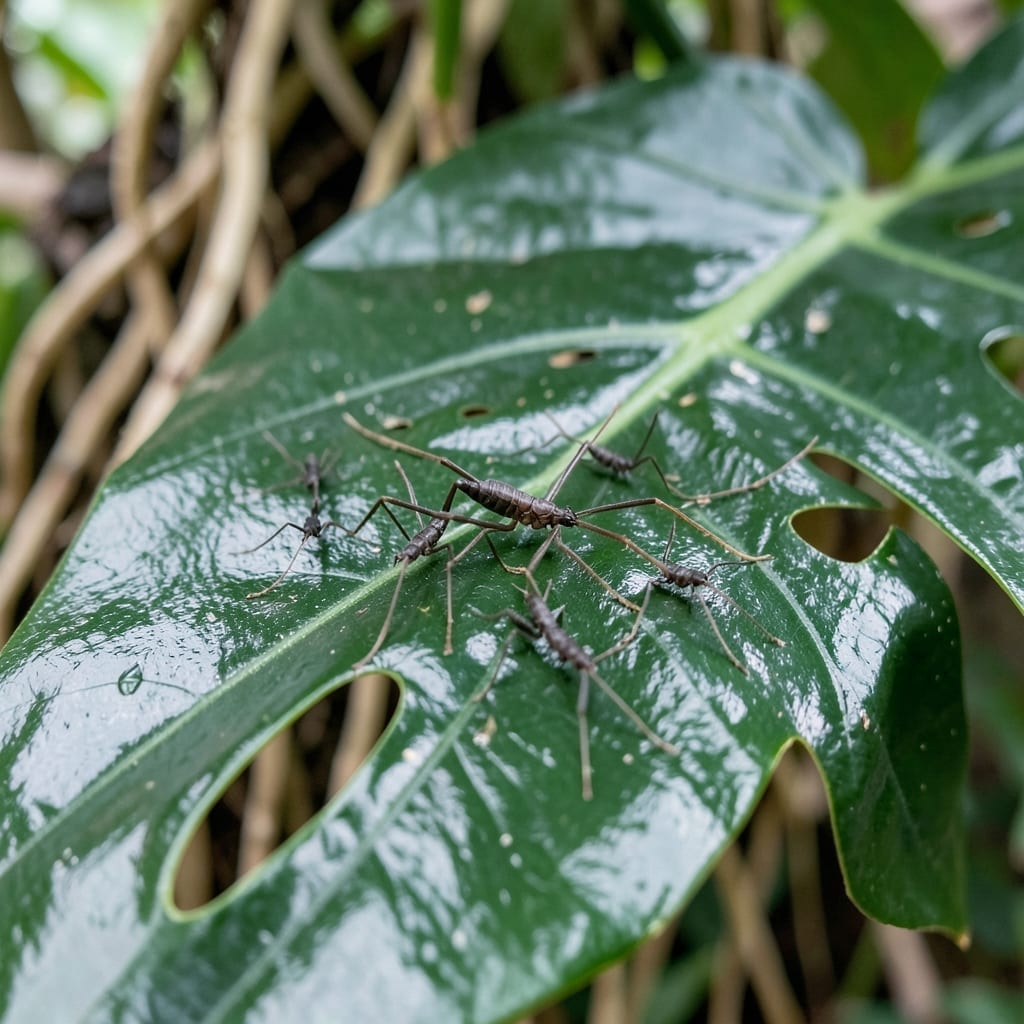
Tiny black specks on your Monstera leaves mean trouble. I spotted my first thrips infestation last summer—silver streaks on the foliage, like someone had scratched the surface with a needle.
These pests multiply fast, but they’re not invincible. A weekly inspection of leaf undersides catches them early, before they spread to every plant in your collection.
Natural solutions work best in my experience. A sharp spray of water dislodges adults, while neem oil smothers the larvae. Consistency is key—skip a treatment and they bounce right back.
Your Monstera can recover fully with patience. New growth emerges thrips-free once the cycle is broken, and those iconic split leaves return to their glossy best.
Thrips on Monstera deliciosa don’t appear out of nowhere. These tiny, fast-moving pests are drawn to your plant for specific, often preventable reasons. Understanding the root causes helps you stop them before they start.
Monstera plants thrive in humid environments (60–80% relative humidity), but thrips prefer dry air. When indoor humidity drops below 40%, thrips reproduce more rapidly, as their eggs dry out less often. This is especially common in heated homes during winter or air-conditioned spaces in summer.
Thrips target weak or stressed plants first. Overcrowding—whether from too many plants in one area or dense foliage on a single Monstera—creates the perfect hiding spots. Poor air circulation and limited light in these conditions also stress the plant, making it more susceptible to infestation.
Thrips often hitch a ride on freshly potted soil or newly purchased plants. If you’ve recently repotted your Monstera with unsterilized soil or introduced a new plant without quarantining it, you may have unknowingly invited thrips into your home. Always inspect new plants and sterilize soil by baking it at 200°F (93°C) for 30 minutes.
While thrips don’t thrive in soggy soil, overwatering weakens your Monstera’s natural defenses. Root stress from waterlogged soil reduces the plant’s ability to fend off pests. Additionally, damp conditions can attract fungus gnats, which may coexist with thrips, creating a double threat.
Thrips can be stubborn, but these targeted solutions will help you reclaim your Monstera’s health. Address the issue as soon as you spot silvery streaks, black specks, or distorted leaves.
For mild infestations, start with a hands-on approach. Use a soft cloth or cotton swab dipped in rubbing alcohol (70% isopropyl) to wipe down leaves, focusing on the undersides where thrips hide. This kills adults and nymphs on contact. Repeat every 2-3 days for a week to break their life cycle.
Spray your plant with a neem oil solution (1 tbsp neem oil + 1 tsp dish soap + 1 quart water). Neem disrupts thrips’ feeding and reproduction. Apply in the evening to avoid leaf burn, and reapply every 5-7 days. Insecticidal soap (1 tbsp mild soap per quart of water) is another gentle option—spray until leaves are thoroughly coated, then rinse after 15-20 minutes.
Introduce beneficial predators like ladybugs, lacewings, or predatory mites (e.g., Amblyseius cucumeris). These natural enemies feed on thrips and can provide long-term control. Purchase them from garden centers and release them near your Monstera in the evening for best results.
Consistency is key! Combine methods for the best results, and your Monstera will bounce back with lush, thrip-free foliage. ✨
Inspect your plant weekly, paying close attention to leaf undersides. Early detection makes treatment much easier. Use a magnifying glass to spot tiny larvae or eggs.
Yes, thrips can quickly move between plants. Always isolate infested plants immediately and avoid grouping houseplants too closely together. This prevents rapid spreading.
Dish soap can help but works best mixed with water as insecticidal soap. Use 1 tablespoon mild soap per quart of water for effective treatment. Rinse leaves after 15-20 minutes.
With consistent treatment, most infestations clear within 2-4 weeks. Continue preventive measures afterward, as eggs may hatch later. Patience is key to full recovery.