
Beautiful Plants For Your Interior
Beautiful Plants For Your Interior
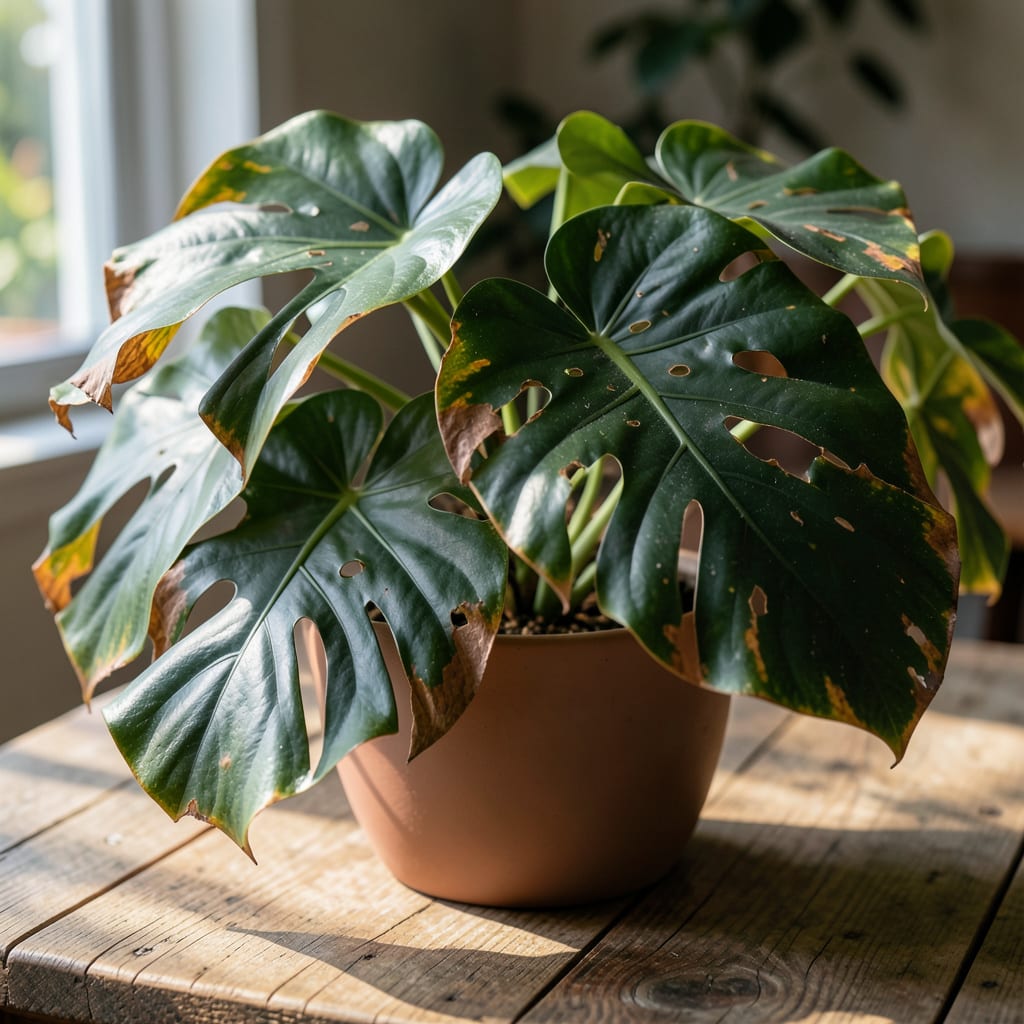
Brown spots on your Monstera aren’t a death sentence. I’ve revived more than a dozen plants from the brink with simple adjustments to their environment and care routine.
Most cases come down to 3 common issues: too much water, not enough humidity, or pests hitching a ride. The good news? Each has a straightforward fix that shows results within 1-2 weeks.
You’ll watch those crispy edges soften as new growth emerges in that signature deep green with white variegation. The plant tells you exactly what it needs if you know how to read the signs.
Works for any Monstera variety, from classic deliciosa to rare variegated types. Let’s diagnose and repair your plant today.
Monstera leaves turning brown is often a sign of stress, and several common factors can trigger this issue. Below are the primary causes, explained scientifically to help you diagnose and address the problem.
Excess water suffocates the roots, preventing oxygen uptake and leading to root rot. Fungi like Phytophthora thrive in soggy soil, damaging the root system and cutting off nutrient flow. As a result, leaves lose their vibrancy and turn brown, often starting at the edges.
While Monsteras enjoy bright, indirect light, direct sunlight can scorch the leaves. The intense UV rays break down chloroplasts, causing photooxidative damage. This manifests as brown, crispy patches, typically on the side facing the light source.
Monsteras are tropical plants that thrive in 40-60% humidity. Dry air (common in heated homes) causes transpirational stress, where the plant loses moisture faster than it can absorb it. Leaves respond by browning at the tips or margins. Similarly, drafts or temperatures below 50°F (10°C) can shock the plant, leading to discoloration.
Over-fertilization leads to salt buildup in the soil, which draws water out of the roots—a condition called fertigation burn. This causes leaf tips and edges to turn brown and crisp. Conversely, a magnesium or potassium deficiency can also trigger browning, often accompanied by yellowing (chlorosis).
Sap-sucking pests like spider mites, thrips, or mealybugs pierce leaf cells, disrupting fluid transport. Their feeding damage appears as brown or yellow stippling, while severe infestations cause widespread browning and leaf drop.
Here’s how to tackle each common cause of browning leaves and restore your Monstera’s lush green beauty. Follow these targeted fixes and prevention tips to keep your plant thriving.
If the soil is bone-dry, give your Monstera a deep watering until water drains from the bottom. Let the top 1-2 inches of soil dry out between waterings. Prevention tip: 💡 Stick to a consistent schedule—check soil moisture weekly with your finger.
Soggy soil suffocates roots. Trim any black, mushy roots and repot in fresh, well-draining soil. Use a pot with drainage holes. Prevention tip: 🌱 Water only when the topsoil feels dry, and empty the saucer after 15 minutes.
Move your Monstera to bright, indirect light—east or north-facing windows are ideal. If leaves are scorched, trim the worst damage to redirect energy. Prevention tip: 🎯 Rotate the pot quarterly for even light distribution.
Mist leaves daily or use a humidifier to maintain 50-70% humidity. Grouping plants together also helps. Prevention tip: ✨ Place a pebble tray with water under the pot for steady humidity.
Use a balanced liquid fertilizer (10-10-10) every 4-6 weeks in spring/summer. Flush the soil with water monthly to prevent salt buildup. Prevention tip: 🌿 Dilute fertilizer to half-strength to avoid burning roots.
Wipe leaves with neem oil or insecticidal soap to remove spider mites or mealybugs. Isolate the plant to prevent spreading. Prevention tip: 🔍 Inspect leaves weekly, especially the undersides.
Water when the top 1-2 inches of soil feel dry. Typically, this means watering every 7-10 days, but adjust based on humidity and light conditions. Overwatering is more harmful than underwatering.
Unfortunately, no. Once a leaf turns brown, the damage is permanent. Focus on improving care to encourage new, healthy growth. Trim the brown areas to redirect energy.
Aim for 40-60% humidity. Use a humidifier or pebble tray if your home is dry. Misting daily can also help, but avoid soaking the leaves.
Check for crispy, brown patches on leaves facing the light source. Move your plant to bright, indirect light and rotate it weekly for even growth.
