
Beautiful Plants For Your Interior
Beautiful Plants For Your Interior
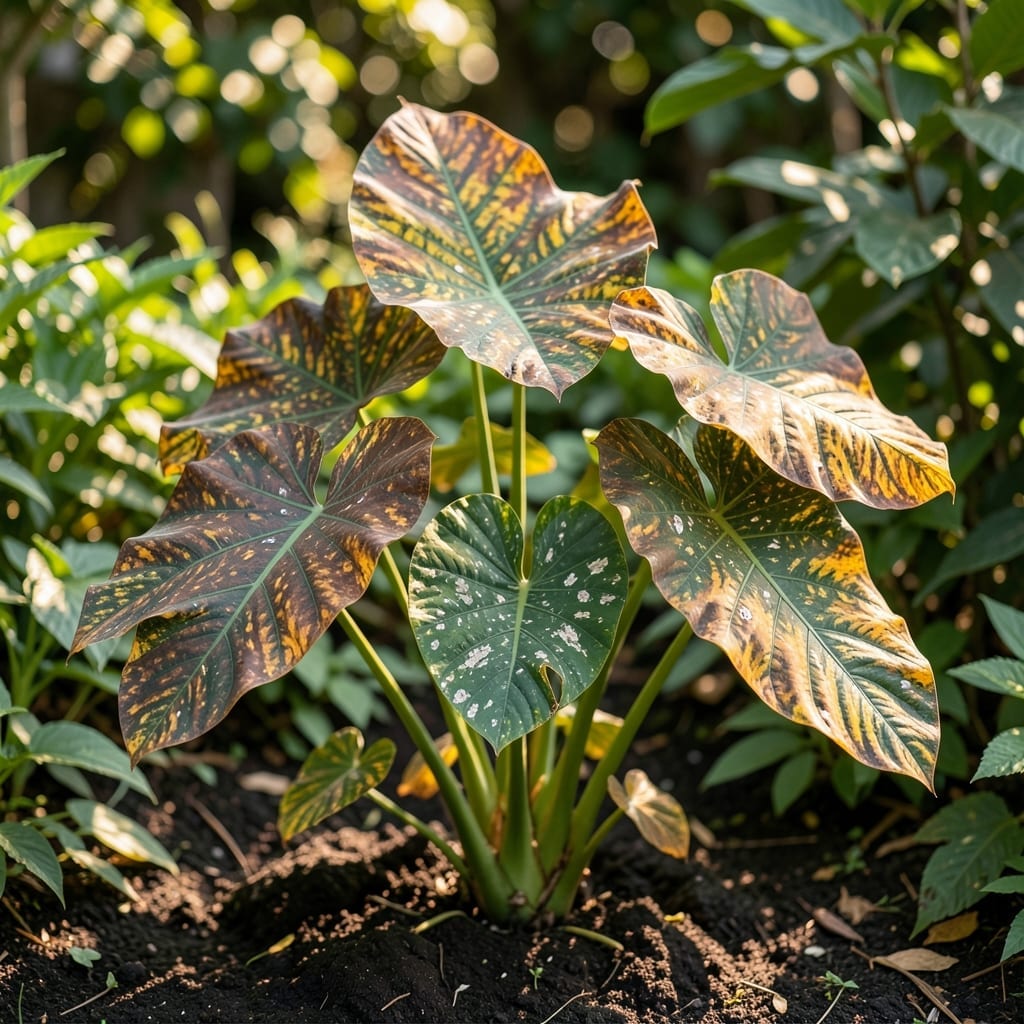
Those crispy brown edges on your elephant ear leaves aren’t just ugly—they’re a distress signal. I’ve seen this happen overnight when plants get too much direct sun without warning.
The damage looks bad, but here’s the thing—elephant ears bounce back fast with the right care. Move them to shade immediately, trim the worst leaves, and keep the soil moist to help recovery.
You’ll notice new growth within a week if you act quickly. The key is preventing future burns by gradually introducing sunlight or using shade cloth for protection.
Works for potted or in-ground plants, and keeps your tropical beauties looking lush all season long.
Elephant ear plants (Colocasia or Alocasia) thrive in bright, indirect light, but direct sunlight can scorch their delicate leaves. Here’s why it happens:
The primary cause of sunburn in elephant ear plants is prolonged exposure to intense, direct sunlight. These tropical plants are adapted to dappled light under forest canopies. When exposed to full sun, especially during peak hours (10 AM–4 PM), the chlorophyll in their leaves becomes overwhelmed. This triggers photooxidative stress, where sunlight breaks down cell membranes, leading to brown, crispy patches or bleached spots.
High temperatures (above 90°F/32°C) exacerbate sunburn. Elephant ears prefer warm but humid conditions. When heat combines with direct sun, the plant loses moisture faster than it can absorb it, causing leaf dehydration. The result? Wilting, yellowing, or scorched edges—classic signs of heat-induced sun damage.
Underwatered plants are more vulnerable to sunburn. Water acts as a coolant and helps maintain cellular structure. Without adequate hydration, the plant’s cuticle (protective leaf layer) weakens, making it easier for UV rays to penetrate and damage tissues. Ensure consistent moisture, especially in hot, sunny conditions.
Moving an elephant ear plant from low light to full sun too quickly shocks its system. These plants need time to acclimate. Without gradual adaptation (hardening off), their leaves lack the protective pigments (like anthocyanins) to shield against UV radiation. Always introduce them to brighter light incrementally over 1–2 weeks.
If your elephant ear plant is showing signs of sunburn, don’t panic—there are simple, effective ways to nurse it back to health. Below are targeted solutions for each issue, along with prevention tips to keep your plant thriving.
Fix: Trim the damaged leaves at the base using clean, sharp scissors. This redirects the plant’s energy to healthy growth. Avoid removing more than 30% of the foliage at once to prevent stress.
Prevent: Move the plant to a spot with bright, indirect light or dappled shade. Use a sheer curtain to filter harsh sunlight if it’s indoors.
Fix: Give your plant a deep watering to rehydrate the roots, but ensure the soil drains well to avoid waterlogging. If the soil is bone-dry, soak the pot in a tray of water for 10–15 minutes.
Prevent: Check soil moisture regularly—stick your finger an inch into the soil. Water when the top layer feels dry. Mulching the base helps retain moisture.
Fix: If the discoloration is due to sun stress, relocate the plant immediately to a shadier area. For mild cases, a foliar spray of diluted seaweed extract can help revitalize the leaves.
Prevent: Acclimate your elephant ear gradually to sunlight. Start with 1–2 hours of morning sun daily, increasing slowly over a week. Avoid midday sun, which is the harshest.
💡 Pro Tip: For outdoor plants, use shade cloth (30–50% density) during peak summer months. Indoor plants near south- or west-facing windows may need to be moved back a few feet from the glass.
Look for brown, crispy edges or bleached spots on the leaves. These are classic signs of sunburn. Wilting during the hottest part of the day is another red flag.
No, damaged leaves won’t heal, but trimming them helps the plant focus on new growth. Healthy foliage should return within 1-2 weeks with proper care.
Choose a spot with bright, indirect light or morning sun only. East-facing windows or shaded patio areas work well. Avoid midday to afternoon sun.
Keeping soil consistently moist helps, but it won’t compensate for too much direct sun. Always pair proper watering with appropriate light conditions.