
Beautiful Plants For Your Interior
Beautiful Plants For Your Interior
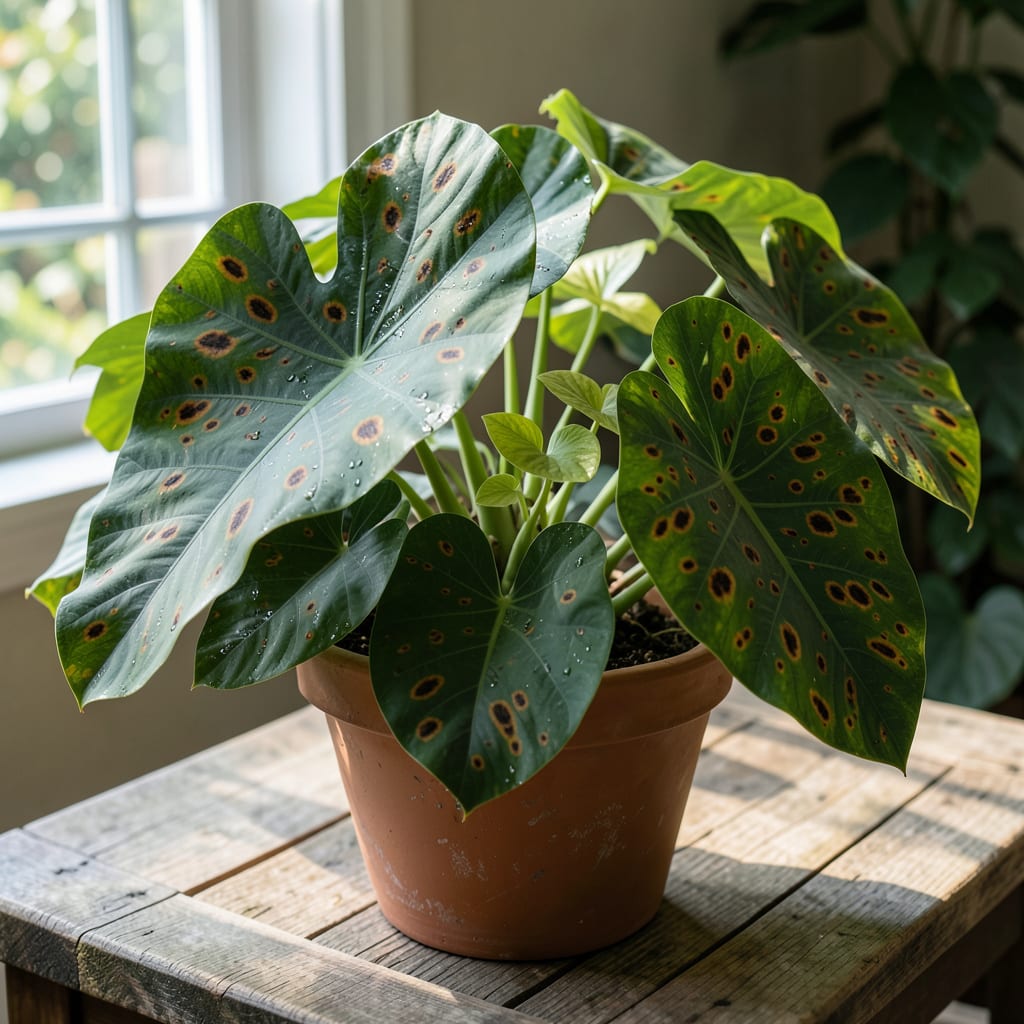
Those ugly brown spots on your elephant ears aren’t just unsightly—they’re a warning sign. I’ve seen entire plants wiped out in a week when left untreated, but the good news is most causes are fixable with quick action.
Usually it’s one of three culprits: too much water sitting on the leaves, fungal invaders taking hold, or pests setting up camp. The solution starts with better air circulation and a closer look at your watering routine.
You’ll notice the difference within days once you adjust care. Leaves regain their deep green color, new growth emerges spot-free, and your plants bounce back stronger than before.
Works for both indoor and outdoor elephant ears, in all climates. Here’s exactly what to do first.
Brown spots on elephant ear plants (Colocasia or Alocasia spp.) often signal underlying stress or disease. Below are the most common causes, explained with actionable insights:
Fungi like Phytophthora or Myrothecium thrive in wet, poorly ventilated conditions. They attack leaves, causing irregular brown patches with yellow halos. Overwatering or high humidity accelerates spread.
Both overwatering (leading to root rot) and underwatering (causing dry, crispy spots) stress the plant. Inconsistent moisture disrupts nutrient uptake, weakening foliage.
Spider mites, aphids, or thrips pierce leaf tissues, leaving tiny brown or yellow speckles that merge into larger spots. Check leaf undersides for webbing or sticky residue (honeydew).
Direct sunlight scalds the broad leaves of shade-loving elephant ears, creating dry, papery brown patches on exposed areas. This is common in abrupt light changes.
Lack of magnesium, potassium, or calcium can cause interveinal browning. Poor soil or pH imbalance (below 5.5 or above 7.0) often restricts nutrient absorption.
Dealing with brown spots on your elephant ears plants? Here’s how to tackle each cause with simple, actionable fixes—and prevent future issues.
Remove affected leaves to stop the spread. Apply a copper-based fungicide or a homemade mix of 1 tsp baking soda + 1 quart water + a few drops of dish soap. Spray weekly until spots disappear. Prevention tip: Space plants for better airflow and water at the base to keep leaves dry. 💡
Let the top 1-2 inches of soil dry out before watering again. Ensure pots have drainage holes, and consider repotting in fresh, well-draining soil. Prevention tip: Use a moisture meter or the finger test to avoid guesswork. 🌡️
Wipe leaves with a soapy water solution (1 tsp mild soap + 1 quart water) to dislodge pests like spider mites or aphids. For stubborn infestations, use neem oil. Prevention tip: Inspect plants weekly and keep the area clean. ✨
Move potted plants to a spot with dappled sunlight or use a shade cloth. For in-ground plants, add a temporary barrier like a sheer curtain. Prevention tip: Acclimate plants gradually to brighter light. 🎯
Use a balanced, water-soluble fertilizer (e.g., 10-10-10) every 4-6 weeks. Yellowing + brown spots? Test soil pH—elephant ears prefer 6.0-7.0. Prevention tip: Amend soil with compost for long-term health. 🌿
Consistency is key! Monitor your plant’s response and adjust care as needed.
These are classic signs of fungal infections like Phytophthora. The yellow halo forms as the fungus spreads, damaging surrounding tissue.
Yes, soggy soil leads to root rot, which prevents proper nutrient uptake. The result is crispy brown edges or patches on the leaves.
Wipe leaves with 1 tsp mild soap + 1 quart water or apply neem oil for stubborn infestations. Inspect leaf undersides weekly for early detection.
Absolutely—if the spots are dry and papery. Elephant ears prefer bright, indirect light. Sudden sun exposure often causes sunburn.
