
Beautiful Plants For Your Interior
Beautiful Plants For Your Interior
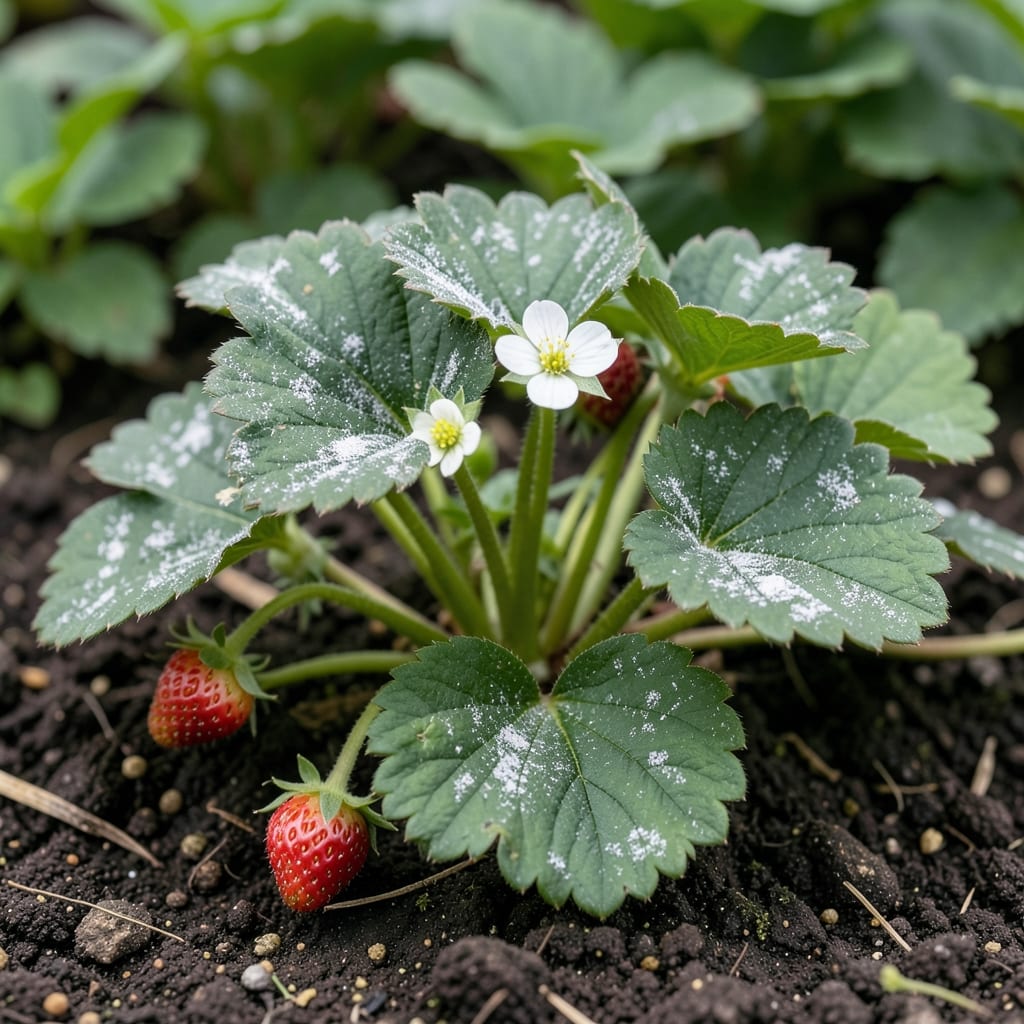
White dust on strawberry leaves spells trouble. I first noticed it on my June-bearing plants last summer, and within 48 hours it had spread to half the patch.
The powdery coating isn’t just unsightly—it weakens plants and reduces yields. It thrives in crowded beds with poor air circulation, especially during warm days and cool nights. My strawberries bounced back once I adjusted spacing and watering habits.
Organic treatments like neem oil or baking soda sprays work if you catch it early. I’ve had success with weekly applications at the first sign of trouble. The key is consistency and good garden hygiene.
Prevention is simpler than cure: space plants properly, water at the base, and remove affected leaves immediately. Your strawberries will thank you with a healthier harvest next season.
Strawberry powdery mildew is a common fungal disease that thrives under specific environmental and cultural conditions. Understanding these triggers is key to prevention and control. Below are the primary causes, broken down for clarity.
The fungus Podosphaera aphanis (the culprit behind strawberry powdery mildew) flourishes in environments with high relative humidity (70-90%) and stagnant air. Dense plant canopies, overhead irrigation, or crowded plantings restrict airflow, creating a microclimate ideal for spore germination and spread. Actionable fix: Space plants properly, prune excess foliage, and use drip irrigation to reduce leaf wetness.
Some strawberry cultivars lack genetic resistance to powdery mildew. Varieties like ‘Albion’ or ‘Seascape’ are more vulnerable, while others (e.g., ‘Fort Laramie’) show tolerance. Actionable fix: Select resistant cultivars when planting, and monitor susceptible types more closely for early signs of infection.
Watering from above wets the foliage, providing the moisture the fungus needs to colonize. Unlike other fungal diseases, powdery mildew does not require free water to infect—high humidity alone suffices. However, wet leaves accelerate spore production. Actionable fix: Switch to soaker hoses or drip irrigation to keep leaves dry.
Over-fertilizing with nitrogen promotes lush, tender growth—perfect for powdery mildew. Soft new leaves are more susceptible to infection than mature, hardened foliage. Actionable fix: Balance fertilization with potassium and phosphorus, and avoid late-season nitrogen applications.
Powdery mildew on strawberries can be frustrating, but these targeted solutions will help you regain control. Address the root causes with practical fixes and keep your plants thriving.
Crowded plants trap moisture and encourage fungal growth. Space strawberry plants at least 12–18 inches apart to allow airflow. If growing in rows, leave 2–3 feet between them. For potted strawberries, move containers to a breezy spot or use a small fan on low to keep air moving.
Powdery mildew thrives in damp conditions. Water at the base of the plant early in the day so foliage dries quickly. Avoid overhead watering, and use drip irrigation if possible. If humidity is high, reduce watering frequency and ensure the soil drains well.
Shade weakens plants and creates a mildew-friendly environment. Relocate strawberries to a spot with at least 6–8 hours of direct sunlight daily. For container gardens, move pots to sunnier areas. If shade is unavoidable, consider thinning nearby plants or pruning overhanging branches.
Look for white, powdery spots on upper leaf surfaces, often starting on older leaves. These patches spread quickly, sometimes covering entire leaves.
Yes, the fruit itself remains safe to eat. Wash berries thoroughly before consuming. The mildew only affects the plant’s foliage and stems, not the edible parts.
Under ideal conditions, spores can spread to new plants within 24-48 hours. Warm days and cool nights create perfect conditions for rapid growth.
The fungus overwinters in plant debris and soil. Remove all affected plant material and rotate crops to prevent recurrence.