
Beautiful Plants For Your Interior
Beautiful Plants For Your Interior
Yellow patches appearing overnight in your lawn are frustrating. I’ve dealt with this exact issue with my own dogs, and the solution is simpler than you’d think.
Dog urine contains nitrogen that essentially fertilizes grass to death. The key is diluting it quickly or preventing concentrated spots. A quick rinse with water after your dog goes can make a huge difference.
Long-term, training your dog to go in a specific area or switching to urine-resistant grass types works best. These methods protect your lawn without harsh chemicals.
With the right approach, you can keep your grass green and healthy while still letting your dog enjoy the yard.
Dog urine can turn your lush green lawn into unsightly brown patches, but why does this happen? The answer lies in the chemistry of your dog’s urine and the sensitivity of your grass. Here’s a breakdown of the key causes:
Dog urine is naturally rich in nitrogen, a nutrient that, in small amounts, fertilizes grass. However, the high concentration in urine overwhelms the grass, essentially “burning” it. Nitrogen breaks down into ammonia, which disrupts the soil’s pH balance and damages grass roots, leading to yellow or dead patches.
Canine urine is slightly acidic, typically with a pH between 6.0 and 7.0. While this isn’t extreme, the acidity can stress grass over time, especially if your dog frequently urinates in the same spot. Acidic urine alters soil chemistry, making it harder for grass to absorb essential nutrients like phosphorus and potassium.
Not all grass is created equal. Cool-season grasses like Kentucky bluegrass and fescue are more susceptible to urine damage than warm-season varieties like Bermuda or Zoysia. Thinner, delicate blades and shallow root systems in some grass types make them less resilient to nitrogen and acid exposure.
What your dog eats and drinks directly affects their urine’s potency. High-protein diets produce more nitrogen-rich urine, while well-hydrated dogs dilute their urine, reducing its damaging effects. If your dog’s diet is unbalanced or they drink too little water, their urine becomes more concentrated—and more harmful to your lawn.
Dealing with yellow patches from dog urine doesn’t have to be a losing battle. Here’s how to tackle the issue head-on, based on the root cause:
Rinse the area immediately after your dog goes with a hose or watering can. This dilutes the nitrogen and reduces burn risk. For existing spots, flush the area thoroughly and reseed if needed.
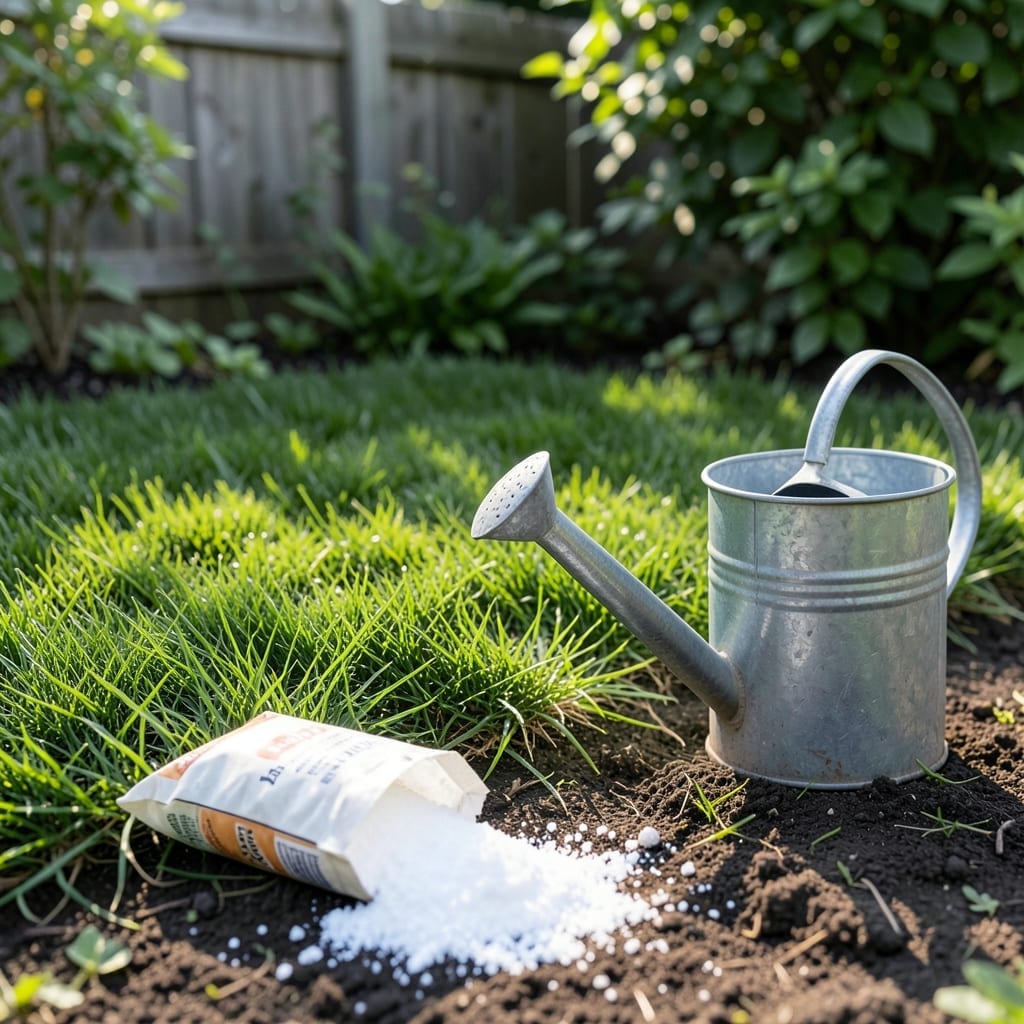
Sprinkle gypsum (calcium sulfate) over affected areas to neutralize salt buildup from urine. Water it in well. Apply monthly for prevention, especially in high-traffic zones.
Water your lawn deeply and regularly to help flush out urine before it concentrates. Aim for 1–1.5 inches of water per week, including rainfall. Early morning watering is best to prevent evaporation.
Switch to a high-quality, low-protein dog food (check with your vet first). Add dog-friendly supplements like Urinary SO to neutralize urine pH. Always ensure fresh water is available to dilute urine naturally.
Prevention Tips:
Rinse the spot within 10 minutes for best results. The faster you dilute the urine, the less nitrogen your grass absorbs. Use 1-2 gallons of water per spot.
No, baking soda can further damage your lawn. Use gypsum instead to neutralize salts. Apply 1 tablespoon per square foot and water in thoroughly.
Warm-season grasses like Bermuda or Zoysia handle urine better. Avoid cool-season types like Kentucky bluegrass if possible.
Yes, but act fast. Watering within 30 minutes can still help. Deep watering later won’t reverse damage but helps overall lawn health.