
Beautiful Plants For Your Interior
Beautiful Plants For Your Interior
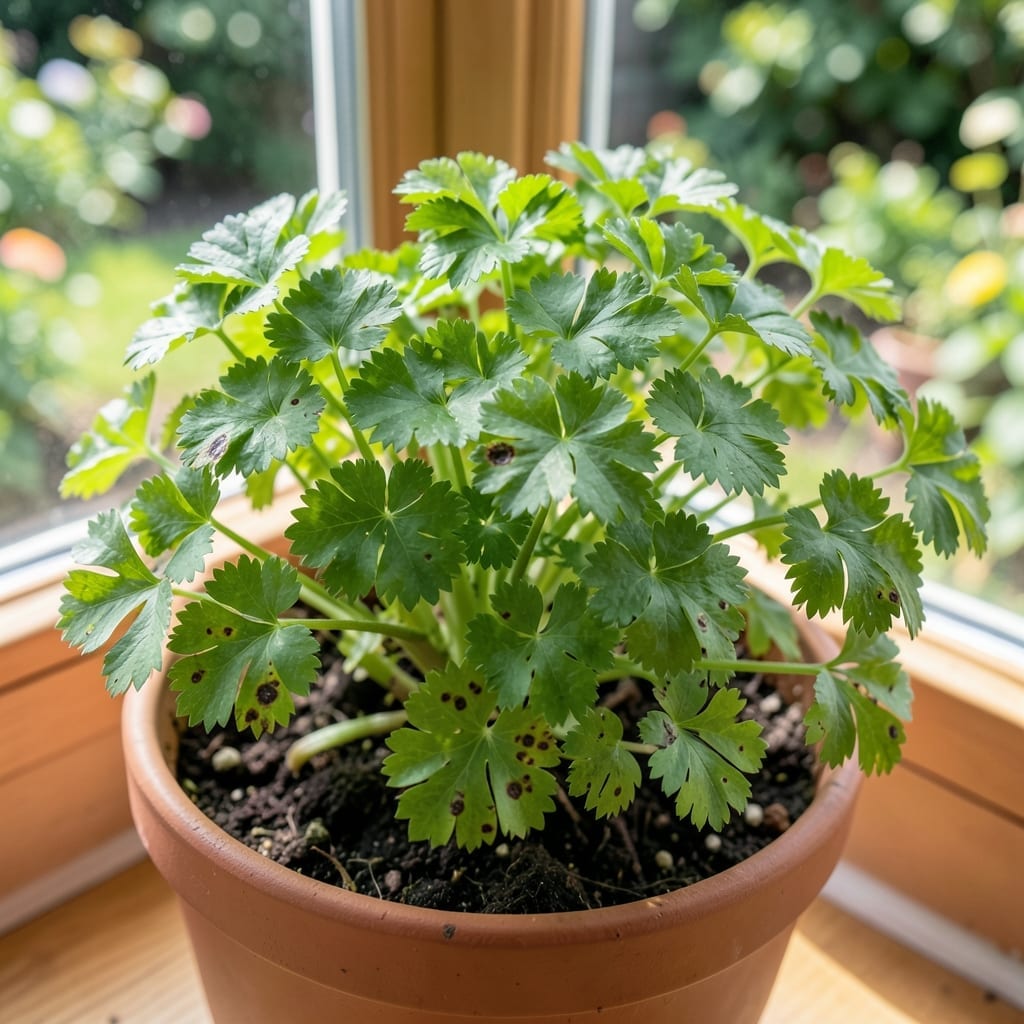
Those brown spots on your parsley aren’t just ugly—they’re a warning sign. I’ve lost entire plants to this before learning that early action makes all the difference.
Most cases come down to three culprits: fungal invaders, hungry pests, or simple environmental stress. The good news? Each leaves a distinct pattern that gives it away.
With the right approach, you can stop the spread within 48 hours and even save affected plants. I’ve rescued parsley that looked beyond hope using basic household items.
Prevention is simpler than you think—just a few habit changes keep your plants spot-free all season.
Parsley leaves develop unsightly spots when stressed by pathogens, pests, or environmental factors. Below are the most common causes, each with its own telltale signs.
Septoria leaf spot and Cercospora thrive in wet, humid conditions. These fungi produce circular, brown-to-black spots with light centers, often surrounded by a yellow halo. Spores spread via water splashes, so overhead irrigation accelerates outbreaks.
Pseudomonas syringae and Xanthomonas bacteria create small, water-soaked lesions that turn necrotic. Unlike fungal spots, these often have a greasy appearance and may ooze in high humidity. Bacteria enter through wounds or stomata, especially during rainy weather.
Parsley worms (black swallowtail caterpillars) and aphids feed on foliage, leaving behind irregular holes or stippling. While not true “spots,” their feeding wounds can invite secondary infections that do cause spotting. Check leaf undersides for pests or their sticky honeydew residue.
Sunburn from intense UV exposure can create bleached or brown patches, especially on tender new growth. Similarly, nutrient deficiencies (like calcium or magnesium) may cause interveinal chlorosis or marginal necrosis that resemble disease spots. Test soil pH (ideal: 6.0–7.0) to rule out imbalances.
Tackling spots on parsley starts with identifying the cause and applying the right fix. Below are targeted solutions for the most common issues, along with prevention tips to keep your parsley thriving.
If the spots are brown or black with a fuzzy texture, a fungal issue like Septoria or Cercospora may be to blame. Remove infected leaves immediately to prevent spread. Apply a copper-based fungicide or a homemade baking soda spray (1 tsp baking soda + 1 quart water + a few drops of dish soap). Space plants 12–18 inches apart to improve airflow, and water at the base to keep foliage dry.
Prevention: Rotate crops yearly and avoid overhead watering. Mulch with straw to reduce soil splash.
Tiny holes or yellowing spots often signal pests like aphids, spider mites, or parsley worms. Blast off aphids with a strong stream of water, or wipe leaves with neem oil or insecticidal soap. For parsley worms, handpick them or introduce beneficial insects like parasitic wasps. Row covers can prevent future infestations.
Prevention: Inspect plants weekly and companion plant with marigolds or dill to deter pests.
Overwatering or drought can cause yellow or crispy spots. Check soil moisture 1 inch deep—water only when dry. Ensure pots have drainage holes, and use well-draining soil. For underwatered parsley, water deeply but less frequently to encourage strong roots.
Prevention: Use a moisture meter and water in the early morning to reduce evaporation.
Yellowing between leaf veins (interveinal chlorosis) may indicate a magnesium or iron deficiency. Apply Epsom salt (1 tbsp per gallon of water) for magnesium or chelated iron for iron shortages. For general health, work compost into the soil before planting.
Prevention: Test soil every 2–3 years and amend with organic matter annually.
💡 Pro Tip: Always sterilize pruning tools with rubbing alcohol between cuts to avoid spreading disease!
Fungal spots are usually circular with brown or black edges and lighter centers. They often have a yellow halo and appear in wet, humid conditions.
Neem oil is great for pests like aphids but won’t fix fungal or bacterial issues. For those, use a copper fungicide or baking soda spray instead.
Yes! Overwatering leads to root stress, which can cause yellow or brown spots. Always check soil moisture 1 inch deep before watering.