
Beautiful Plants For Your Interior
Beautiful Plants For Your Interior
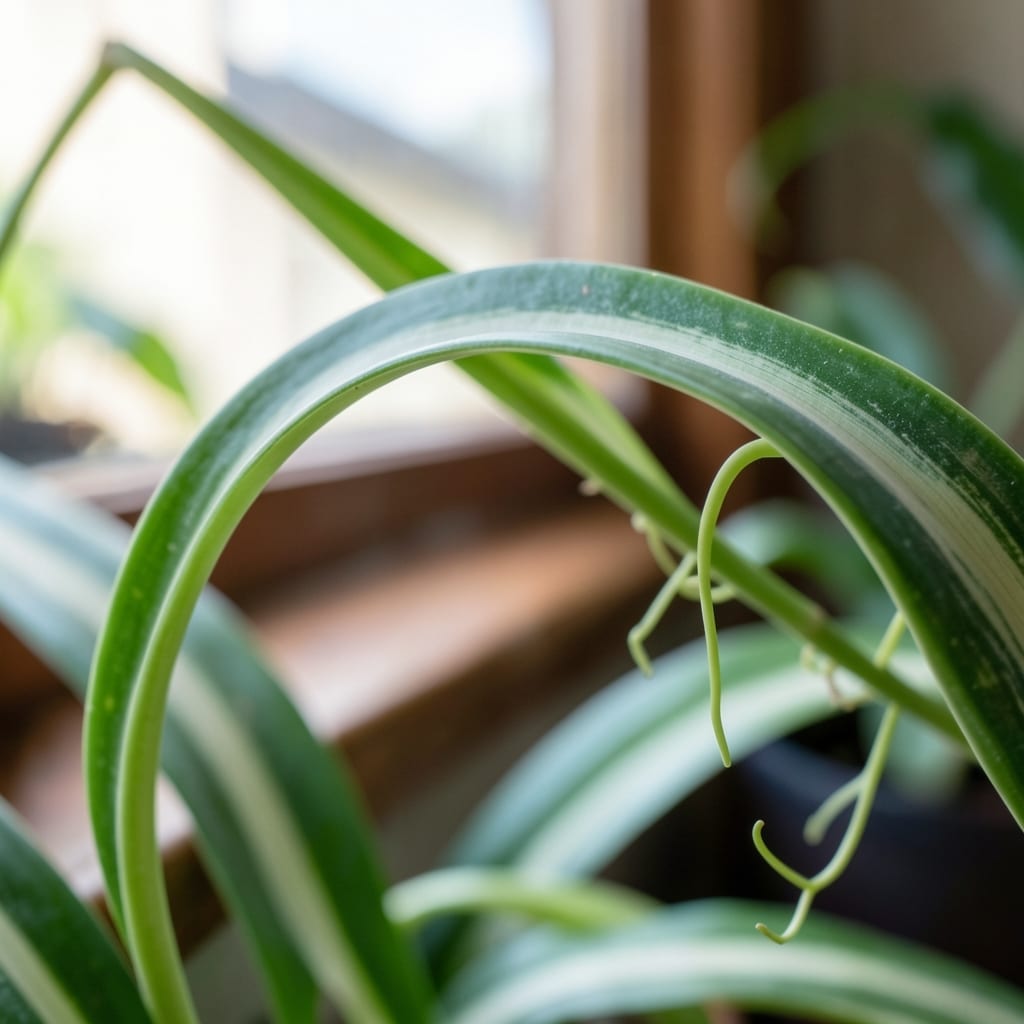
My spider plant looked like it was doing the limbo last week. Leaves bending every which way—some curling tight, others drooping like they’d given up. Turns out, it’s usually trying to tell me something.
Most often, it’s about water. Too much and the roots drown, too little and they shrivel. But light plays a sneaky role too—bright indirect is the sweet spot, not full sun or dark corners.
Pests can join the party uninvited, leaving telltale webs or sticky residue. And don’t forget the pot—roots need room to stretch, or they’ll protest by bending those leaves.
Good news: with a few adjustments, those leaves pop back to their perky selves in 3-5 days. Here’s exactly how to decode what your plant is saying.
Spider plant leaves bend or droop when their environment or care routines disrupt their natural growth. Here are the most common causes, explained with actionable insights:
Spider plants (Chlorophytum comosum) are sensitive to water imbalance. Underwatering causes leaves to curl inward and bend to conserve moisture, while overwatering leads to root rot, which weakens the plant and causes limp, drooping foliage. Check soil moisture: it should be slightly damp (not soggy or bone-dry) 1–2 inches below the surface.
These tropical natives thrive in 65–75°F (18–24°C). Exposure to cold drafts (below 50°F/10°C) or heat sources (radiators, direct AC) shocks the plant, triggering leaf bending as a stress response. Keep plants away from windows or vents during extreme weather.
Dry air (common in heated/cooled indoor spaces) saps moisture from leaves, causing them to curl or bend at the tips. Spider plants prefer 40–60% humidity. Grouping plants together or using a pebble tray with water can restore balance.
Too little light leads to etiolation—leggy growth with weak, bending leaves. Conversely, harsh direct sunlight scalds foliage, causing it to droop or curl defensively. Aim for bright, indirect light (e.g., near an east-facing window).
A lack of potassium or magnesium can weaken cell structure, making leaves bend. Use a balanced, water-soluble fertilizer (10-10-10 NPK) every 4–6 weeks during growing season, but avoid over-fertilizing, which causes salt buildup and root damage.
If your spider plant’s leaves are bending or drooping, don’t worry—most issues are easy to fix with a few adjustments. Below are targeted solutions for common causes, along with prevention tips to keep your plant thriving.
If the soil is bone-dry, give your spider plant a deep watering until water drains from the bottom. Let the top inch of soil dry out between waterings to avoid overdoing it. Prevention tip: Stick to a consistent schedule—check soil moisture weekly!
Soggy soil leads to root rot, which causes limp leaves. Stop watering immediately and let the soil dry out. Repot in fresh, well-draining soil if needed, and ensure your pot has drainage holes. Prevention tip: Use a moisture meter to avoid guesswork.
Leggy or weak leaves often mean insufficient light. Relocate your plant to a spot with bright, indirect sunlight (e.g., near an east-facing window). Prevention tip: Rotate the pot occasionally for even growth.
Drafts, heaters, or AC can shock your plant. Keep it away from vents and maintain a steady temperature (65–75°F). Prevention tip: Avoid sudden temperature swings—consistency is key!
Check for spider mites or aphids under leaves. Wipe leaves with a damp cloth or use neem oil for infestations. Prevention tip: Inspect new plants before bringing them home.
With these fixes, your spider plant’s leaves should perk up in no time! 🌿
With proper care, most leaves return to normal within 3-5 days. Severe cases may take up to 2 weeks for full recovery.
Yes! Trim damaged foliage and address the root cause. Focus on consistent watering and stable conditions to encourage new growth.
Misting can help with low humidity but won’t fix underwatering or overwatering. For best results, combine it with proper soil moisture.
Tip bending often signals underwatering or low humidity. Check soil moisture and consider a humidity tray for dry environments.