
Beautiful Plants For Your Interior
Beautiful Plants For Your Interior
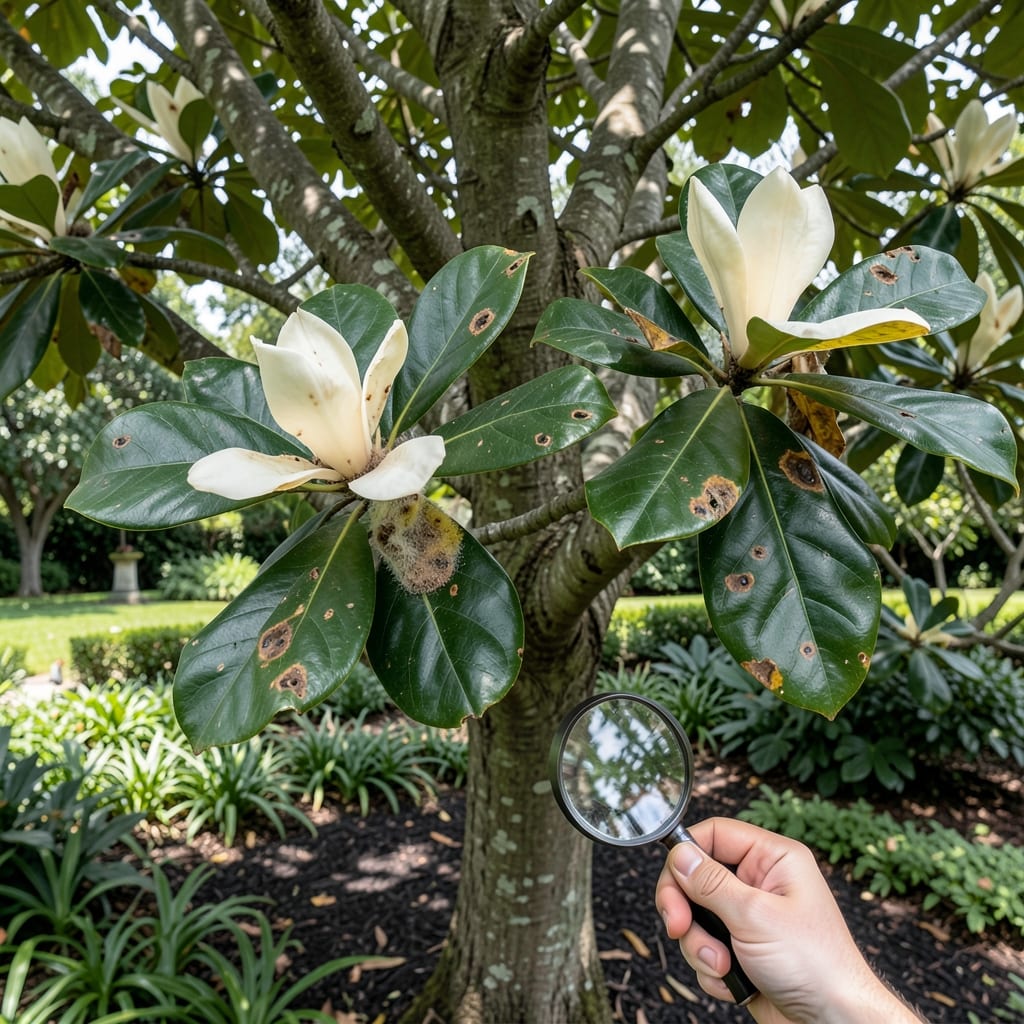
Spotting brown leaves or black splotches on your southern magnolia means trouble. 🌿 I’ve learned the hard way that early detection saves trees from serious damage. Catching problems when they first appear prevents spread to the whole canopy.
Most issues stem from too much moisture, poor air flow, or stressed plants. The good news is organic solutions work surprisingly well if you start treatment immediately. Fungicides aren’t always necessary for common problems.
You’ll notice the difference within 2-3 weeks of proper care. Leaves regain their deep green color, new growth appears healthy, and the tree’s natural resistance improves. The key is consistency in monitoring.
Works for established trees and young specimens alike. Here’s how to identify what you’re seeing and stop it in its tracks.
Southern magnolias are hardy, but they’re not invincible. Diseases often strike due to a mix of environmental stressors, poor cultural practices, and pathogenic invaders. Here’s why these issues arise:
Fungal diseases like leaf spot and root rot thrive in soggy conditions. Overwatering, compacted soil, or heavy clay soils trap roots in waterlogged environments, creating a breeding ground for pathogens such as Phytophthora and Botryosphaeria. Magnolias prefer well-draining, slightly acidic soil—standing water is their enemy.
Dense canopies and crowded plantings restrict airflow, leading to powdery mildew and bacterial leaf blight. Humidity gets trapped among the leaves, giving fungi like Erysiphe the perfect moist, stale environment to spread. Pruning for open canopies and spacing plants properly can prevent this.
Weak or stressed magnolias are more susceptible to disease. Iron or magnesium deficiency (common in alkaline soils) causes chlorosis, weakening the tree’s defenses. A soil test helps identify imbalances—amending with sulfur or organic compost can restore vitality and resistance.
Insects like magnolia scale and borers create entry points for diseases. Their feeding wounds allow bacteria and fungi to infect the tree. Additionally, pruning with unsterilized tools can spread pathogens between cuts. Always disinfect tools with rubbing alcohol and monitor for pest activity.
Extreme heat, drought, or sudden temperature swings stress the tree, lowering its immunity. Sunscald (from winter exposure) and heat stress can lead to dieback, making the magnolia vulnerable to secondary infections like Canker diseases. Mulching and consistent watering help stabilize conditions.
Tackling southern magnolia diseases starts with quick action and the right approach. Below are targeted solutions for common issues, paired with prevention tips to keep your tree thriving.
This often signals iron deficiency in alkaline soil. Apply chelated iron as a soil drench or foliar spray every 2–3 weeks during the growing season. For long-term improvement, amend the soil with sulfur to lower pH (aim for 5.0–6.5).
Remove and destroy infected leaves to stop the spread. Spray with neem oil or copper fungicide every 7–10 days until symptoms fade. Prune nearby branches to improve airflow, which reduces humidity—fungi’s favorite environment.
Scrape off visible pests with a soft brush, then apply horticultural oil or insecticidal soap to smother remaining insects. For severe infestations, use systemic insecticides labeled for magnolias.
If you spot wilting, yellowing, or stunted growth, stop watering immediately and check drainage. Remove soggy soil and replace it with fresh, well-draining mix. Fungicide drenches (e.g., with Trichoderma) can help infected roots recover.
Blast mites off leaves with a strong stream of water, then apply miticide or insecticidal soap. Repeat every 5–7 days until gone, as mites reproduce quickly.
Leaf spot fungi, often from excess moisture or poor airflow, create brown splotches. Remove infected leaves immediately and improve air circulation to prevent spread.
Only if the issue is iron deficiency. Apply chelated iron every 2-3 weeks and amend soil with sulfur. Once leaves turn fully brown, they won’t recover.
Ensure well-draining soil and avoid overwatering. Plant in raised beds if your soil is heavy clay, and use fungicide drenches at the first sign of wilting.
Act at the first sign of pests like scale or mites. Use horticultural oil or insecticidal soap early, before infestations weaken the tree and invite secondary infections.